On my commute into town last week, I braked to a stop before a parade of wild turkeys slowly strutting within the white striped bounds of the crosswalk in my neighborhood. It’s charming and a little puzzling that they’ve learned to cross at such designated spots. Since my mind had been turning over ideas related to the Rights of Nature movement, their presence made me wonder, do turkeys understand the legal rights associated with crosswalks? Should it matter? Our sense of compassion and respect would lead us to pause for them regardless, right?
Lane County voters are being asked to consider a more far-reaching set of questions about the Rights of Nature on the May 19th ballot. According to its proponents, the Watershed Bill of Rights (Measure 20-373) is designed to “…secure legal rights for all watersheds within Lane County to exist, flourish, and naturally evolve…” They also propose articulating the rights of community members to clean water and the rights of those same community members to stop what they consider harmful actions and seek damages from people, governments, or corporations that carry them out. Many friends of McKenzie River Trust and community members have asked for our thoughts on this measure because its overall goal of protecting and caring for our watersheds aligns so closely with our work.
- McKenzie River Trust will neither support nor oppose Measure 20-373.
- We believe that rivers are, indeed, alive, and align our day-to-day work accordingly.
- We also believe that lasting change happens when diverse coalitions share the same table.
- We remain committed to working across sectors, cultures, and communities to care for land and water in western Oregon and beyond.
Land trusts, watershed councils, and conservation districts tend to stay on the land and in the water, in our communities, and out of the courts. Legal rights certainly underpin our work, and those court battles over the rights of people versus doing right by nature affect everything from where we practice conservation to how we pay for it. At the end of the day, we are committed to an approach that acknowledges the gifts we receive from the natural world and our primary responsibility to sustain them for generations to come, and that requires cooperation and compromise at every step.
Reviewing Measure 20-373, we are intrigued by the idea, puzzled about how it might be implemented and enforced, and cautious about the potential negative impacts it could have on our restoration efforts, leaving us to wonder whether such a legalistic Rights of Nature-based approach is the best way to achieve the goals of healthy watersheds and communities. We are also disappointed that something brought forward in the name of nature and community health has so quickly become a polarized argument.
McKenzie River Trust began and continues from a place of commitment to doing right by the health of the rivers, the fields, the forests, and the communities we call home. We do so within a system of legal rights, especially property rights, that put sidebars on who owns what and what can be done with land and water. There is often tension between the actions someone might take with legal property rights and what others might consider doing right by the river. McKenzie River Trust looks for ways to release some of that tension through land transactions and conservation easements that place those property rights in public trust, held on behalf of the land, water, and community, now and in the future.
The idea that land and water, or nature in the broad sense, would be better cared for by explicitly conveying legal rights to it has been tested countless times since the 1970’s. At that time, nationwide organizing brought people back together around our foundational knowledge that trees and rivers, for example, are living beings, and thus deserving of our consideration, restraint, and care. Fifty years of court cases for and against legal standing for nature have produced a growing body of contested legal precedent, with an ebb and flow of perceived winners and losers in those arguments and actions.
Over time, these national conversations have, regrettably, led to broad generalizations about environmentalists, developers, and corporations, portraying each as a monolithic entity with ulterior motives. Now, public discourse often begins from positions of mutual distrust and quickly moves into pitched battles by communities of interest, while community members at large wonder which side to choose. And all the while, the trends have not been good for the natural world broadly.
The most vocal proponents and opponents of Measure 20-373 have defined the terms of the discussion in similarly distrustful, hyperbolic terms, an unfortunate approach to considering something as fundamentally important as the care of our watersheds. We believe that part of that problem stems from an assumption that others can be blamed for our problems. Proposals that begin with finger-pointing are most often met with the same, and too often, critical community conversations suddenly shift into polarized debates.
But these questions deserve our thoughtful time and attention. Near-yearly, we invite people to come together to engage in a similar conversation about how people relate to the natural world through our event Upstream: Conversations Between People and Rivers. For this year’s gathering, on the evening of June 2nd at The Shedd Institute, we will be joined by Robert Macfarlane, the British-based writer who explores the language and interactions of people and landscapes. His 2025 book, Is A River Alive?, was constructed around field tours where the Rights of Nature concept was applied to conservation in Ecuador, India, and Canada. Macfarlane does not delve into the mechanics of legislation and governance. Instead, he describes and celebrates the people and places at the center of particularly tough challenges familiar to us here in western Oregon: forest management and biodiversity conservation, drinking water protection and urban development, and free-flowing rivers and the maintenance of dams for flood control, power generation, and recreation.
Rivers are alive, and we care for them accordingly. We don’t believe the proposed Measure began with, or will result in, increased collaboration, and thus we can’t support it. And we don’t believe that its passage would necessarily be a fist-crushing blow to community development, so we won’t oppose it either. Instead, we will listen closely to what the voters say about the Lane County Watershed Bill of Rights and will look for ways to collaborate accordingly. Whatever its outcome, on May 20th and every day thereafter, we will continue the work of protecting, connecting, restoring, and sustaining these watersheds so that they can indeed flourish and evolve. Whether the cross-walking turkeys are aware of it or not.
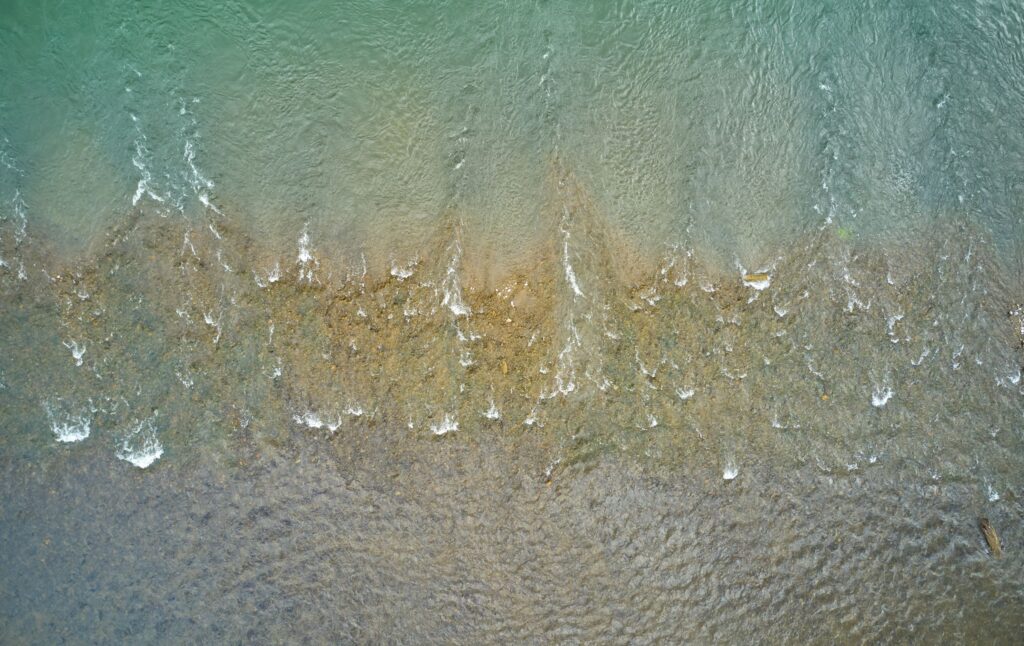
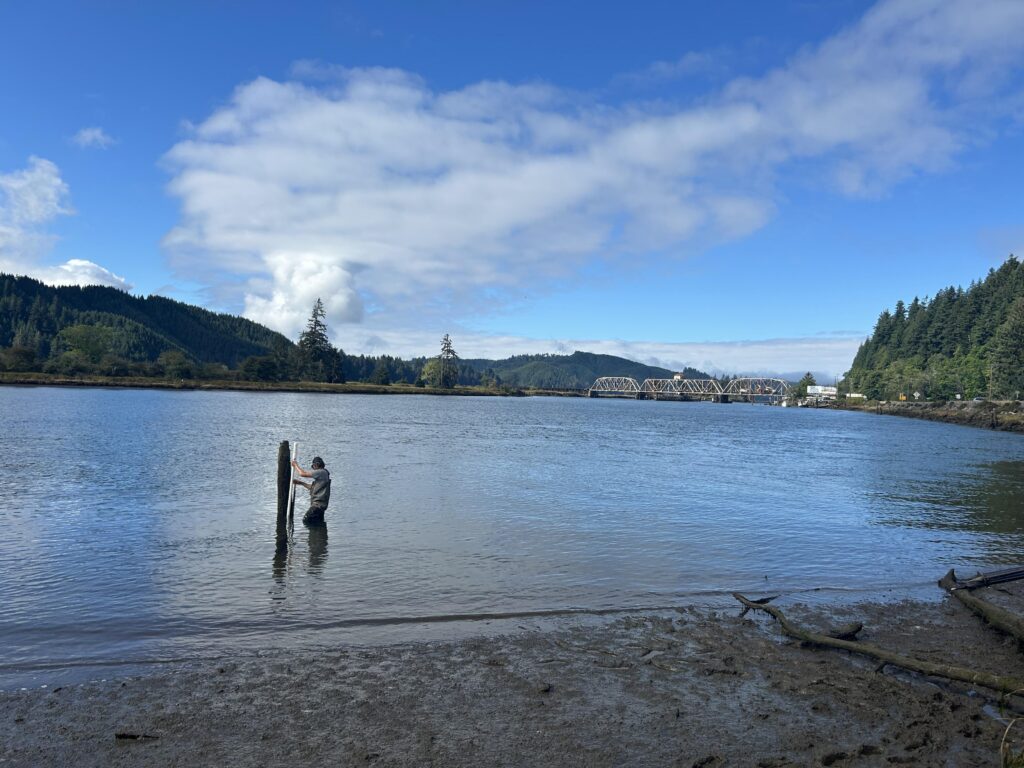
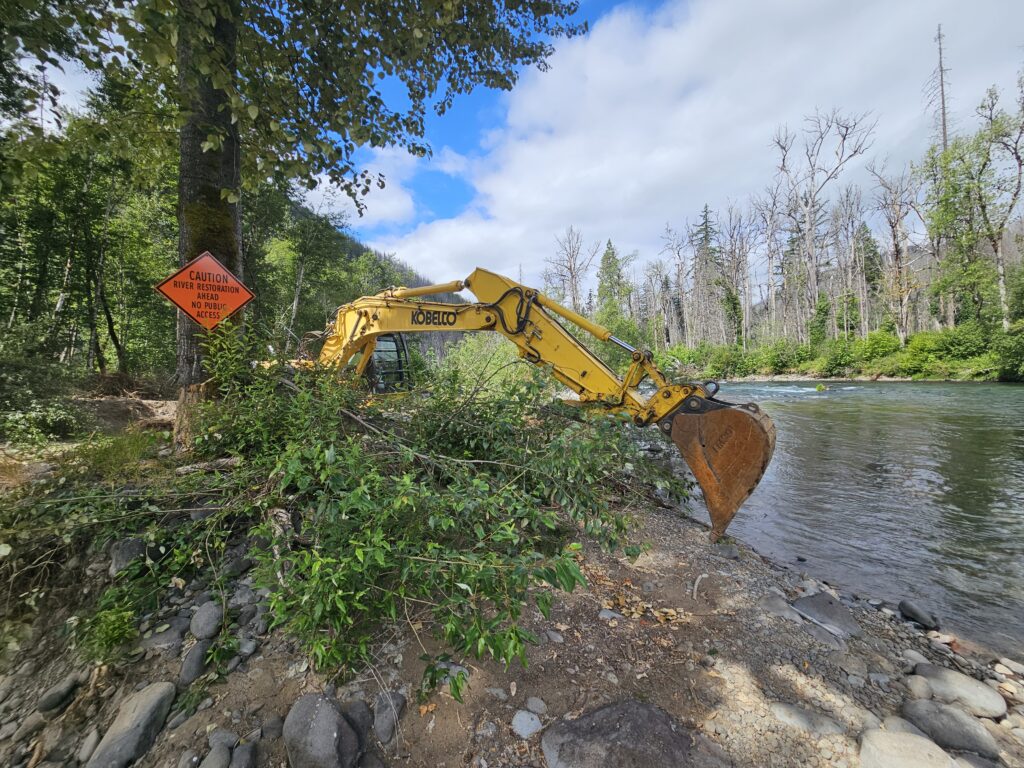
Photo captions clockwise from upper left: (1) An excavator works to restore connections between the river and its historic floodplain at Finn Rock Reach on the McKenzie River. (2) A river side-channel meets the mainstem Willamette River at Green Island just outside of Eugene, OR. (3) Wood stacks sit ready to support tidal estuary restoration at haich ikt’at’uu on the Siuslaw River. (4) Ferguson Creek runs through conservation lands in the Long Tom watershed.