Reflections on Measure 20-373
McKenzie River Trust Executive Director Joe Moll shares his reflections on the proposed “Lane County Watershed Bill of Rights” (Measure 20-373).

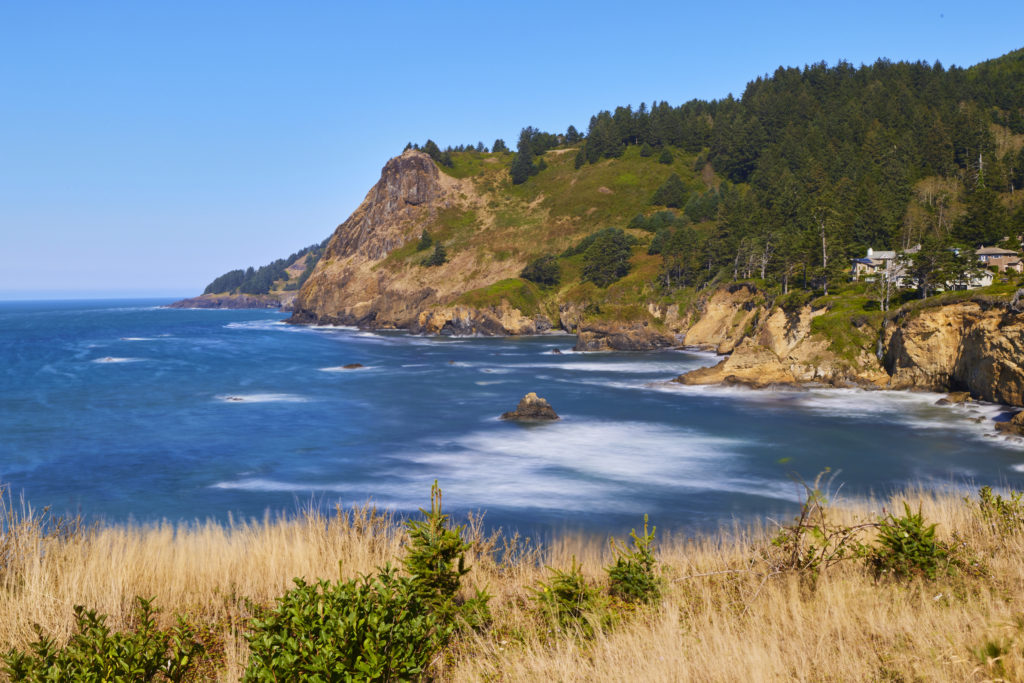
In 2021, with the support of members like you, McKenzie River Trust deepened our investments to protect and care for land and water on Oregon’s central coast. Soon after opening our coast office in the summer of 2021, we learned of an immediate need from partners at the Confederated Tribes of Siletz Indians and Lincoln County. A 27- acre property located off of highway 101 was on the open market and at risk of development.
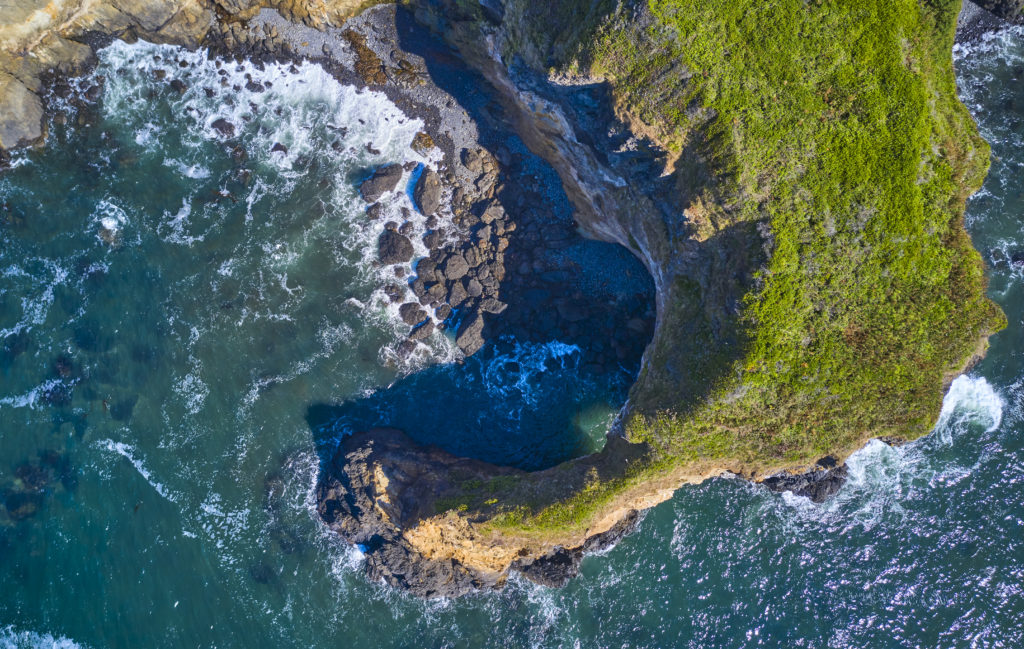
Working in collaboration with our partners, McKenzie River Trust was able to secure a bridge loan to purchase the property as an interim landowner in August of this year. We’ll hold the property until it can be transferred to the Confederated Tribes of Siletz Indians in the coming years. The property, known as Cape Foulweather, is at the heart of Siletz territory, and adjoins Otter Crest State Scenic Viewpoint just north of Newport, OR. Nearby Marine Gardens, State Parks and Marine Reserves highlight the abundance of this area for a variety of plants and animals.
In the intertidal zone of the Pacific Ocean, harbor seals congregate to rear their pups on the water’s edge. Nearby kelp forests provide important food and shelter for an abundance of marine life which flourishes in the ever changing tidescape. Jutting abruptly from the ocean, the property rises across steep and rare salt-spray meadows. These meadows provide critical habitat for threatened Oregon Silverspot Butterflies who rely on this niche habitat for food and breeding. In the upper reaches, meadows transition into dense stands of Spruce trees and native understory. These coastal habitats are at the heart of important cultural practices for the Siletz people.
To purchase the property, McKenzie River Trust used private donations, support from the Lincoln Land Legacy Program of Lincoln County and a low-interest loan from Craft3’s Conservation Bridge Fund. Over the coming year, we’ll work with good people like you to pay off that loan and seed funding for the long-term stewardship of this special place. The conservation of Cape Foulweather ensures ecological and cultural connections from land to sea, and weaves a tapestry of abundance across generations.

McKenzie River Trust Executive Director Joe Moll shares his reflections on the proposed “Lane County Watershed Bill of Rights” (Measure 20-373).

McKenzie River Trust is pleased to announce it is applying for its third accreditation renewal through the national Land Trust Alliance. The land trust accreditation program recognizes land conservation organizations that meet national quality standards for protecting important natural places and working lands forever. The public is invited to comment through Monday, December 22nd, 2025
More than four years ago, McKenzie River Trust expanded our work into Lincoln County to help safeguard this special place. Now, we’re carrying forward the good work of the Central Coast Land Conservancy and expanding impact across the Yaquina River watershed.
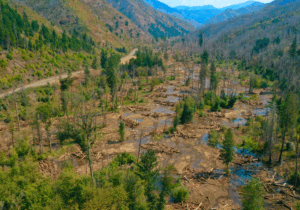
The completion of restoration at Quartz Creek bolsters a growing network of efforts to protect water and wildlife across the McKenzie River watershed.
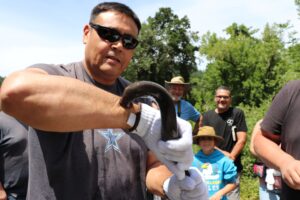
In late June, Pacific Lamprey were released into the upper Long Tom River, marking the first time these ancient fish have swum in this part of the watershed in nearly 100 years. Part of a decades-long restoration initiative, the release was carried out by fisheries staff from the Nez Perce Tribe and the Confederated Tribes of the Umatilla Indian Reservation (CTUIR), who harvested the adult spawning fish at Willamette Falls, collected DNA samples, and then released them into the Long Tom River.
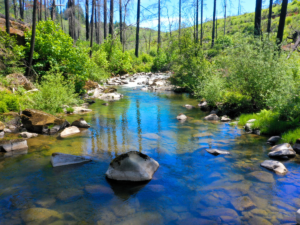
In May, McKenzie River Trust completed the purchase of 175 acres of high-priority habitat from Weyerhaeuser. This acquisition reflects the strength of thoughtful collaboration between conservation organizations and industry partners as we work to protect special places for Oregon’s communities, who rely on both commercial timber and natural habitats for economic and community health.
Sign up for our monthly newsletter and get the latest conservation news and events.