
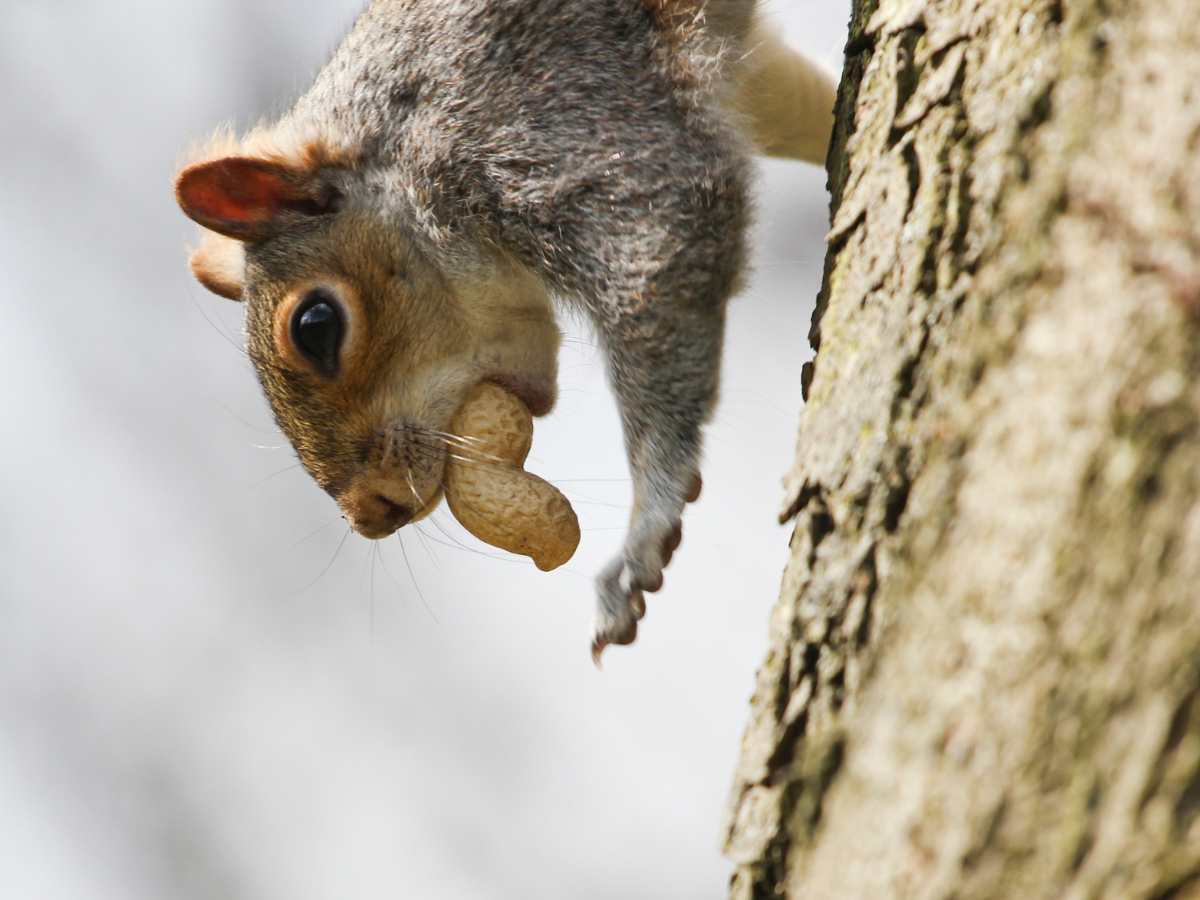
With temperatures still brushing the 100s, it’s hard to believe that winter is, indeed, coming. Though it’s not yet time to pull out your sweater collection, the signs of changing seasons are subtly underway in yards, parks, and natural areas. As the days become shorter, animals react in several distinct ways, transitioning from a season of abundance to one of preparation.
Squirrels are probably the best-known preppers in the animal kingdom. They dig holes here and there to cache nuts for the winter, an approach referred to as scatter-hoarding. As native hazelnut and oak trees enter the final weeks of ripening, squirrels are just beginning the work of harvesting and storing these high-fat, high-protein foods. But how will they know where to find them three, five, or seven months from now?
Contrary to the popular belief that squirrels lose track of up to 90% of their nut caches, science has shown that they’re actually quite adept at relocating their food—and they remember a lot more than we might imagine.
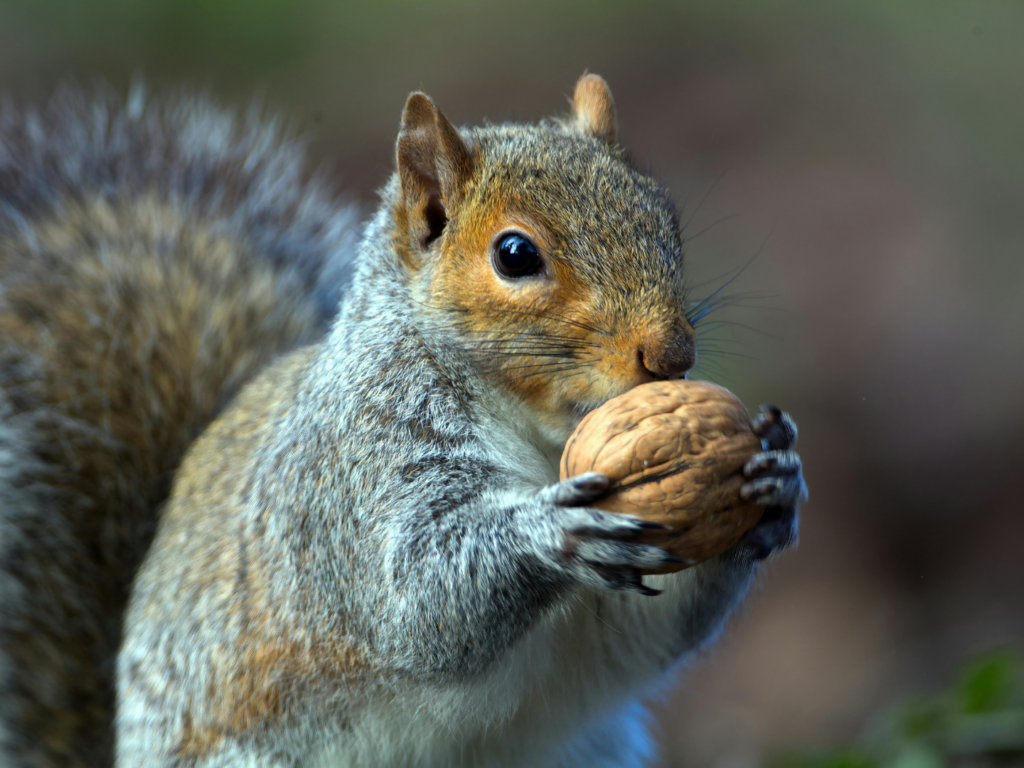
Squirrels use a mix of spatial mapping and scent to relocate their caches, but a study from UC Berkeley indicates that the way they bury their food is surprisingly sophisticated and may help reduce the memory load needed to retrieve it. The researchers found that squirrels use a mnemonic technique called “spatial chunking” to sort and bury their nut stores by type—and perhaps by qualities like size, nutritional value, or taste.
During the study, researchers spent a year and a half feeding 45 free-ranging squirrels one nut at a time, then tracking the nuts that weren’t immediately eaten using GPS. They found that the squirrels tended to store like with like. For instance, they buried almonds in one area and hazelnuts in another. This behavior is thought to help squirrels find the foods they seek as the seasons—and their nutritional needs—change.
Spatial chunking is just one neat thing squirrels get up to when caching their food. They also take bigger risks with higher-value foods, sometimes burying the tastiest morsels in open areas where they face a greater chance of predation. They even practice deception, trying to trick other squirrels and birds that may be watching them.
All in all, these clever cachers are up to much more than we might generally imagine. As hazelnuts and acorns finish ripening in the weeks ahead, we hope you can take some time to enjoy these smart squirrels in action as they sort and hoard for the months ahead.
P.S. Think squirrels plant trees? It turns out they sometimes crack their nut shells to prevent germination. Clever little fuzzballs!