

Spring is a time of emergence. Cherry blossoms begin to speckle side streets with pinks and whites, willow trees explode with leaf buds, and just warm enough weather draws gardeners back outside to prepare their soil for planting. Here in the Pacific Northwest’s forests, another emergence is underway as amphibians of all kinds make use of plentiful water and warming temperatures to mate, lay eggs, and ensure the next generation of their kind.
Among these cool-bodied brethren are Oregon’s nineteen species of salamanders. From the elusive Coastal Giant Salamander, which can grow to more than a foot in length, to the dainty Oregon Slender Salamander, which stops just shy of five inches, the salamanders of Oregon are as diverse as the forests and streams they call home.
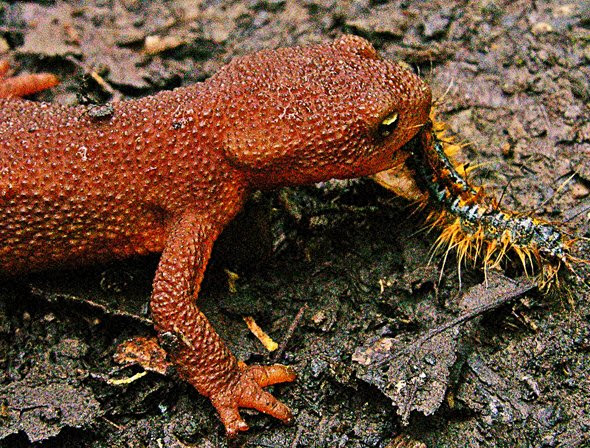
Perhaps the most recognizable salamander in our region is the Rough-skinned Newt. With a tawny brown back and bright orange underbelly, newts quickly catch the eye as they make annual migrations between forests and lowland streams or ponds. In spring, they can travel miles to gather in mass and mate. Unlike most other salamanders, which are primarily nocturnal, newts are active both day and night, making your chance of seeing them a bit more likely. This bold activity is likely due to their infamous toxicity, which makes them inedible to nearly everything except a few species of garter snakes.
So where do you find the other eighteen salamanders of Oregon? First, you’ll need to learn a bit more about their unique lives and habits. Many salamander species do not have lungs and instead breathe through their skin. Lungless salamanders have exquisitely thin skin made up of different cell types that make mucus, pheromones, and often, toxins. This thinness allows for direct air exchange between blood cells and capillaries close to the surface, but also makes them more vulnerable to hot and dry weather. This likely contributes to their nocturnal behaviors, encouraging them to hunker down in dark, moist places during the day and then venture out at night when temperatures are lower and humidity is usually higher.
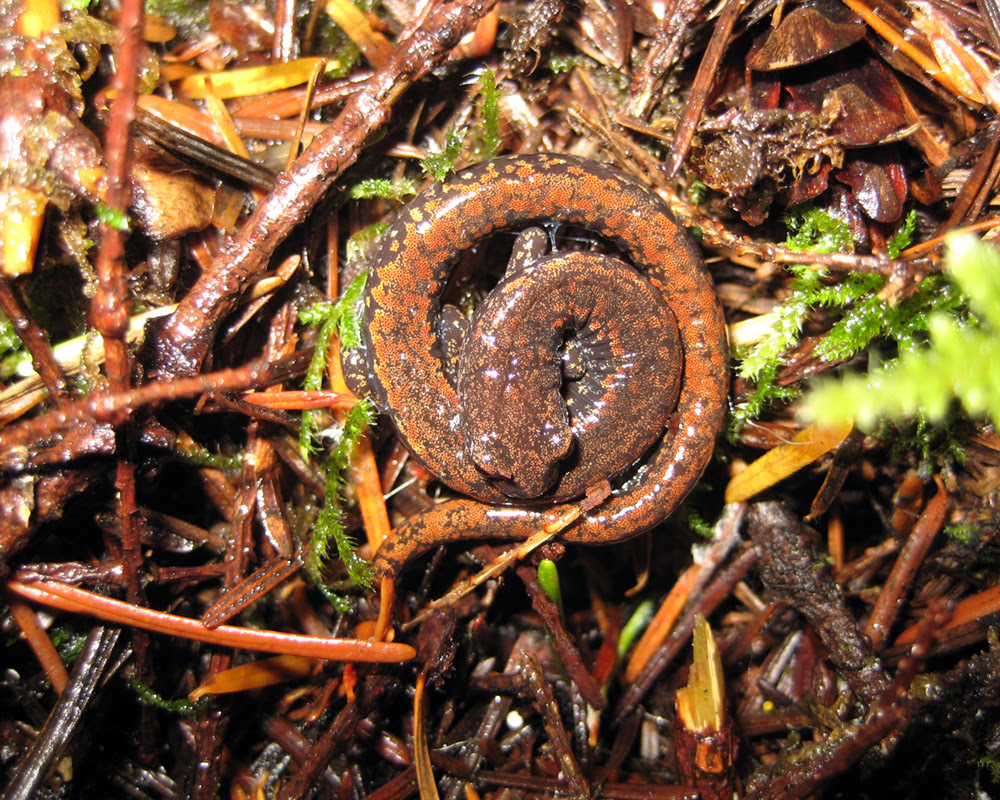
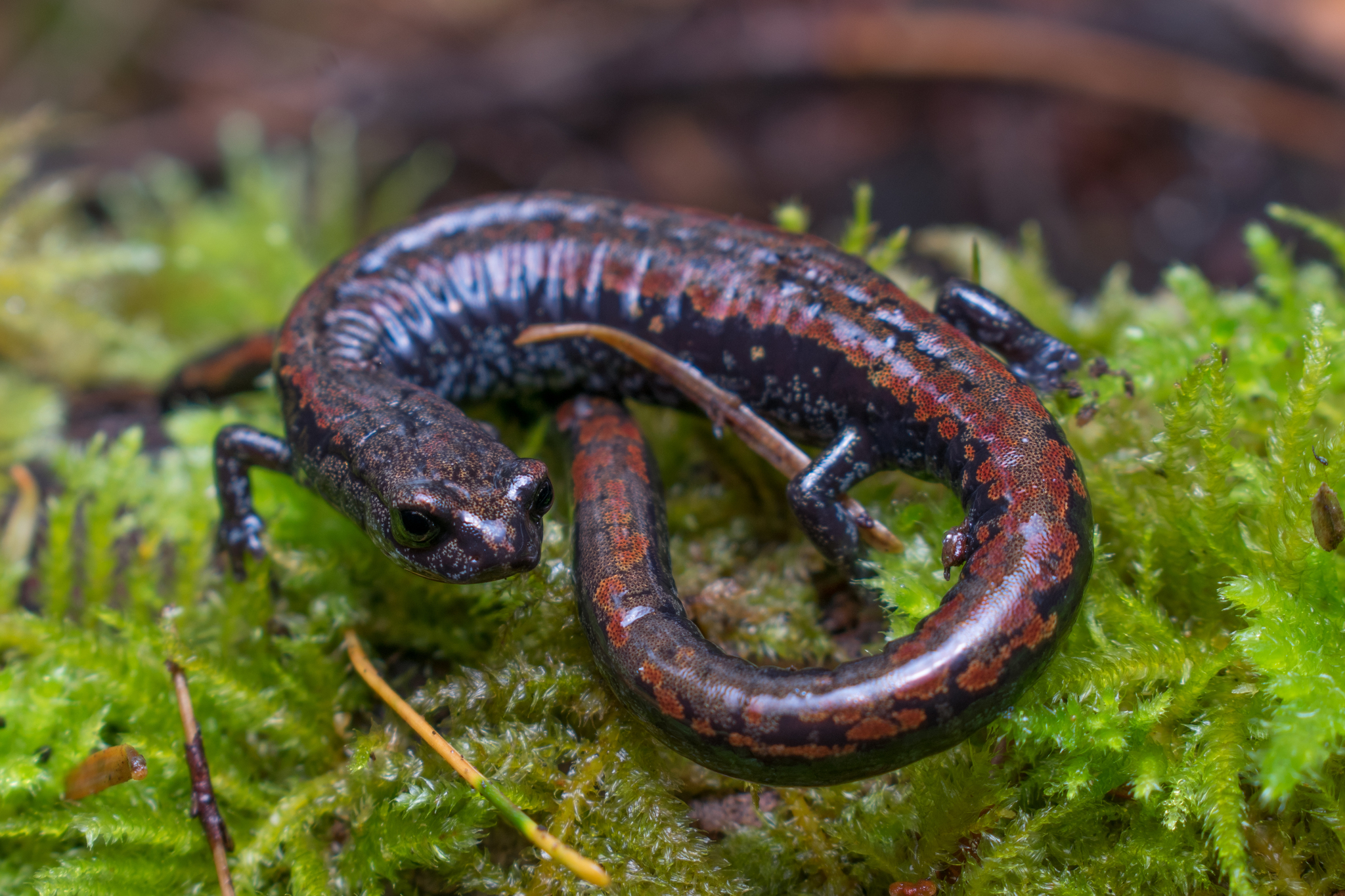
One of the more incredible lungless salamanders is the tiny Oregon Slender Salamander, which is currently proposed for listing under the Endangered Species Act. As its name suggests, this salamander has a long, thin body with small pairs of arms and legs. Growing to only a few inches in length, these salamanders can easily be mistaken for worms. This elusive salamander is only found on the west slopes of Oregon’s Cascade Range in areas where there is plentiful decaying wood and moisture. Like all other lungless salamanders, they lay their eggs on land rather than water, making healthy forest habitats particularly important as they hold more moisture than more disturbed landscapes. These eggs hatch into fully-formed juveniles measuring less than half an inch long! Once hatched, these small salamanders will spend their entire lives within one mile of the forest foraging on insect larvae, spiders, and worms. Due to their limited distribution, small home ranges, and reliance on downed wood, they are especially vulnerable to timber harvest practices, and efforts are underway to develop assessment plans to inform future conservation.
(top) An Oregon Slender Salamander is curled and camouflaged against the forest floor. Douglas Fir needles denote the small size of these elusive creatures. Photo courtesy of East Multnomah SWCD. (bottom)An Oregon Slender Salamander, courtesy of Oregon State University.
All of Oregon’s salamander species appreciate moderate temperatures and ample moisture. You can find salamanders resting in moist places, including beneath the bark of fallen trees or in burrows in the ground. In fact, several Oregon species live their entire adult lives underground unless heavy rainfall pushes them out of their homes. As spring rain blankets forest floors, warming temperatures make it more likely for salamanders to leave their burrows and hidey holes and move around in the open. While hiking this spring, be sure to watch your step as newt migration is now underway across the western part of the state. And, if you do go poking around the forest floor in search of salamanders, please remember that humans are the biggest threat to salamander safety. Keep your hands to yourself, and if you do move any items in the forest, be sure to return them to the way in which you found them.