Across the Pacific Northwest, forests capture and store water. In healthy forests, diverse tree canopies slow the rain as it reaches the ground. Then it seeps through layers of moss, duff, and soil before trickling into small streams that gather and weave a complex river system across the landscape.
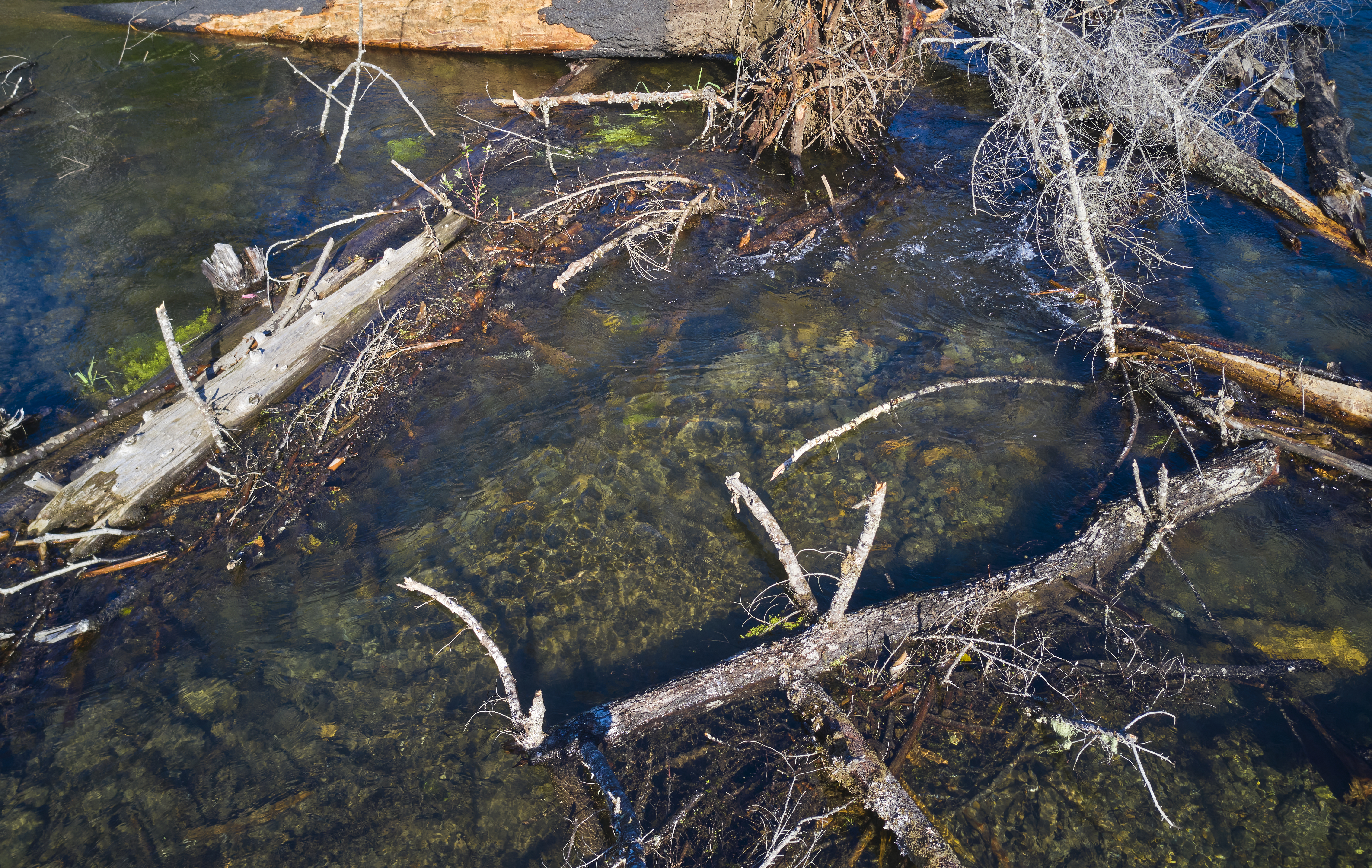
Before settlers moved west across the United States, these streams and rivers were full of wood. Fallen trees are a natural part of forest cycles of growth, death, and renewal. When settlers arrived, they cleared rivers to make way for boats and barges that carried goods and timber. Logs from upper watersheds were floated downstream to mills, often located where rivers slow and widen.
This removal of wood helped shape the Oregon we know today, but it also obscured our expectation of what rivers look like and how they function. Today, clear waterways can make recreation safer for boaters and anglers. But removing wood has made rivers less suitable for some native species, including beaver, trout, steelhead, and salmon.
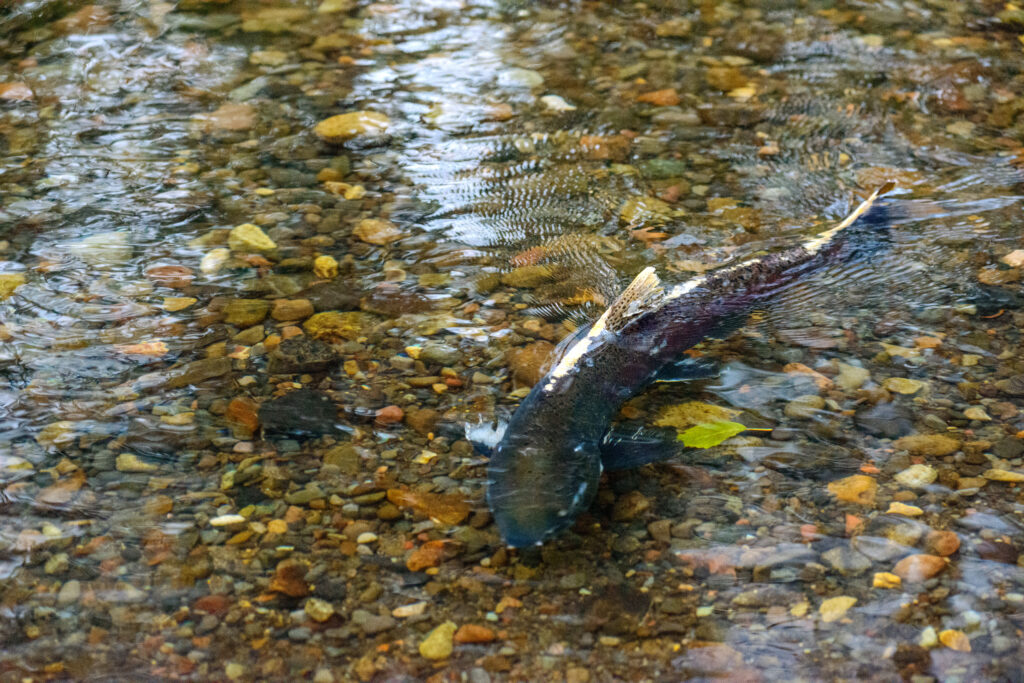
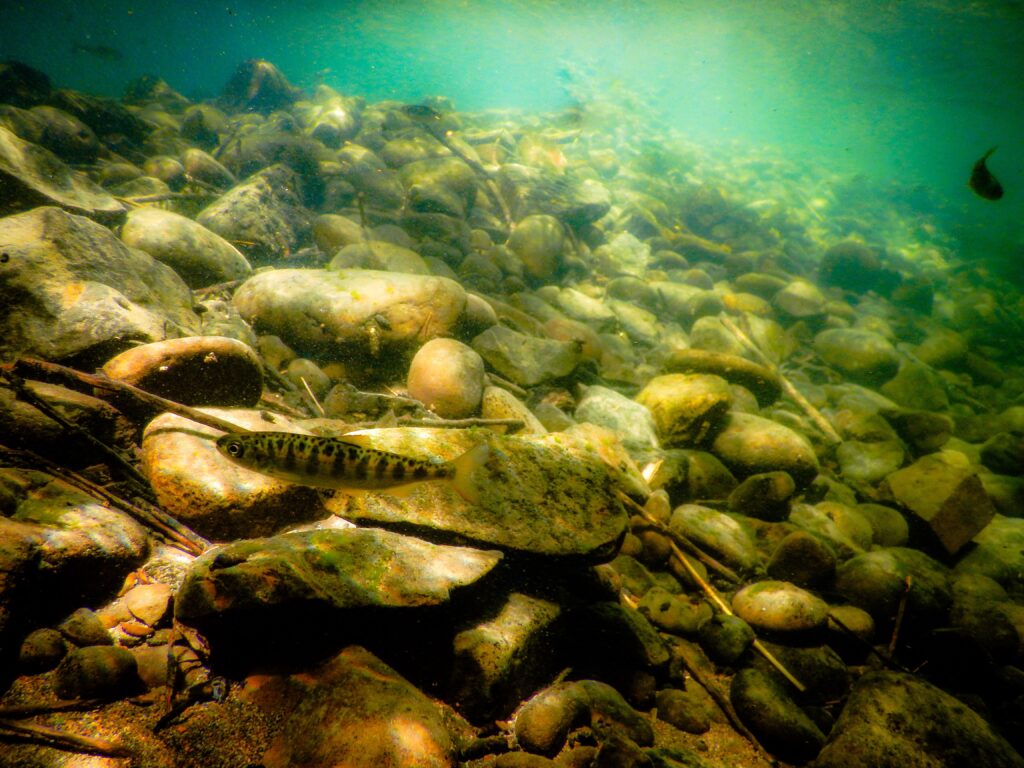
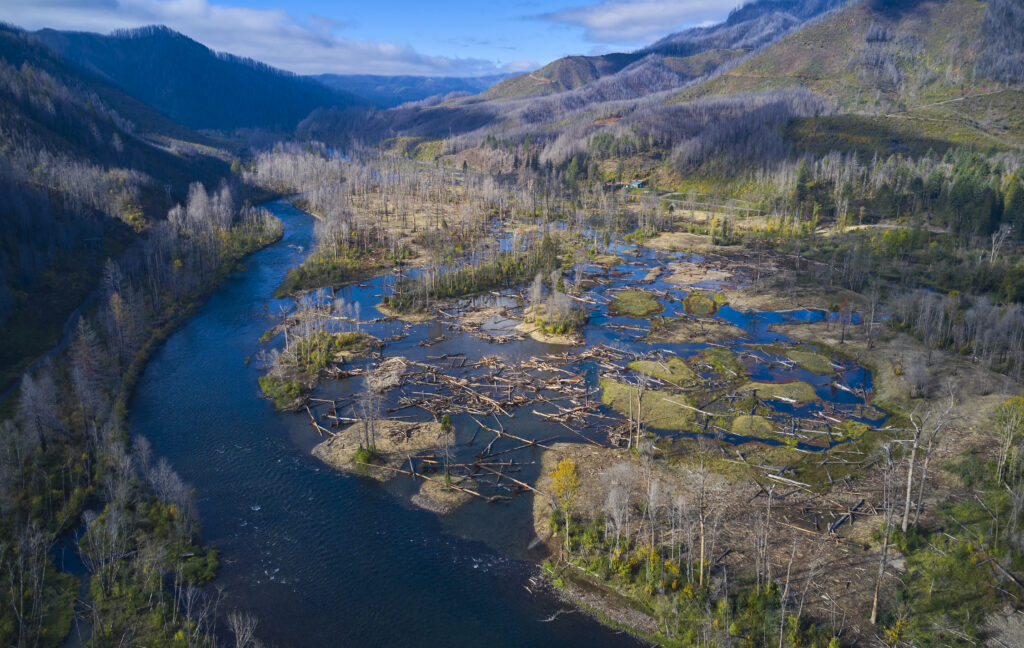
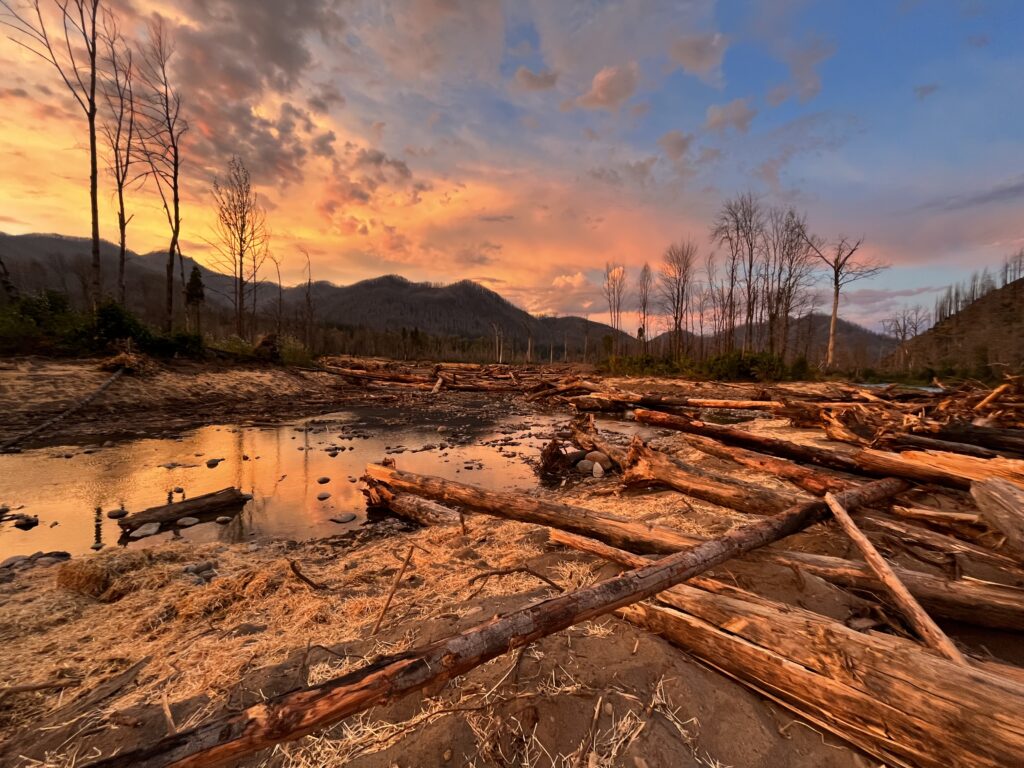
Now, restoration practitioners across the state are thoughtfully working to return wood to rivers, especially in areas where salmon spawn. After decades of restoration work, some native fish populations are beginning to stabilize, but there is still more to do. In recent years, restoration has evolved to emphasize natural processes. In a river setting, this means broadly reconnecting rivers to their floodplains and adding more wood back into streams than people may be used to seeing.