
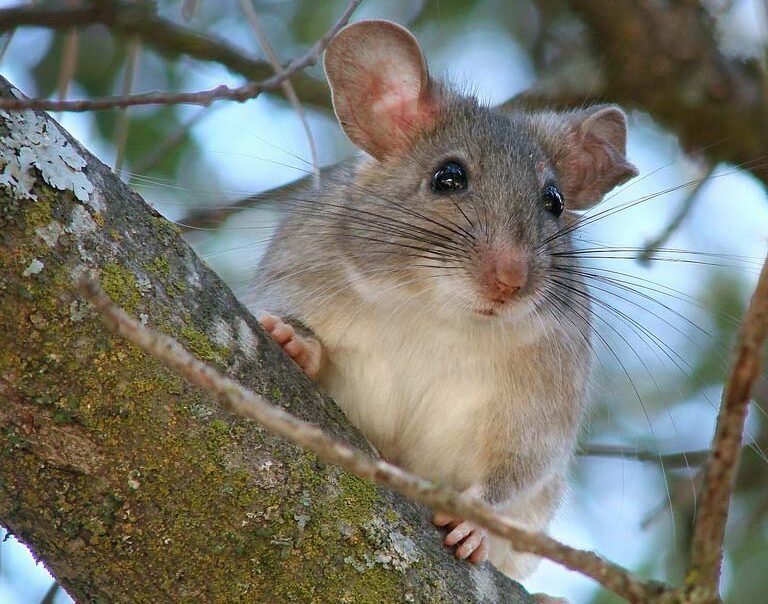
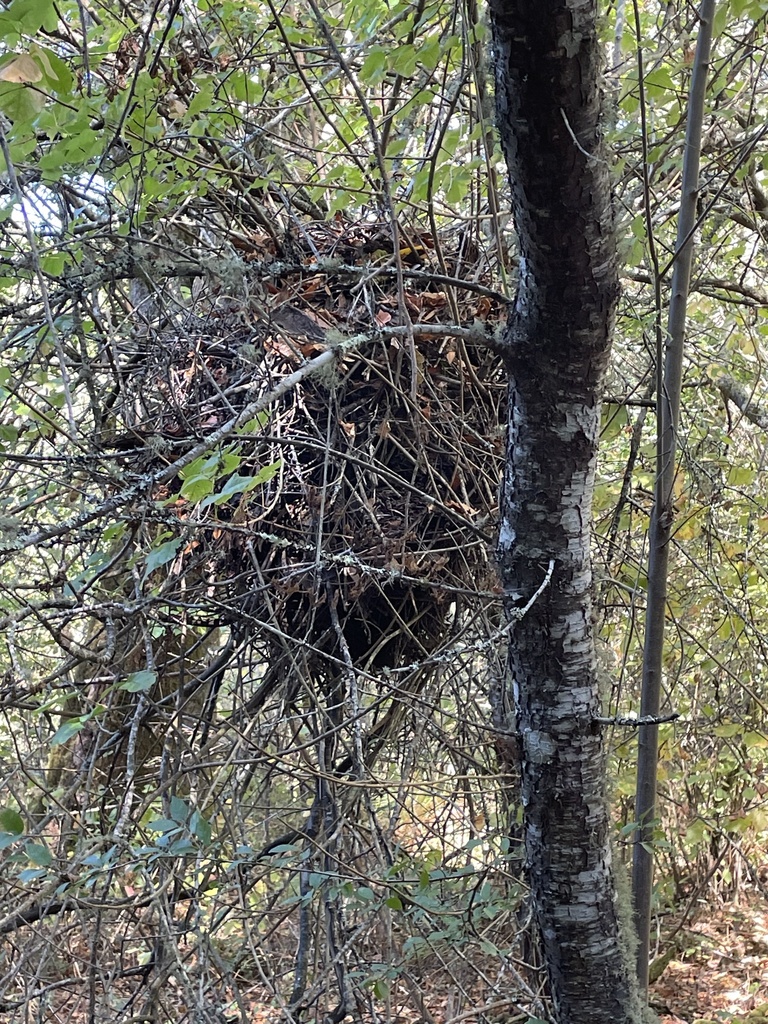
Wandering through a riparian woodland, where sprawling branches — dripping in lush moss and lichen — stretch outward from ancient trees, the understory and forest floor are diverse and teeming with signs of life. Dangling above nurse logs and decaying downed wood, an unassuming clump of what appears to be haphazardly piled sticks and debris is gathered and suspended by branches. At about three to five feet around, it seems too large to have been deposited by chance. Looking closer, more piles appear, some on the ground at the bases of trees and others nestled around nurse logs, with tiny, narrow paths leading to small entrances. These masses of sticks are not here by chance. They are the elaborate homes of the native dusky-footed woodrat.
The dusky-footed woodrat (Neotoma fuscipes) is found only on the Pacific coast, specifically in northern California and western Oregon. This small mammal, often referred to as a “trade rat” or “pack rat,” due to its love of collecting shiny objects, prefers thick forests of coast live oak and native willow. Nocturnal by nature, you may never see a woodrat, but you can learn a lot about their lives from their impressive, intricate nests, which are called middens.
These huge dwellings play an important role in the social and familial lives of dusky-footed woodrats. Inside the midden, a network of tunnels leads to rooms with specialized functions, including nurseries, bedrooms, latrines, and designated storage areas for seeds, leaves, and other food sources. As a matriarchal species, female woodrats choose their mates and raise one to four young in their primary middens, while male woodrats retreat to tree nests after breeding. Successive generations build their own nests adjacent to their parents, and in some cases, mothers may “bequeath” the nest to a son or daughter and depart to live in another nearby satellite home. These middens last for decades, with some dating back 60 years or more.
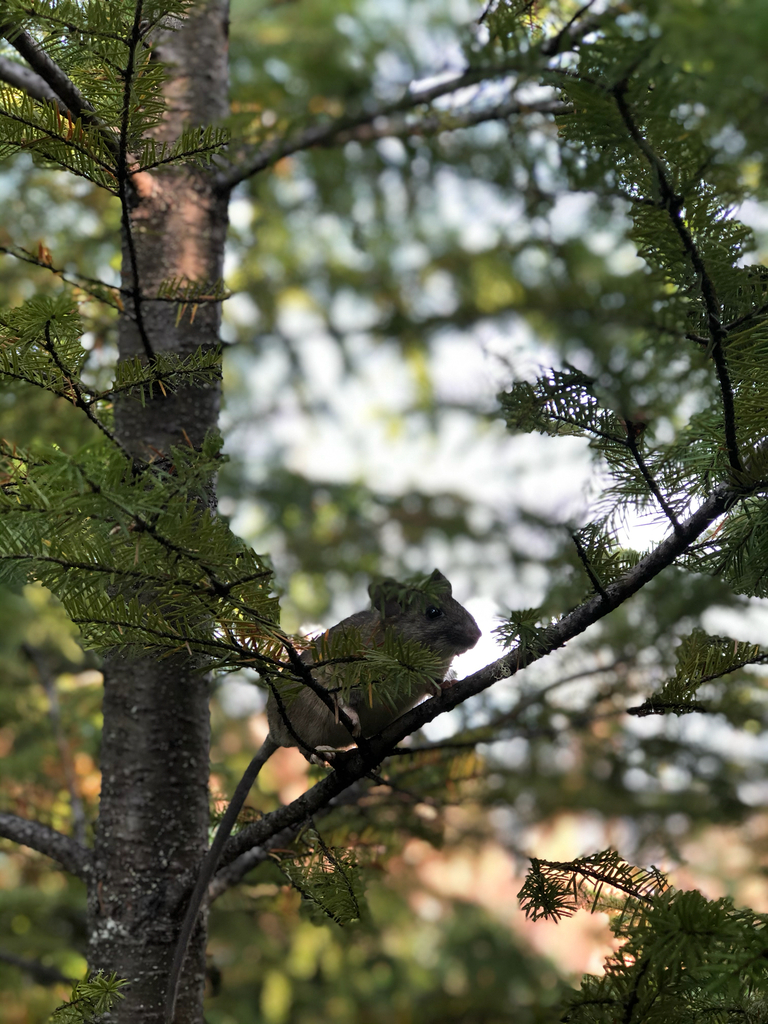
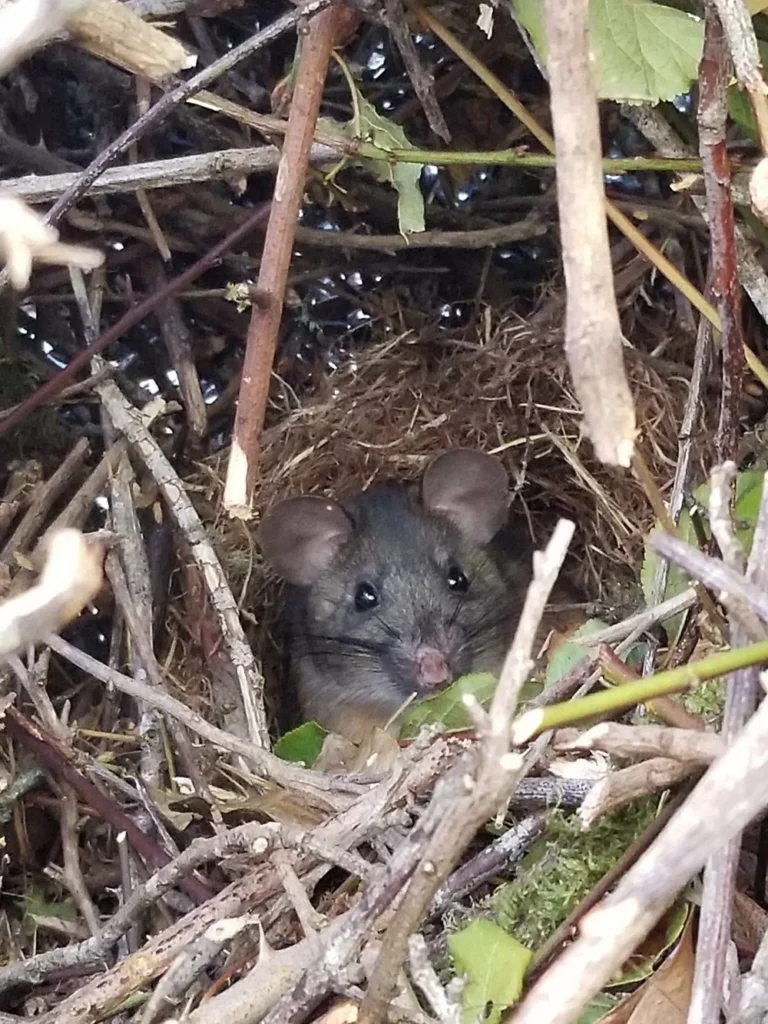
Thanks to the size and complexity of their middens, at home woodrats can evade most predators simply by hiding out of reach. But when it’s time to gather food or for young males to seek out new colonies, dusky-footed woodrats play a very important ecological role as a food source for other animals. Snakes, owls, and large mammals such as coyotes, bobcats, and foxes all consume woodrats, and in northern California, the abundance of woodrats has been particularly helpful for maintaining threatened northern spotted owl populations.
Throughout their lifetimes, woodrat middens host a wide variety of other animals who find shelter in their moist, cool tunnels, including other rodents, amphibians, and insects. In an interesting instance of mutualism and coexistence, sometimes rattlesnakes will wander into woodrat nests and enter dormancy. The resident woodrats will then construct a stick barrier separating the snake from the rest of the colony and benefit from the snake’s smell, which helps ward off other predators.
Through colder seasons and long dark nights when the landscape appears still and silent, our forests are teeming with life as animals forage, hunt, store food, and engage in complex social lives. As deciduous trees and shrubs lie leafless, it becomes easier to glimpse into the world of these unassuming creatures. Across conservation lands, middens suspended in canopies reveal the presence of these complex native mammals. Next time you pick your way through a woodland, observe closely for signs of these talented architects who help keep our forests thriving.

This guest field notes contribution was written by Maya Heikkinen. Maya served as an AmeriCorps member with the Northwest Youth Corps, supporting conservation action on local lands and rivers. Her fieldwork inspired her to learn more about woodrats after encountering their middens at The Nature Conservancy’s Cogswell-Foster property.