
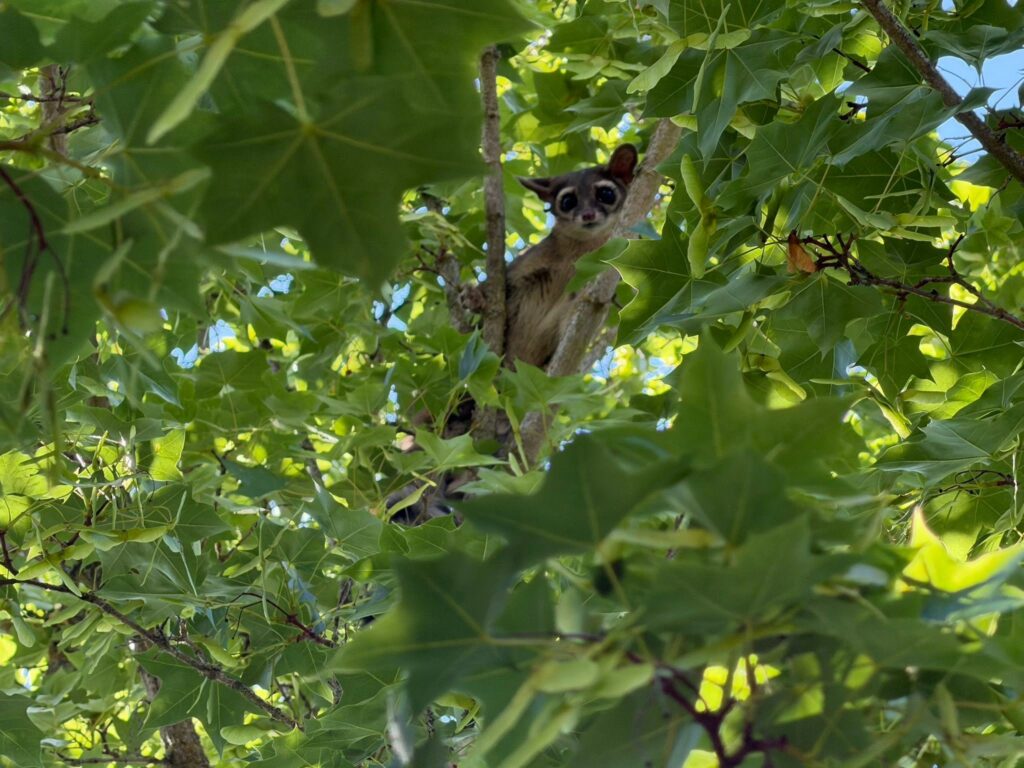
A few weeks back, the cutest wildlife mystery unfolded on local social media. A caring community member posted a photo of what they thought was someone's "lost lemur" in Springfield, Oregon.
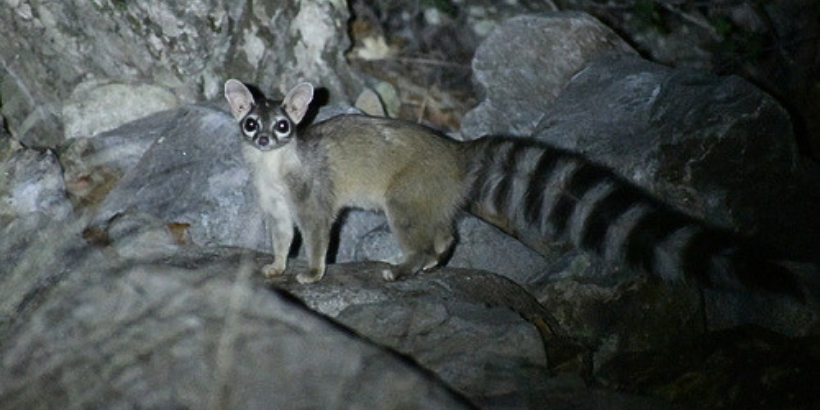
The animal certainly looked the part. With huge eyes, a tawny coat, and a black-and-white striped tail nearly as long as its body, it was easy to mistake for an escaped exotic pet. But the mystery had a much simpler answer. It was a native ringtail (Bassariscus astutus), peeking out from a maple tree before settling in for a day of sleep.
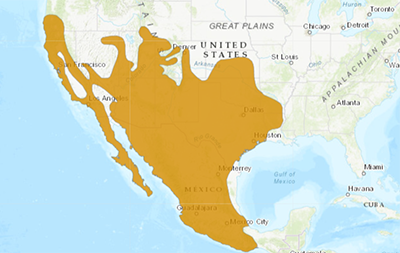
At the northern edge of their range, it's no surprise that many Oregonians have never heard of ringtails. Even the scientists who study them rarely get to see one in the wild. Unlike birds that announce themselves with songs or deer that are often spotted in fields, ringtails spend their days tucked away in tree cavities, rocky crevices, and hollow logs. They emerge only after dark, moving so quietly and quickly that they often disappear without a trace. Their secretive nature makes them one of North America's least-studied mammals.
A close relative of raccoons, ringtails are about the size of a western gray squirrel and weigh just one to two pounds. Their oversized eyes gather every bit of available moonlight, while their long, bushy tail acts like a balancing pole as they race through the night.

If there were an Olympic event for climbing, ringtails would be medal contenders. They scramble across fallen logs, leap between branches, squeeze through narrow rock cracks, and scale near-vertical cliffs with ease. Their secret? Their hind feet can rotate almost 180 degrees, allowing them to climb headfirst down trees and rocky walls as confidently as they climb up. Across much of the Southwest and Mexico, ringtails navigate steep canyon walls, rocky outcrops, and even towering cacti. Here in Oregon, they weave through mixed conifer forests and wooded stream corridors, always staying close to fresh water.
Ringtails have picked up another unusual nickname over the years: "miner's cats." During the Gold Rush, miners often found ringtails sleeping in abandoned mines. Some even welcomed them into their cabins, where the nimble hunters earned their keep by catching mice and rats.
Despite their remarkable abilities, much of a ringtail's life remains a mystery. Females raise one to four young each spring, and the kits spend about six months with their mother, learning to climb, hunt, and navigate the world before heading out on their own. Scientists are still uncovering basic details about how far ringtails travel, where they establish territories, and how their populations are changing because the animals are simply so difficult to observe.
The Springfield ringtail also serves as a reminder that wildlife can thrive surprisingly close to people when healthy habitat remains. Just a few miles away from the sighting, McKenzie River Trust's 1,317-acre Willamette Confluence property offers a rich mosaic of floodplain forests, oak woodlands, wetlands, and riverside habitat where wildlife can find food, shelter, and connected places to move between habitats and across the landscape. While most visitors are more likely to spot beavers, otters, or soaring eagles, it's exciting to imagine a ringtail quietly making its nightly rounds, unseen by nearly everyone.
As temperatures and weather patterns continue to change, ringtails may gradually expand farther north. Whether they do so successfully may depend on having healthy forests, clean rivers, and connected habitats to move through.
By protecting and caring for places like the Willamette Confluence, we're helping ensure Oregon's lands and waters remain resilient for wildlife both familiar and seldom seen. And somewhere, just beyond the reach of our flashlights, one of Oregon's elusive acrobats may already be on the move.

Shaped by Water: Freshwater Sponges found at Green Island
Beneath the surface of Green Island’s side channels, an unexpected animal is thriving. Freshwater sponges that build delicate skeletons of microscopic glass around the rivers’ flow. These fascinating animals filter the river through their bodies and can glow electric green with the help of algae. Their discovery has opened a window into a strange and largely unseen freshwater world where an animal completely different than ourselves is making its home among the current.

Ringtails: The Elusive Acrobats of Oregon
What looked like a “lost lemur” in Springfield turned out to be one of Oregon’s most elusive native mammals. Meet the ringtail, a remarkable nighttime acrobat with incredible climbing abilities, a mysterious lifestyle, and a surprising connection to nearby conservation lands.

From Flame to Flower: How Prescribed Fire Supports Wildflower Prairies
Tribes, agencies, and nonprofits are working together to bring prescribed fire back to the landscape. Prescribed fires in spring and fall help restore balance. They limit the spread of invasive plants and reduce the risk of larger, more destructive fires. By supporting prescribed fire, we can help restore these landscapes and ensure wildflowers continue to thrive.