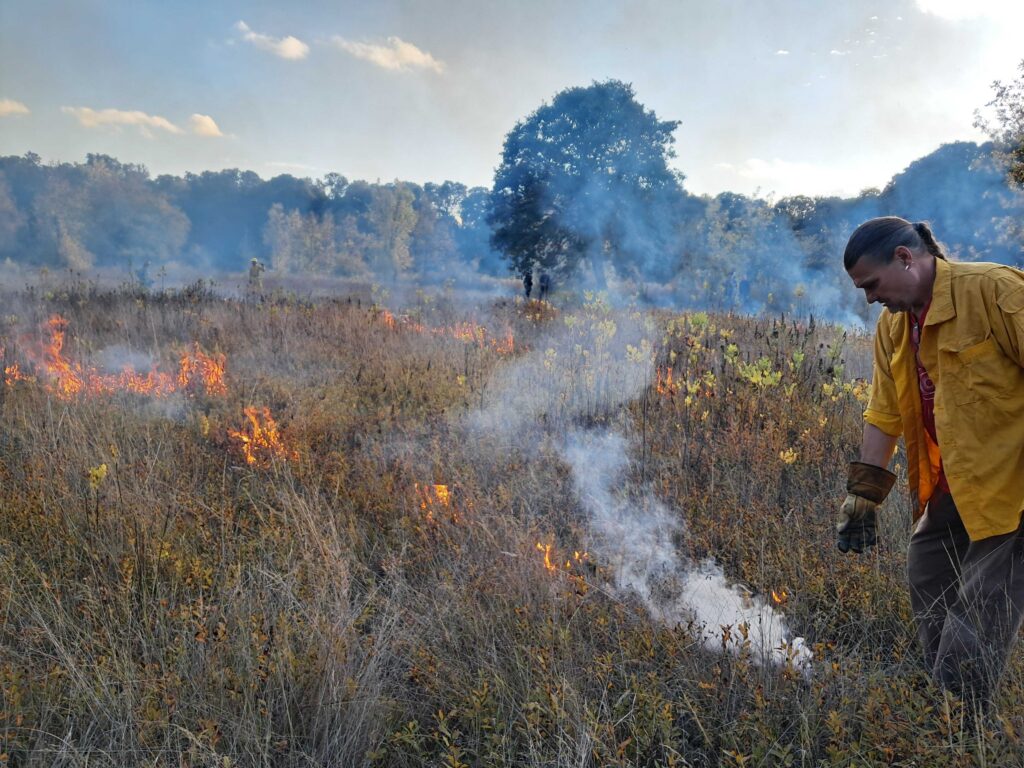
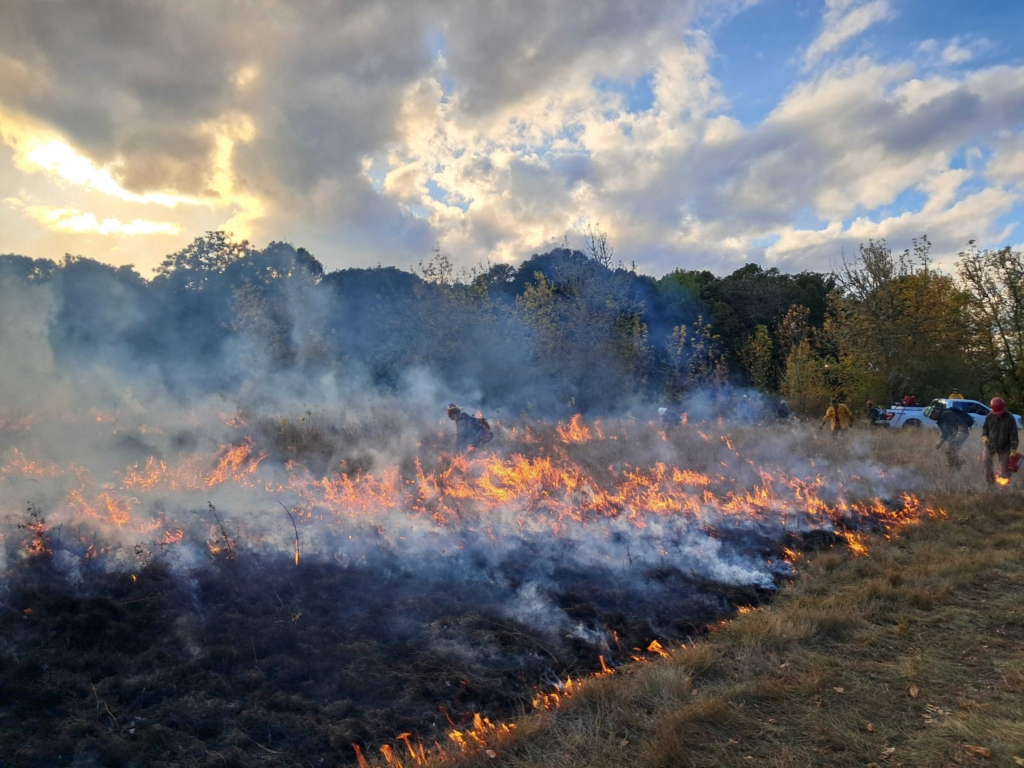
Each fall, a short window of opportunity opens to care for special lands in the Willamette Valley. As summer heat eases and fall rains return, land managers watch the weather closely, hoping for the right conditions to safely return fire to local prairies, wetlands, and oak habitats.

Following early September rains, McKenzie River Trust staff are once again working alongside local partners to conduct prescribed burns across the Eugene-Springfield area. Through thoughtful partnership, our stewardship team will support several burns on both lands cared for by McKenzie River Trust and properties managed by our partners.

This collaborative approach allows trained crews, equipment, knowledge, and capacity to move across property lines. By working together, partners are building regional capacity to bring back good fire, one burn at a time.

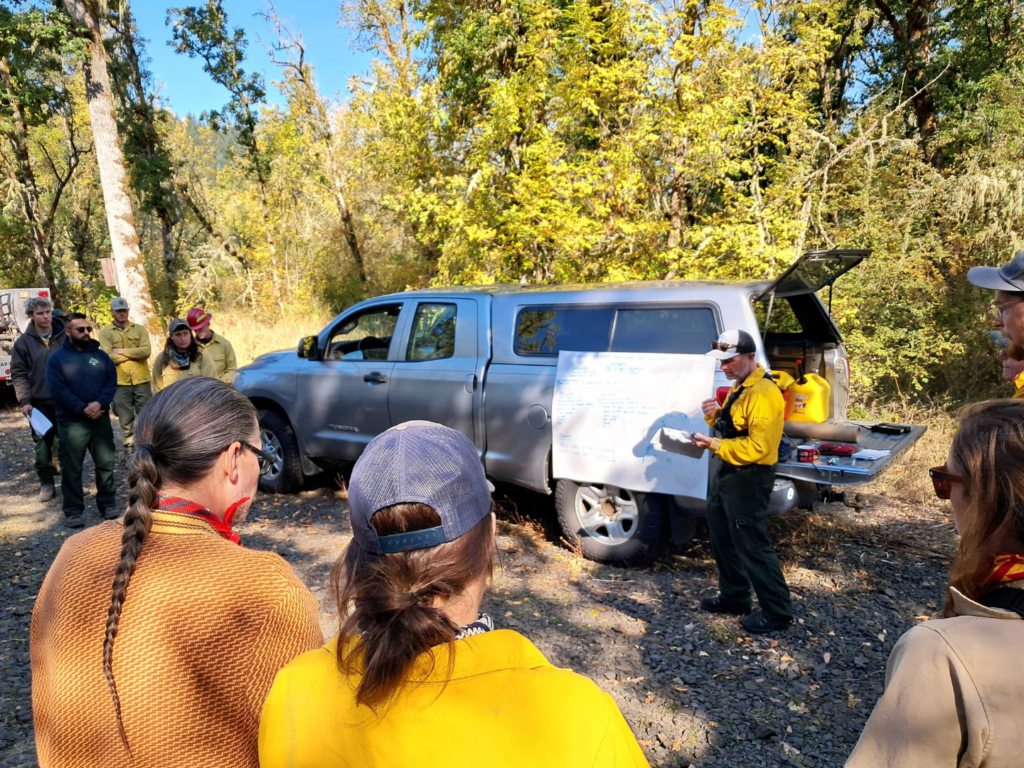
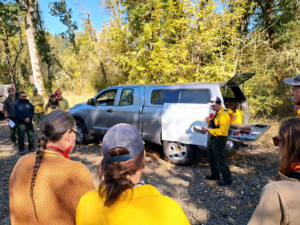
Certified Burn Manager, Brent Ross, briefs the burn team ahead of an ecological burn at Coyote Spencer Wetlands in 2024

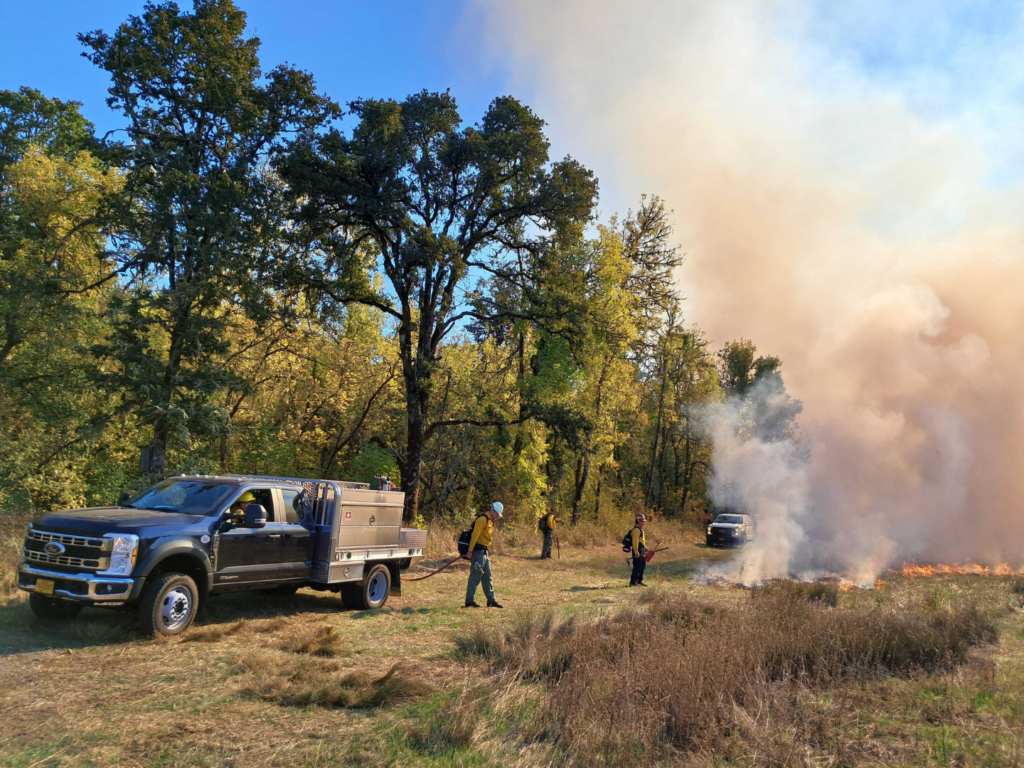
Returning fire to Coyote Spencer Wetlands

One of many planned burns this fall will take place at Coyote Spencer Wetlands, a 225-acre conservation area owned and cared for by McKenzie River Trust in partnership with the Long Tom Watershed Council.

If we’re able to get fire on the ground, this will be the second ecological burn reintroduced to this special area, which supports an abundance of native plants and animals. 

Alongside fire, this area is managed through mowing, invasive plant removal, native planting, and other stewardship practices to maintain the site’s wetland prairie habitats. 

Expanding our Reach

If safe conditions for implementing fire persist through early fall, McKenzie River Trust is excited to pursue a burn at the Marvin and Marie Spores Conservation Area. 

Following several seasons of site prep and baseline monitoring, this incredible wetland area is ready for the return of fire, an action that would significantly benefit native wildflower prairies found across the site. If conditions allow the burn to proceed, it would mark the first use of ecological fire at the property since McKenzie River Trust purchased it in 2020.

Whether or not fire is returned to this area this season will depend on something that guides every burn decision: conditions have to be right.

What makes a prescribed burn safe?

Unlike a wildfire, an ecological burn is carefully planned long before a flame touches the ground.

Each site has its own externally approved burn plan, and trained professionals closely monitor conditions leading up to and during any activity. That includes temperature, humidity, wind speed and direction, moisture levels, vegetation conditions, and the amount of smoke expected.

A burn only moves forward when those factors fall within an established range. If conditions change or do not meet the requirements of the burn plan, the burn is postponed or canceled altogether.

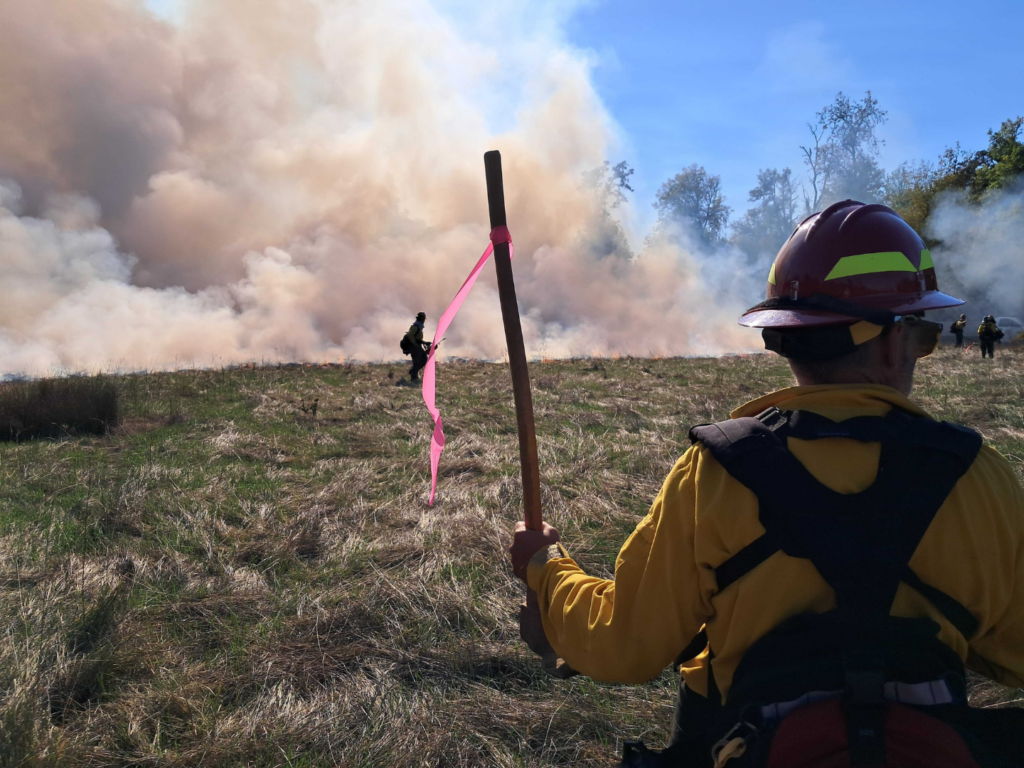
On the ground conditions are carefully monitored before, during, and after each ecological burn.

Crews also prepare the site ahead of time, establishing control lines, positioning people and equipment where they are needed, and coordinating closely throughout the burn itself. The goal is a fire that stays within the planned area and moves across the landscape at the intended pace and intensity.

Smoke is also an important part of the planning process. McKenzie River Trust and our partners coordinate with the Lane Regional Air Protection Agency (LRAPA) and the Oregon Department of Forestry to consider air quality, smoke management, weather, and other burning taking place across the region. This coordination helps land managers look beyond the boundaries of an individual property and consider conditions across the broader community and airshed.

Above: Joe Scott, a member of the Confederated Tribes of Siletz Indians, uses traditional methods to light an ecological burn. While the use of prescribed fire is growing across the West, cultural burning is an enduring practice carried forward by Tribal Nations and Indigenous communities.

Why bring fire back?

Fire has shaped Willamette Valley landscapes since time immemorial.

Before Euro-American settlement, the valley contained more than 1.5 million acres of prairie and oak savanna. Kalapuya people actively tended these landscapes through cultural practices that included regular burning. These low-intensity fires helped maintain open prairie and oak habitats and supported the plants, wildlife, foods, and other resources connected to them.

Over time, western settlement, conversion of land for forestry, agriculture, and development, and widespread fire suppression policies dramatically changed the valley. Today, only a fraction of historic prairie, savanna, and oak woodland habitats remain.

Carefully managed fire can reduce dense shrubs and accumulated thatch, limit encroaching vegetation, and create conditions that help native prairie and oak species persist.

It can also help reduce accumulated fuels that can contribute to more intense wildfire behavior.

More good work through partnership

Returning good fire to the landscape takes more than a single organization or a single burn.

It requires trained people, specialized equipment, careful planning, regulatory coordination, and strong relationships among land managers, agencies, and neighboring communities. Through coordinated partnerships, collaboration, and planning, local fire professionals can help those resources go further and support one another in carrying out this important work across a connected landscape.

That means you may find McKenzie River Trust staff working on a partner’s property one day and partner crews helping care for Trust-owned lands another.

As our region works to increase the use of prescribed fire, that collaboration is becoming increasingly important. Each successful burn builds experience, strengthens relationships, and expands our collective ability to safely care for the lands around our communities.

This fall, that work continues one carefully planned burn at a time.

More news from the field

Field Notes

Spring Chinook Salmon: the fish who feed our forests

Each fall, spring Chinook salmon return to the McKenzie River carrying nutrients gathered during years at sea. Follow their remarkable journey between river, ocean, and forest, and discover why giving rivers room to roam is critical to the next generation of salmon.
Read More »
Restoration

Bringing back good fire, together

This fall, McKenzie River Trust and local partners are working together to safely return prescribed fire to conservation lands across the Eugene-Springfield area. Careful planning, weather monitoring, and regional coordination help make each burn possible.

Read More »
Field Notes

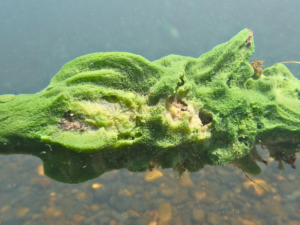
Shaped by Water: Freshwater Sponges found at Green Island 

Beneath the surface of Green Island’s side channels, an unexpected animal is thriving. Freshwater sponges that build delicate skeletons of microscopic glass around the rivers’ flow. These fascinating animals filter the river through their bodies and can glow electric green with the help of algae. Their discovery has opened a window into a strange and largely unseen freshwater world where an animal completely different than ourselves is making its home among the current.

Read More »