
Upper Willamette River spring Chinook are a distinct group of Chinook salmon adapted to the rivers above Willamette Falls. Our namesake McKenzie River supports one of the most important remaining populations of native spring Chinook in the Upper Willamette Basin. Today, these fish are protected as threatened under the Endangered Species Act.

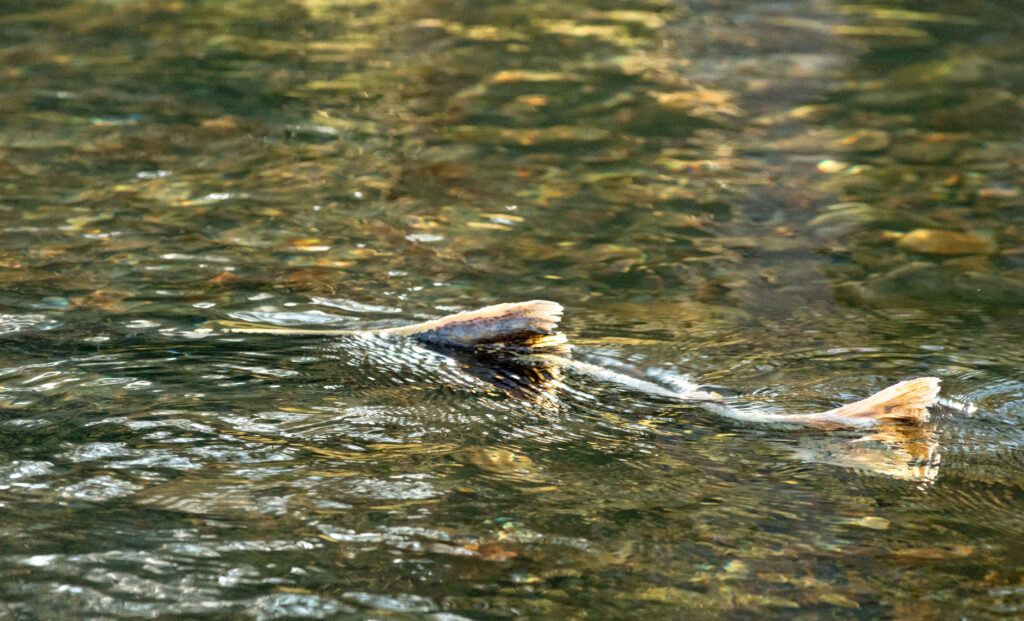
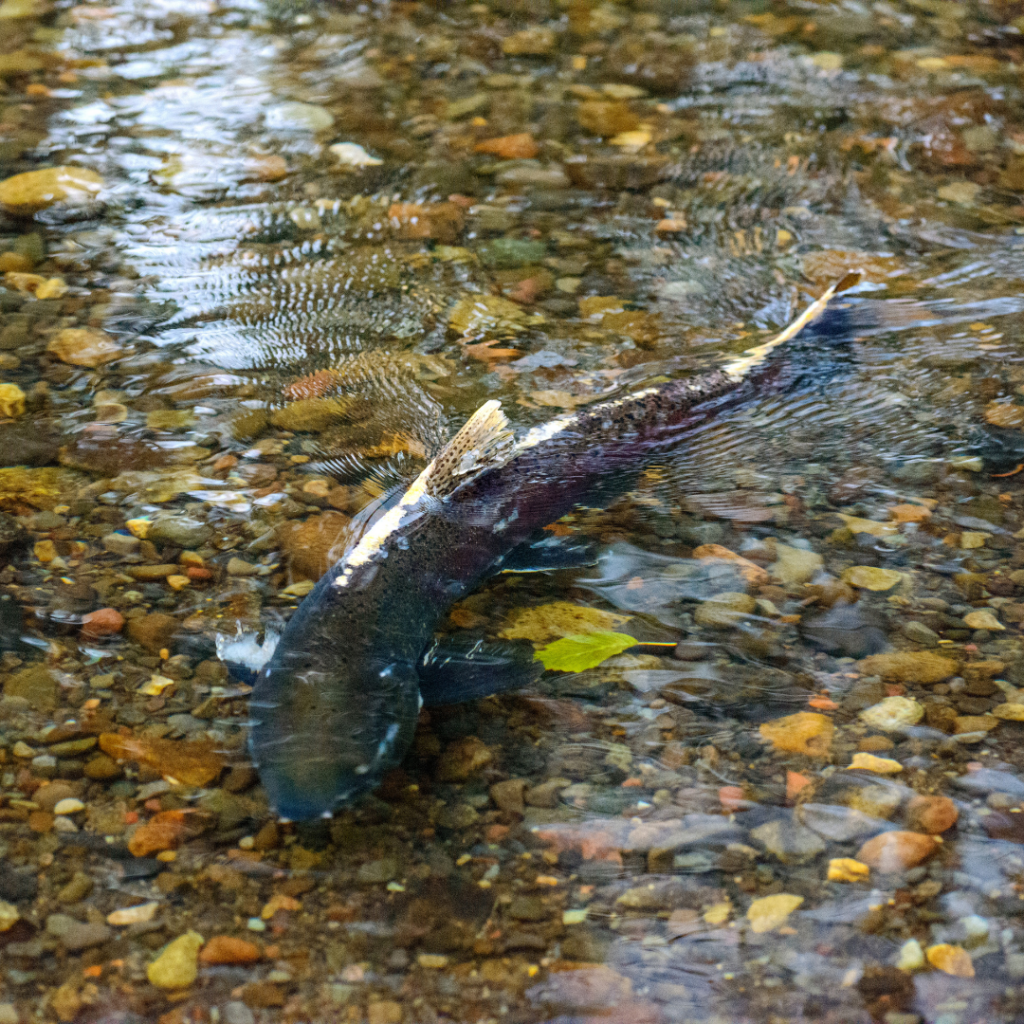
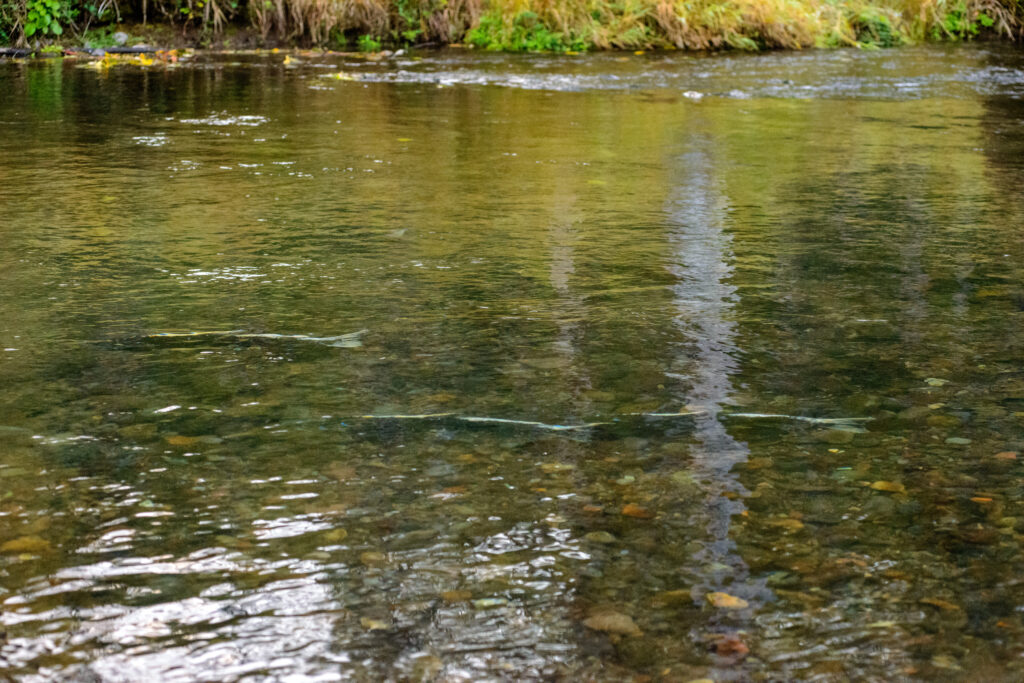
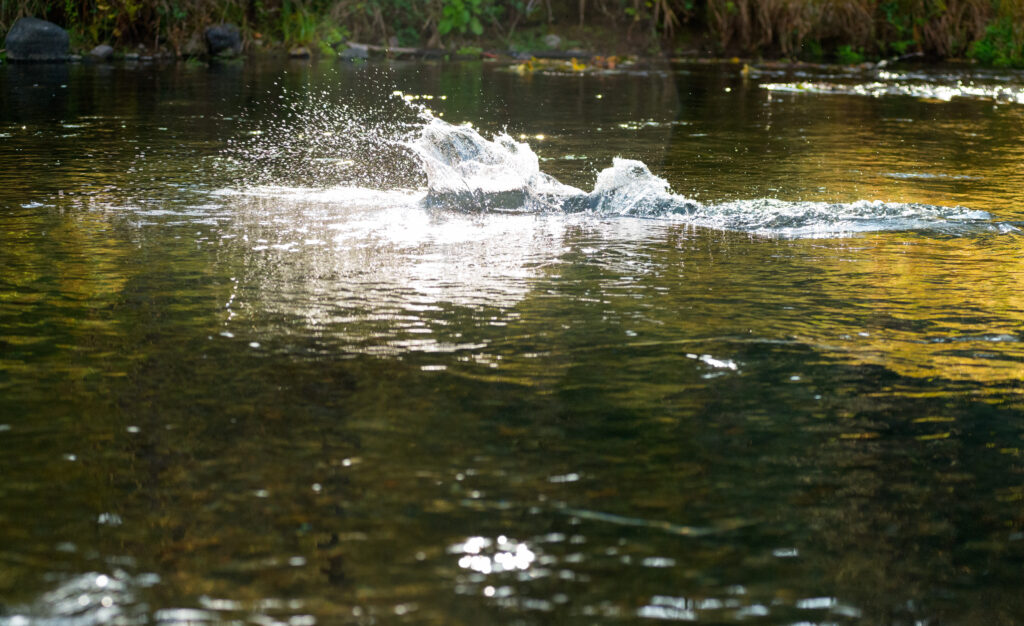
Spring Chinook salmon spawning at Finn Rock Reach | Tim Giraudier, Beautiful Oregon

Each winter, rains pulse through Oregon’s forests. If we’re lucky, much of this precipitation falls as snow at high elevations, blanketing the Cascades in winter white. As the season turns toward spring, warmer temperatures melt the first snow, and the Willamette River basin surges.

As rain and snowmelt gather and spill across the valley floor, they also send a signal that the time has come for spring Chinook salmon to return home. By mid-March, the waters have called dozens of these migratory fish back from the Pacific Ocean. Weaving their way through the Columbia River estuary, they take a sharp turn southward, pushing into the Willamette.

Tim Giraudier, Beautiful Oregon

They’ve arrived months earlier than other Chinook that return in the fall, making their journey when high river flows help carry them over Willamette Falls and toward the cold tributaries of the Upper Willamette watershed. Over the coming months, these fish will travel upstream carrying eggs, milt, and bodies built from nutrients gathered during years in the Pacific Ocean.

They will spend much of the summer gathered in deep pools and cold-water refuges. They will not eat again. Instead, they rely on the energy gained at sea as they wait for cooler water and fall rains to carry them through the final leg of their journey.

With a change of light in September, they slip into the upper reaches of the watershed to spawn, returning to the streams and tributaries where their lives began.

Born in the McKenzie River

A salmon’s life begins and ends in a river’s gravel. As fall arrives on the McKenzie, female salmon seek calmer waters where gravel has gathered across the riverbed. Here, they use their tails to excavate protective nests called redds, where they deposit their eggs.

Male salmon gather nearby. After months in freshwater, their bodies have changed dramatically. Their jaws have grown hooked and lined with teeth, preparing them for fierce competition with other males for the chance to spawn. When a male reaches a waiting female, the pair move together over the redd. She rolls onto her side to release her eggs as he releases milt, fertilizing them among the gravel.

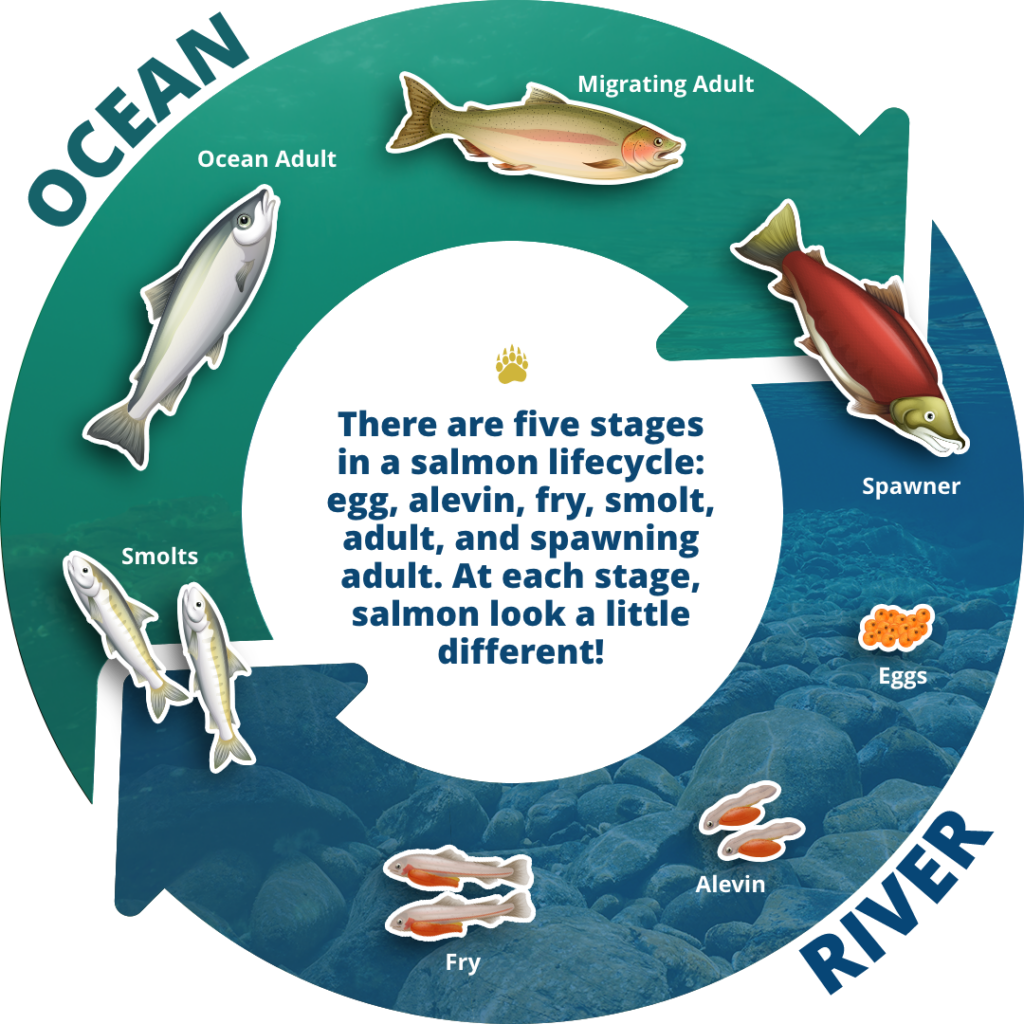
Hidden beneath the riverbed, those eggs hatch into tiny fish called alevins. Still carrying yolk sacs that provide their first food, they remain tucked among the stones until they are ready to emerge as fry. Then, for the first time, the young salmon enter the larger river.

This is where the shape of the river really begins to matter.

Young salmon need more than flowing water. Side channels, shallow edges, backwaters, alcoves, and pools formed by large wood offer places where fast winter water slows, insects gather, and small fish can hide, feed, rest, and grow. For juvenile spring Chinook, access to this complex rearing habitat can shape their chances of surviving long enough to reach the ocean.

Salmon lifecycle courtesy of Rivershed Society of BC

A River With Room to Roam

The McKenzie River cascades out of the Three Sisters Wilderness, moving swiftly as steep slopes shape a path downward. Near Rainbow, the river slows and widens across ancient glacial scars. Historically, this area was a place where water spread across a wide and complex floodplain. 

As western expansion reached the area in the late 1800s, dams, roads, development, gravel mining, forestry practices, and other changes led to a simplified river system. Dredging to support material transport carved out a new river channel, offloading sediment into side channels and alcoves. As people worked to create a more predictable river system, braided channels disappeared, large wood became scarce, and in many places, an ancient web of waterways was transformed into a single, fast-moving channel.

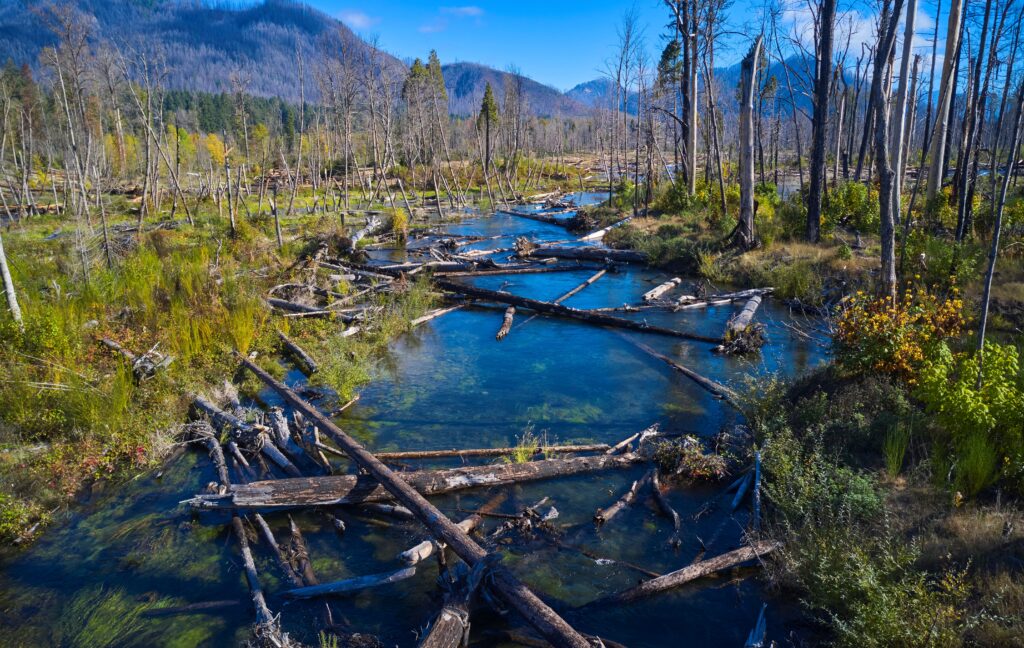
Large wood is placed throughout the restoration project area at Finn Rock Reach. This wood provides important habitat for young salmon and other fish and wildlife | Steve Smith Photography

Those changes helped support growing communities and industry, but they also removed many of the slow, complex places young salmon and many other plants and animals depend on.

Today, McKenzie River Trust and our partners are working to restore some of that complexity by reconnecting floodplains at places like Finn Rock Reach, Quartz Creek, and the Lower South Fork McKenzie River. Instead of keeping water confined to one channel, these projects give it room to spread, slow down, interact with large wood, and create new pathways across the floodplain.

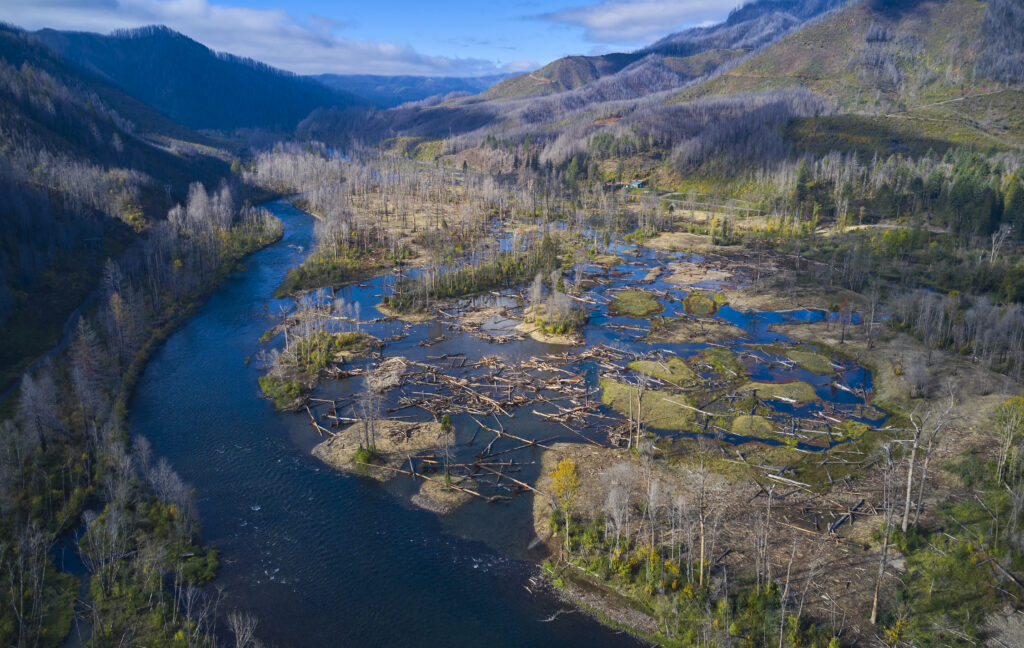
At Finn Rock Reach, the change is already visible. After restoration reconnected the river with its floodplain, spring Chinook salmon quickly returned to spawn across the site. Last season (2025), ODFW documented 80 redds in the project area, a place where young salmon now have access to a growing network of channels, pools, and slow-water habitat as they begin the next stage of their journey.

Carrying the Ocean Home

Each of these channels eventually flows downstream. After months of foraging and growing, young Chinook travel downstream, leaving the McKenzie for the Willamette, Columbia, and finally the Pacific Ocean. 

Along the way, they undergo an extraordinary transformation called smoltification, preparing their bodies for life in saltwater. In the Columbia River estuary, brackish water helps these young fish acclimate as they make the transition from river to ocean.

Tim Giraudier, Beautiful Oregon

Once at sea, salmon grow rapidly. Small fish, squid, and crustaceans fuel their growth. Most will spend two to three years migrating across the Pacific Rim, feeding, growing, and avoiding predators such as orcas and sea lions.

Then, at four or five years old, those that survive turn toward freshwater once again.

When adult salmon return to the McKenzie, they bring the ocean with them. Most of an adult salmon’s body weight was built at sea, transforming marine prey into muscle and fat that are now carried hundreds of miles inland.

After spawning, salmon die, but their journey continues in another form. Their bodies feed aquatic insects, birds, mammals, and other scavengers. As their remains decompose, marine-derived nitrogen and other nutrients enter streams, soils, and plants. Scientists have devoted significant effort to studying nutrient delivery, tracing salmon-derived nitrogen into fungi, trees, and forest invertebrates.

The exchange runs in both directions. Forests shade cold streams, fallen trees create shelter, and insects become food for young fish. Salmon eventually return the favor, carrying nutrients gathered at sea back into the watershed where they began.

Forest feeds salmon, and salmon feed our forests.

Tim Giraudier, Beautiful Oregon

Holding Steady, With Room to Grow

There is encouraging news for this threatened fish species. A recent study completed by NOAA showed that “most Pacific Coast salmon and steelhead listed under the Endangered Species Act have increased in abundance over the past 25 years.” The research also considered the role of habitat restoration activities, like those on the McKenzie and at haich ikt’at’uu on the coast, in aiding species stabilization and recovery.

For McKenzie spring Chinook, however, holding steady is far from enough. The Upper Willamette population remains well below recovery goals, and hatchery-origin fish still make up a significant part of each year’s return.

For a salmon population to sustain itself over the long term, each generation must produce enough returning adults to replace itself. Over the past decade, that has mostly been true in the McKenzie Watershed. The next challenge is creating conditions where more young fish survive, allowing future generations to grow.

Some of the greatest pressures salmon encounter happen far from the McKenzie. Conditions in the Pacific Ocean, including changing temperatures and periods of low ocean productivity, strongly influence whether young salmon survive and return as adults.

But here at home, habitat is something we can affect. Protecting special places and working thoughtfully to restore side channels, reconnect floodplains, and return large wood to rivers gives young salmon more places to feed, hide, and grow before they face the long journey to the sea. 

Their lives may carry them thousands of miles from the McKenzie, but their story begins here, in cold water, gravel, and the quiet edges of the river. And that means we have a role in what happens next. By protecting and restoring the places young salmon need, people across our watershed can help give more of these fish the chance to grow, reach the ocean, and one day find their way home.

Every returning salmon carries the possibility of another generation. And every acre protected, side channel reconnected, tree planted, or hand lent to this work can help sustain that ancient connection between river, ocean, forest, and people for generations to come.

Restored off-channel habitat connects to the mainstem McKenzie River at Finn Rock Reach. Steve Smith Photography

More from the field:

Oregon Coast

The River Returns to haich ikt’at’uu

After 15 years of planning and development, a major conservation project near the town of Florence has achieved its goal: connecting a large swath of restored farmland to the Oregon Coast. The Siuslaw Estuary is a 217-acre expanse that’s expected to accommodate the return of salmon, lamprey, shorebirds, and native plants as it transforms with the tides.
Read More »
four peop
Restoration

Restoration Underway at Quartz Creek

McKenzie River Trust and partners broke ground on a major floodplain restoration project on Quartz Creek this May. The project aims to reconnect the creek with its historic floodplain, benefiting the ecosystem and the plants, animals, and people who rely on it.

Read More »
Oregon Coast

Partners Resume Restoration on the Siuslaw River Estuary

Partners from the Confederated Tribes of Coos, Lower Umpqua and Siuslaw Indians, the Siuslaw Watershed Council, and McKenzie River Trust are preparing for a second season of restoration on the Siuslaw River at Waite Ranch. Beginning in summer 2023, the tidal restoration project is working to return around 200 acres of estuarine wetlands to the Siuslaw River system.

Read More »