As summer heat yields to autumn rain in western Oregon, the relationship with fire across our landscape shifts. For months each year, fire is something we fight and defend against. But here in the Willamette Valley, fire is also an ancient partner to the land.

For thousands of years, Kalapuya people actively tended these prairies and oak savannas through cultural burning, nurturing the plants, food systems, and wildlife that call this place home. Today, only a fraction of these native ecosystems remain, and returning good fire to the ground is a vital step in helping them heal and expand.

What looks like a single day of activity is the culmination of months, sometimes years, of steady work. Behind the scenes, land stewards thin brush, prepare safety lines, and coordinate closely with many regional partners to build capacity, plan and coordinate burn areas, and obtain permits. When the weather window finally aligns, trained crews move together across property lines to tend the landscape safely with fire.

Key partners in this work include nonprofits and agencies organized through the Rivers to Ridges partnership, the Oregon Department of Forestry, and the Lane Regional Air Protection Agency. Because these same partners have worked side by side across many seasons, they bring deep familiarity, shared understanding, and a collective drive to continue building their skills through every collaborative burn.

Today, we invite you behind the scenes at Coyote Spencer Wetlands to experience what a burn day looks and feels like.

Morning Gathering & Crew Briefing

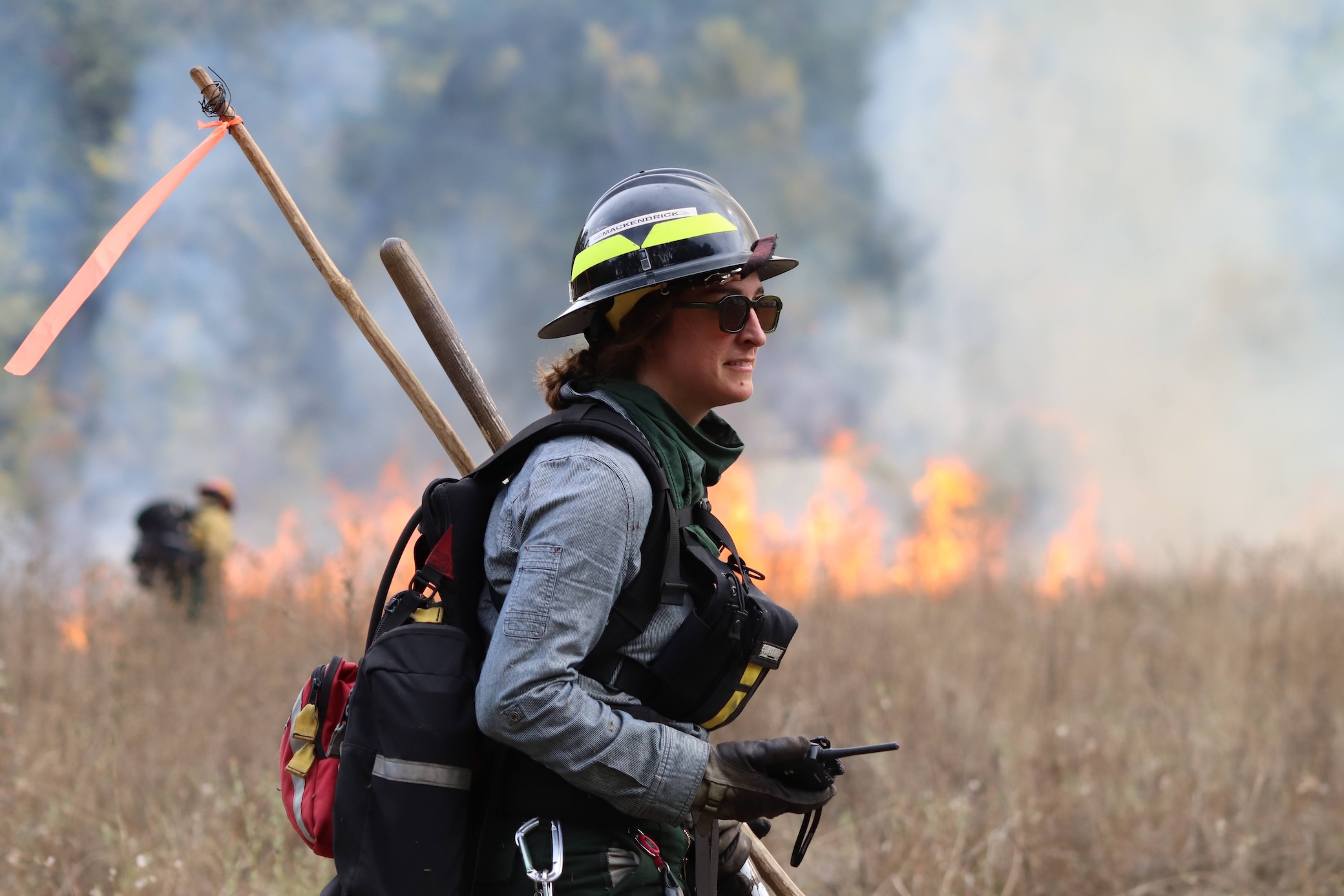
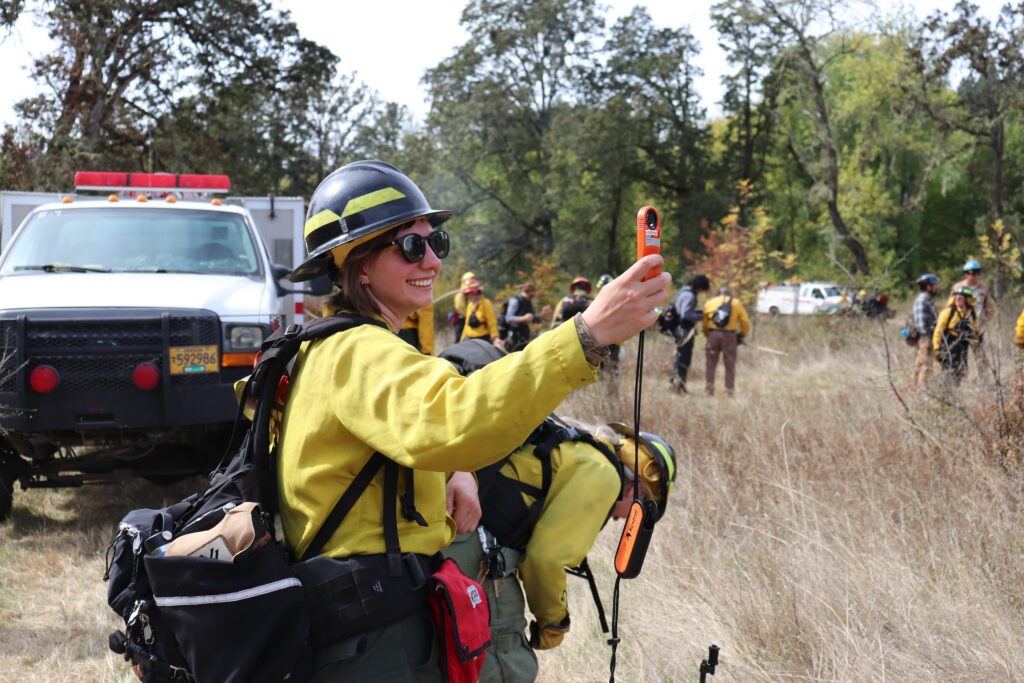
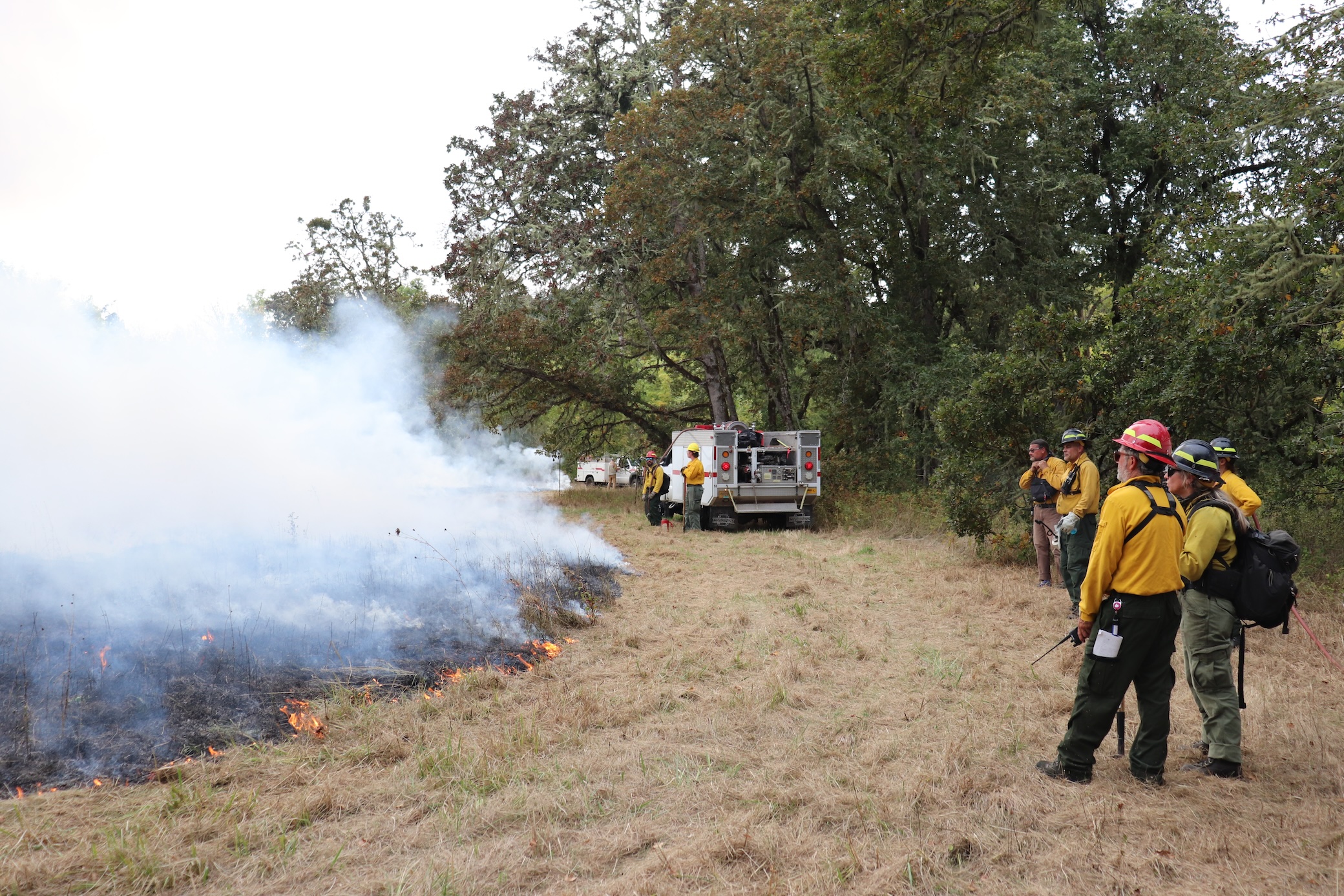
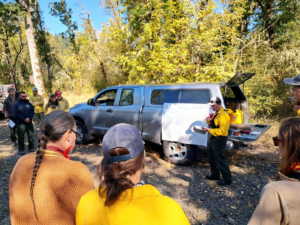
Long before any fires are ignited, practitioners gather to prepare for the day ahead. Autumn dew clings to tall prairie grasses as fire practitioners, land stewards, and Indigenous partners come together, ready for their role assignments.

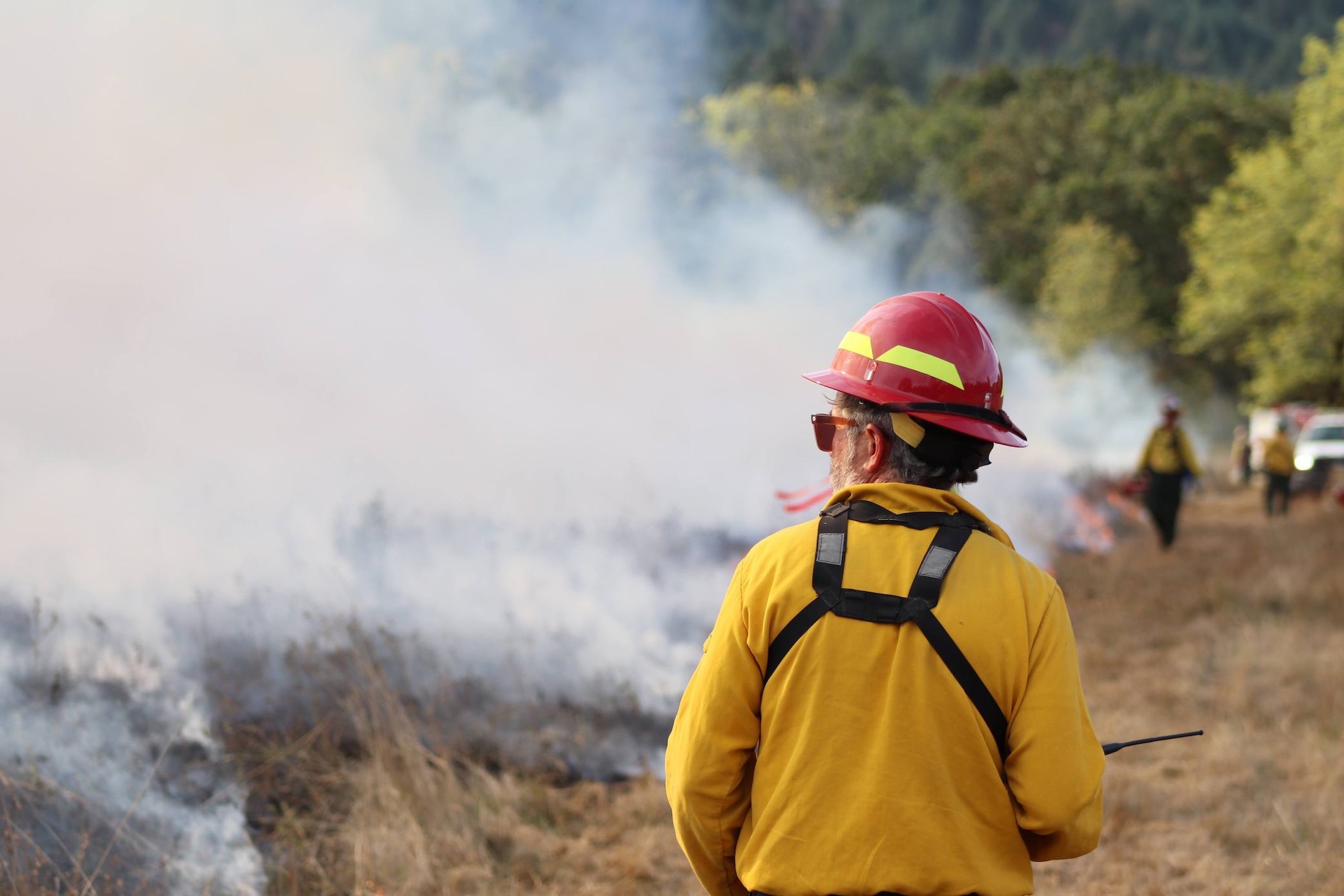
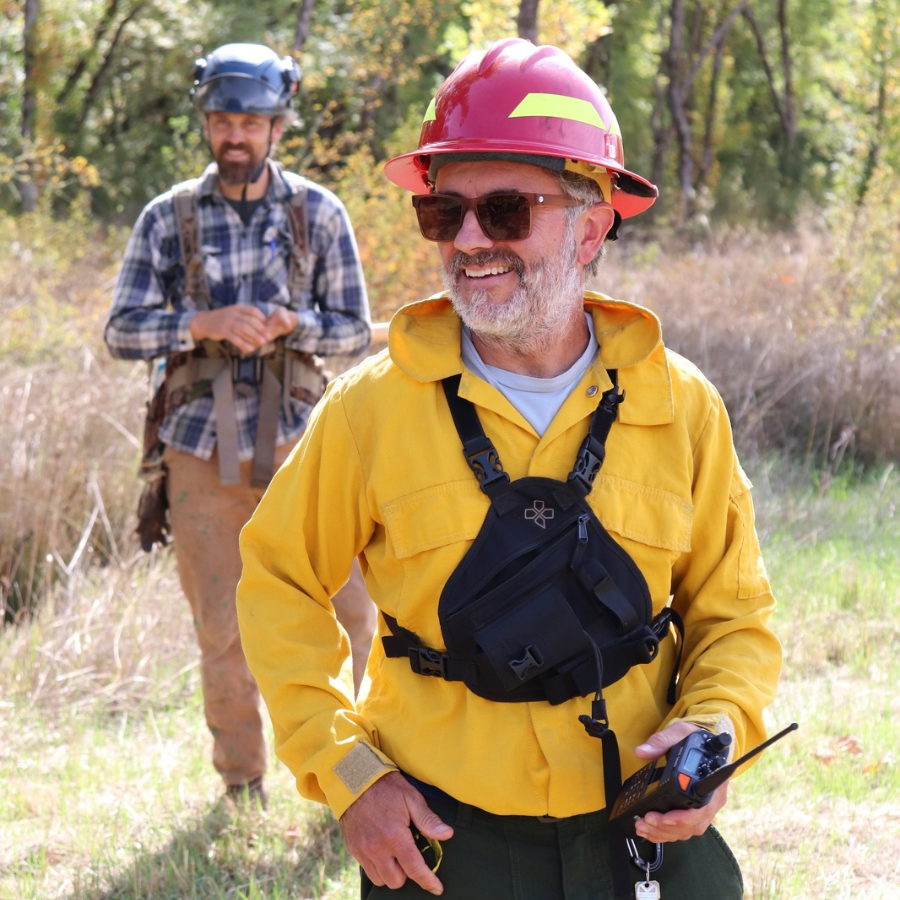
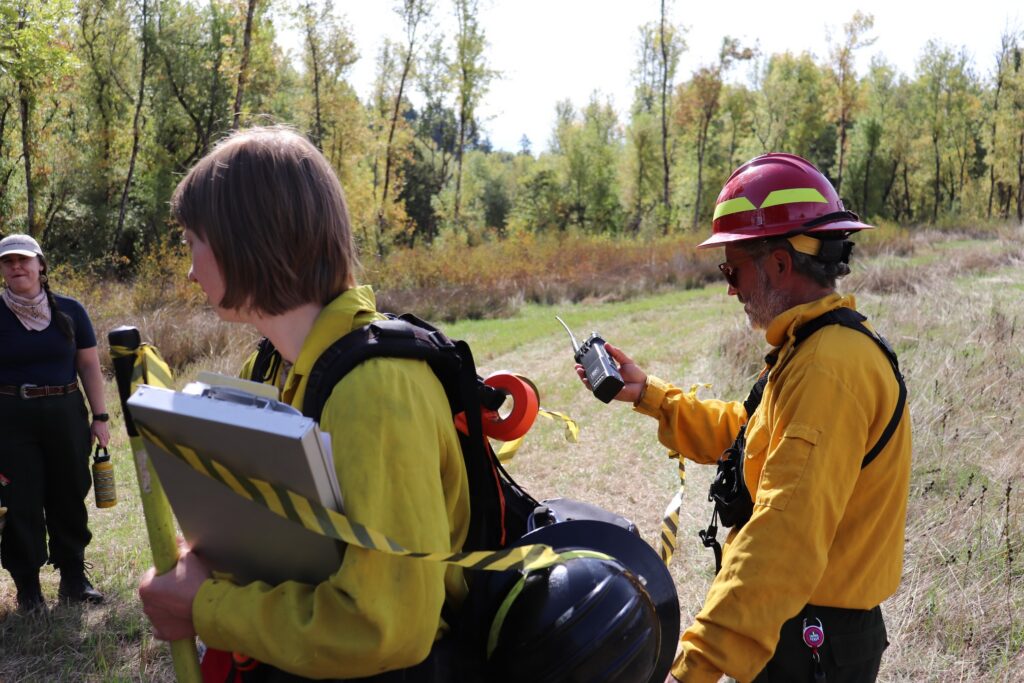
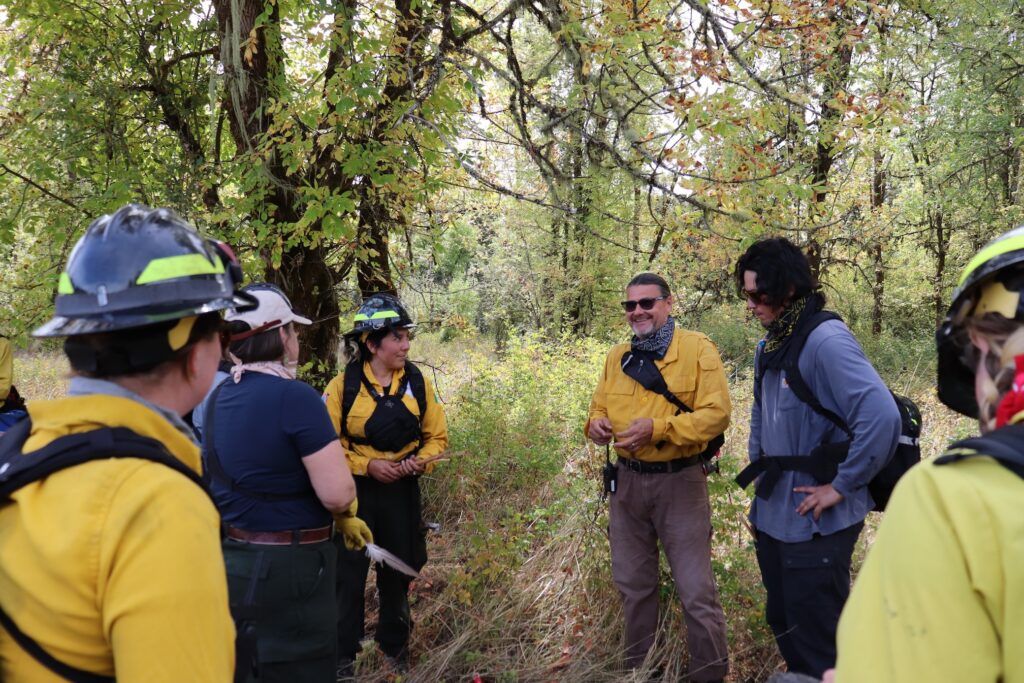
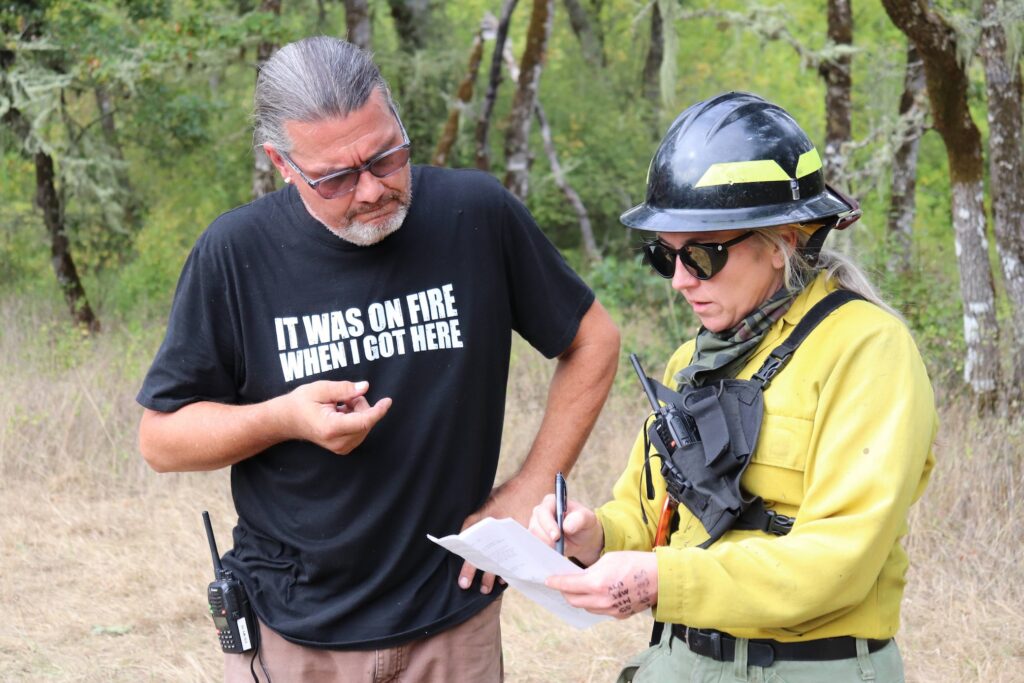
The day begins with a comprehensive safety and operational briefing led by the burn manager. For this particular burn, McKenzie River Trust staff member Brent Ross, an Oregon Department of Forestry (ODF)- certified Burn Manager, worked closely with local fire leadership to prepare the crews for a successful day. 

brent ross rx fire

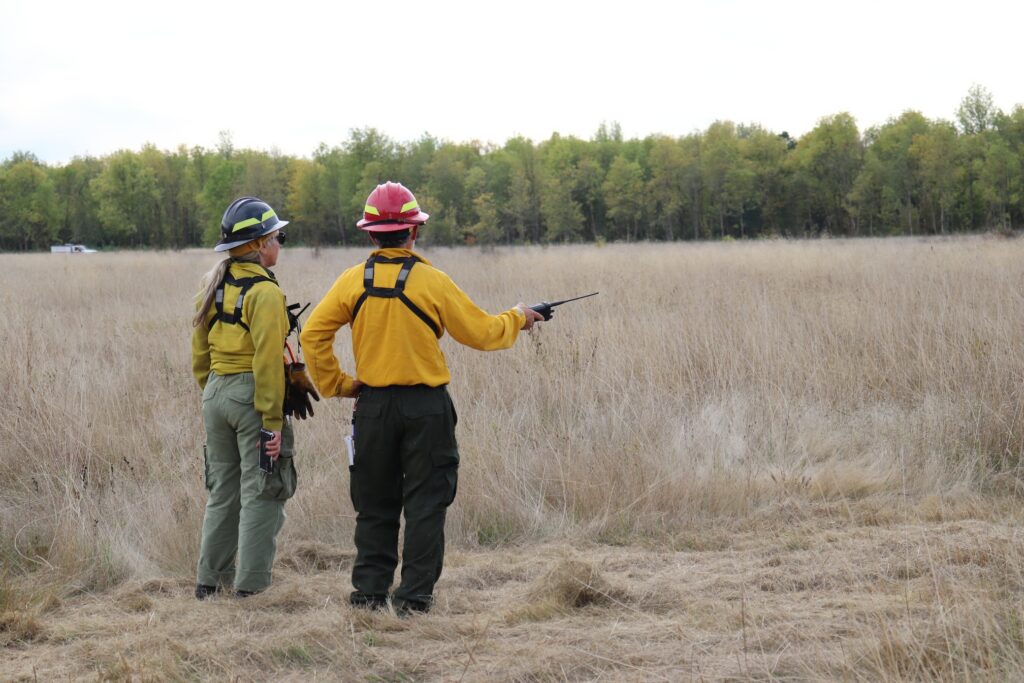
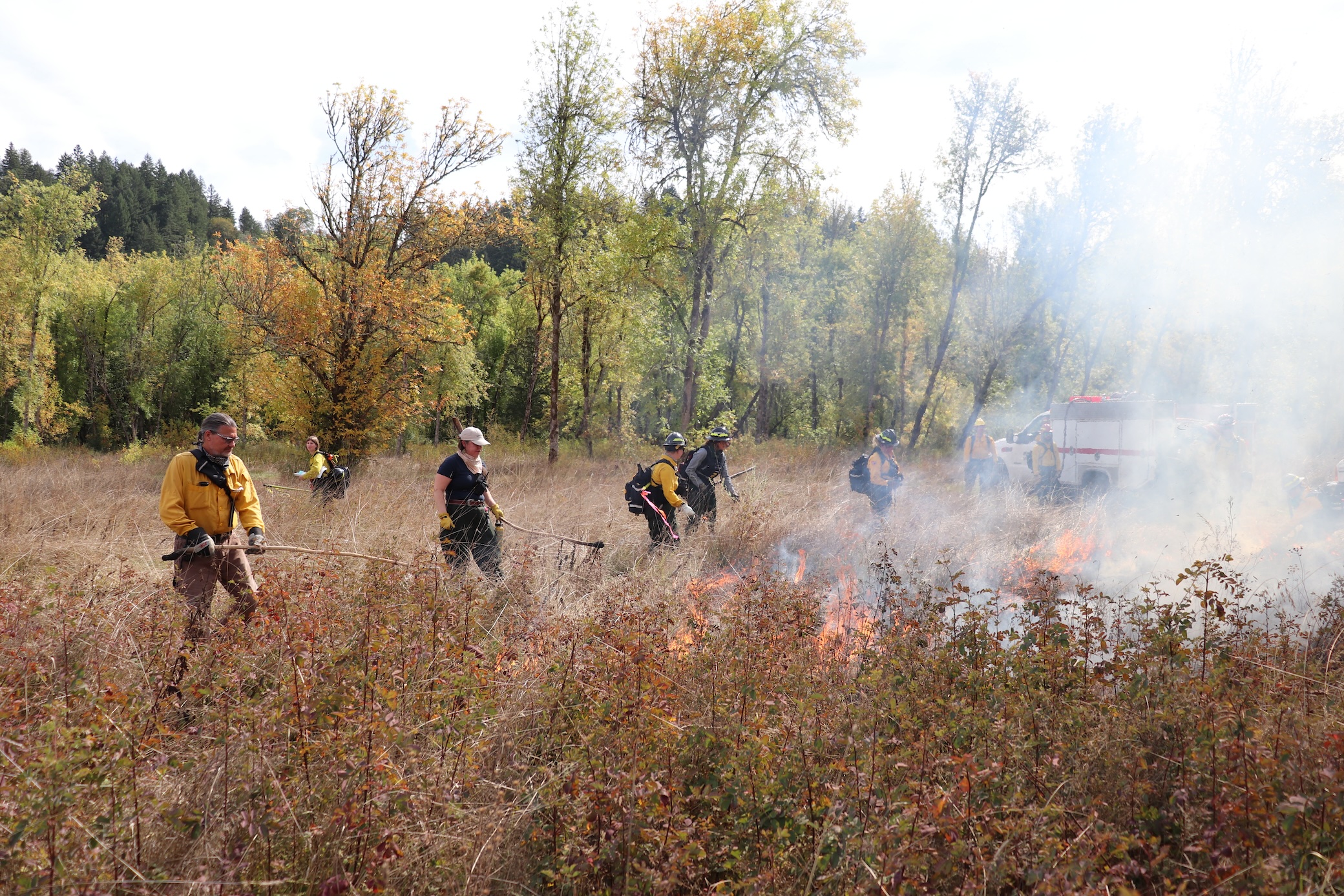
Having local leadership and a trusted burn manager at the helm reflects years of continuous partnership, in which crews already know each other’s communication styles and strengths. Practitioners review maps, examine wind and humidity thresholds, and divide into specialized teams that will take on different aspects of the day’s work. The “Lima” and “Romeo” teams move in unison to lay fire on the ground, closely shadowed by water tenders. Crews prepare their gear for the afternoon, while Indigenous partners with the Traditional Ecological Inquiry Program align on cultural protocols for the day.

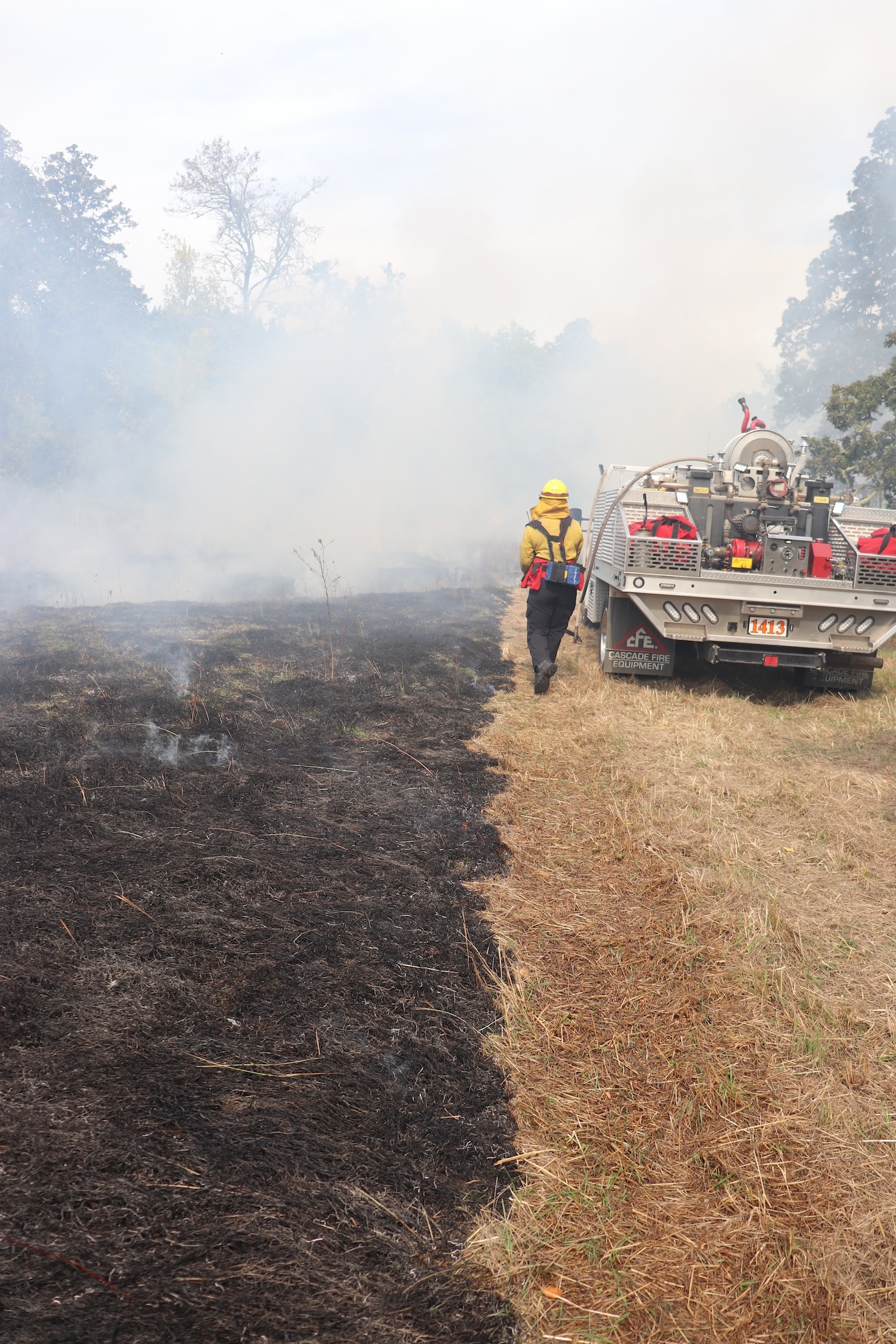
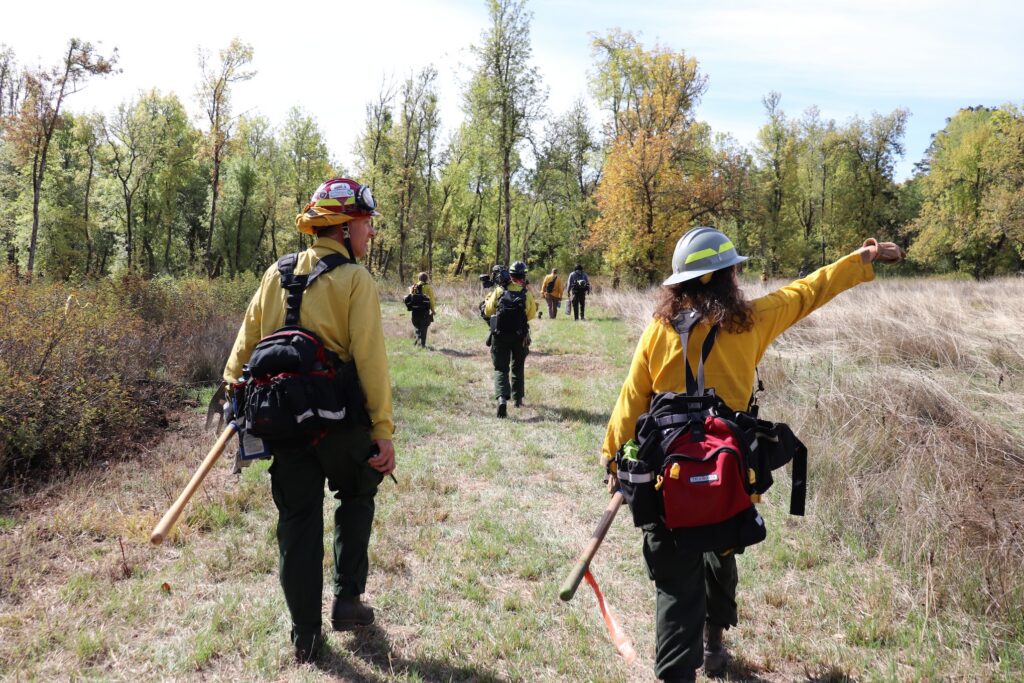
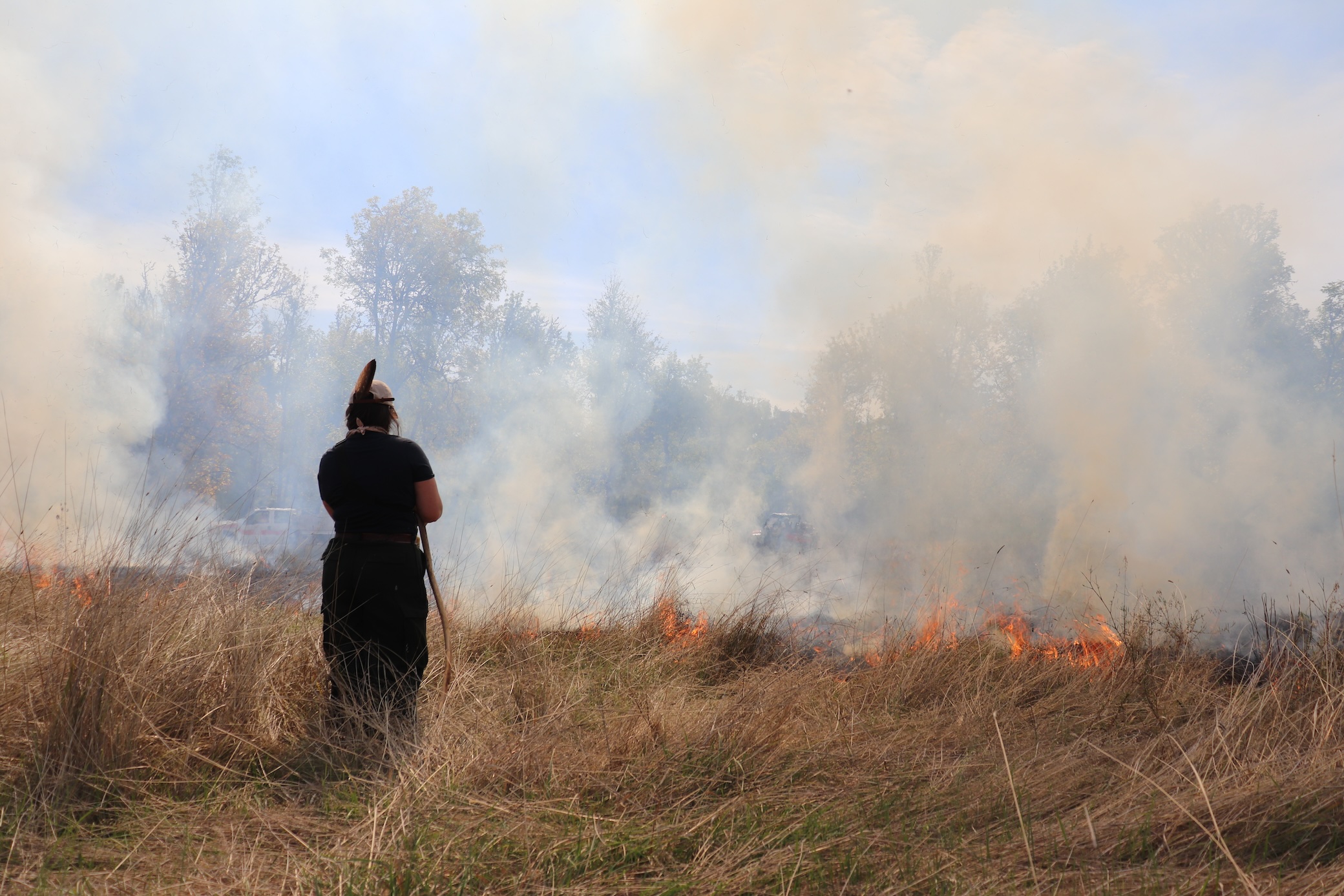
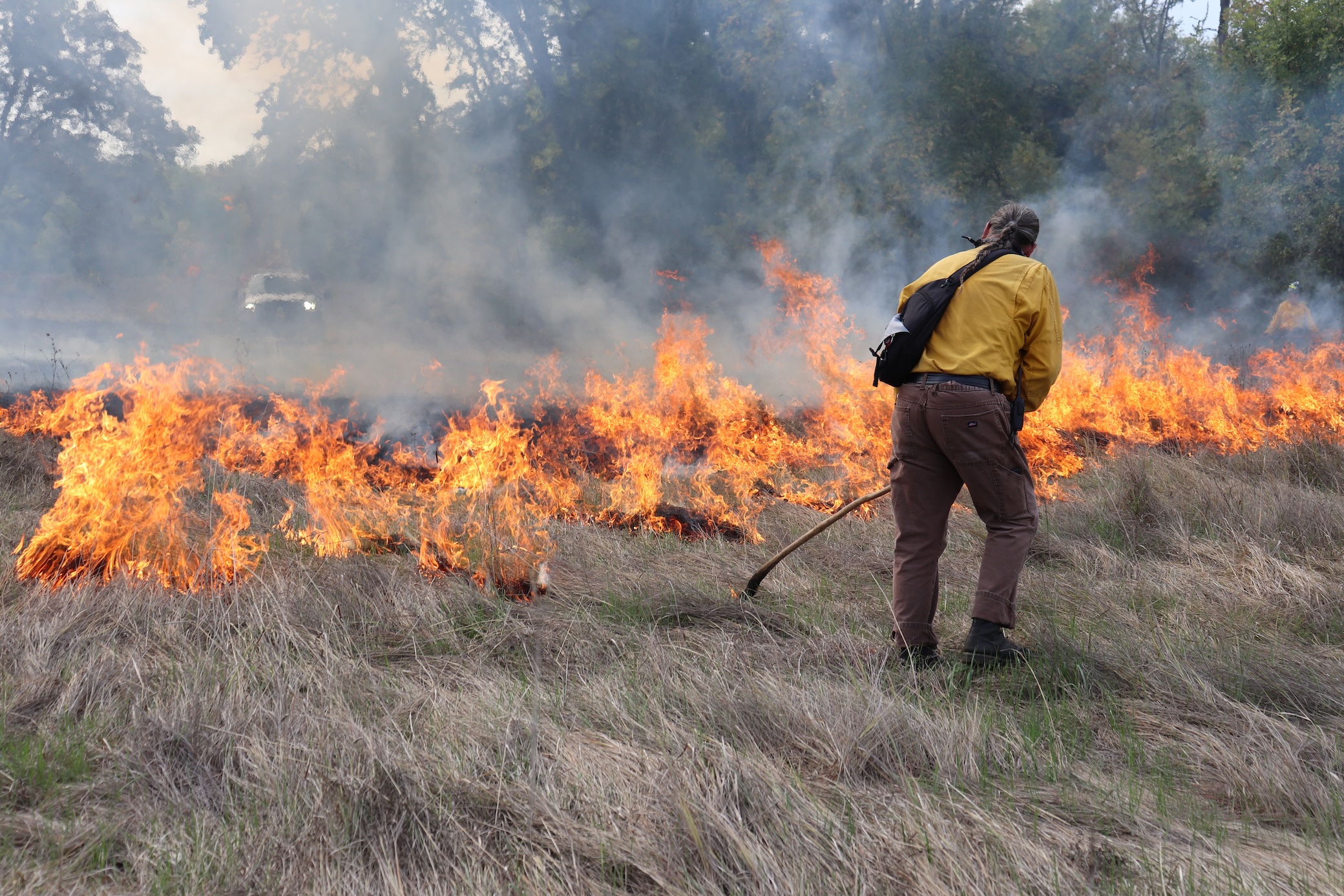
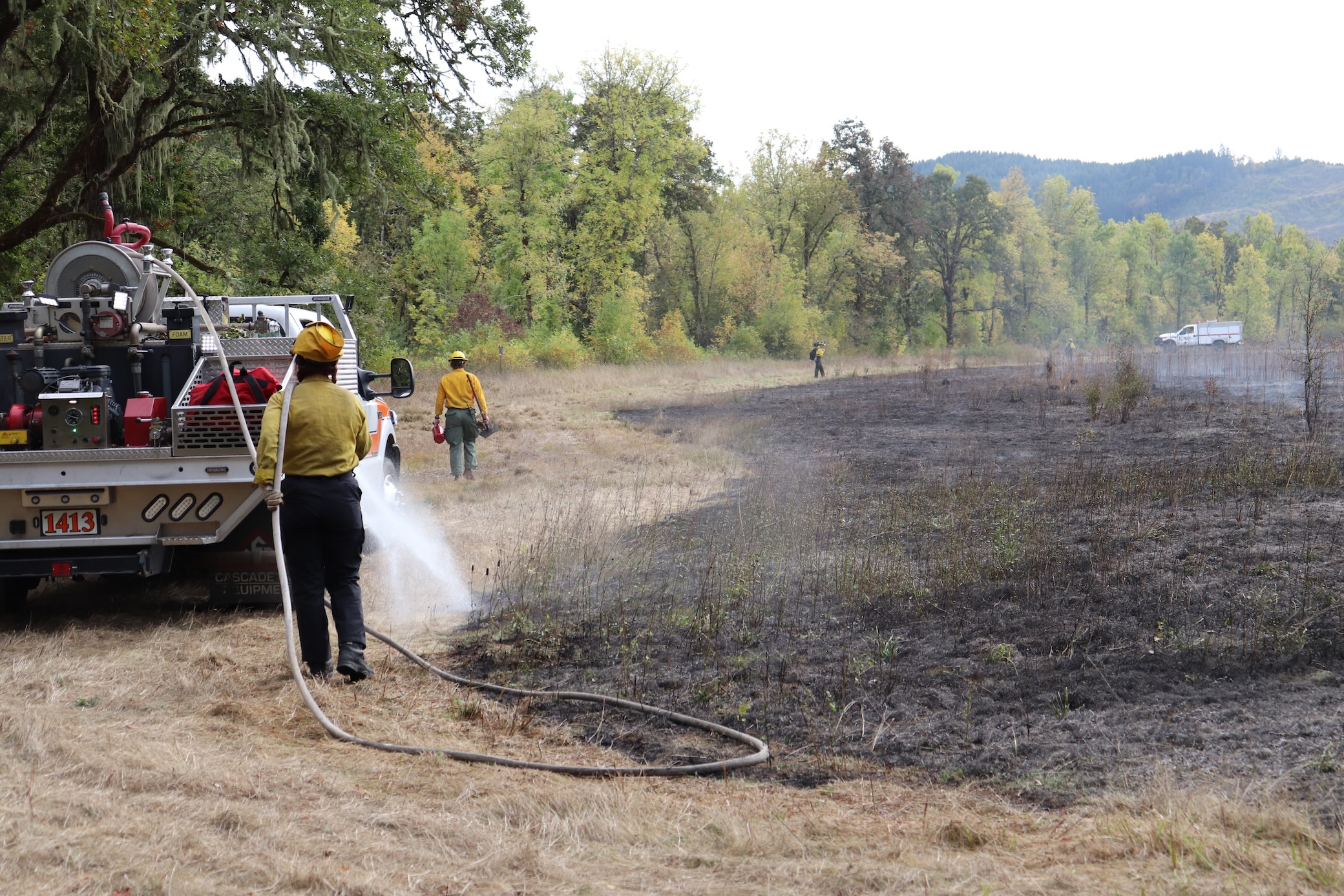
Before ignition begins, crew leaders walk the perimeter. Tall grass along this edge has been mowed low, so there’s less fuel for flames to spread across. Crews will soon begin laying down a “wetline,” soaking the mowed strip with water so the fire has a damp barrier it cannot easily cross. Weather is monitored closely as practitioners familiarize themselves with the site and any known safety hazards…in this case, ground-nesting hornets.

Lighting a test fire

With everyone in place, a small test fire is lit. Practitioners watch closely as flames lick through the dry thatch, evaluating flame length, smoke dispersion, and consumption rates. 

Test fires are conducted at every controlled burn to truth-check measurements and data against on-the-ground conditions. 

Now that the test fire has behaved as anticipated, the burn manager gives the green light to proceed with the burn.

Cultural Fire vs. Ecological / Prescribed Fire:

During this burn, both cultural fire and ecological/prescribed fire occurred simultaneously. Cultural burning was led and carried out by Native and Indigenous partners, while non-Native partners supported the effort. 

Cultural fire is an expression of sovereignty and self-determination that only Native and Indigenous peoples can practice. 

Ecological and prescribed fire are often used interchangeably to describe controlled fire used for ecological benefits. This type of fire benefits the land in ways similar to Native-led fire, but it is not an act of cultural continuity for those who practice it.

The landscapes we tend with fire have been cared for by Native and Indigenous people since time immemorial. Working toward shared restoration goals starts with respecting the distinct knowledges, rights, and roles of each group involved.

Cultural Ignition Methods

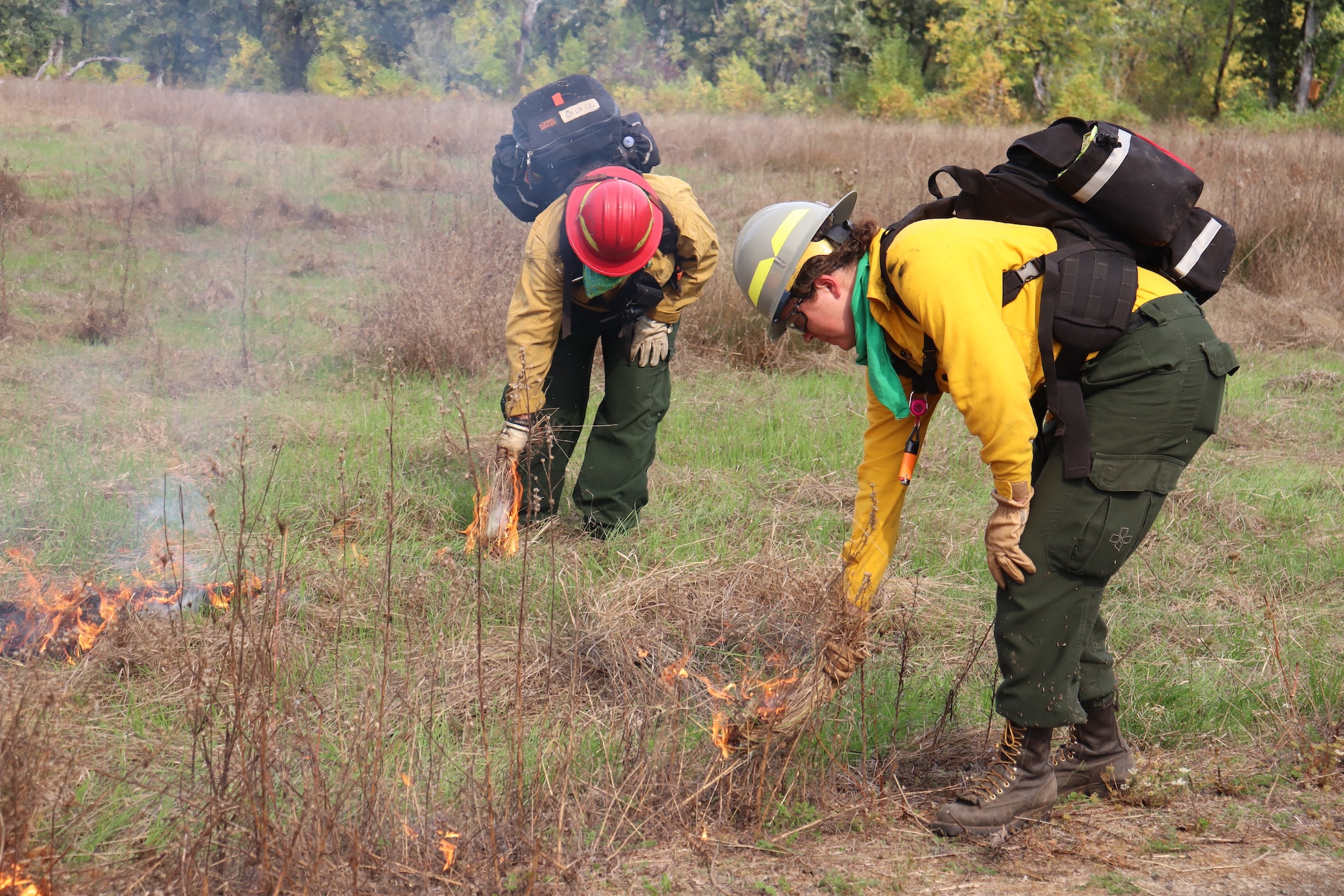
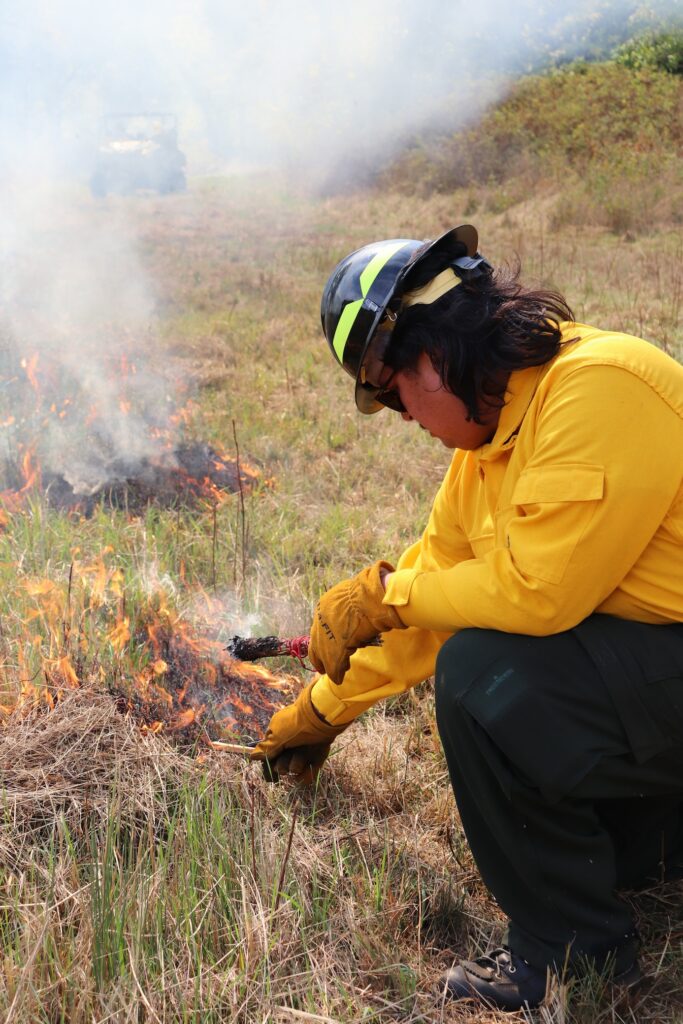
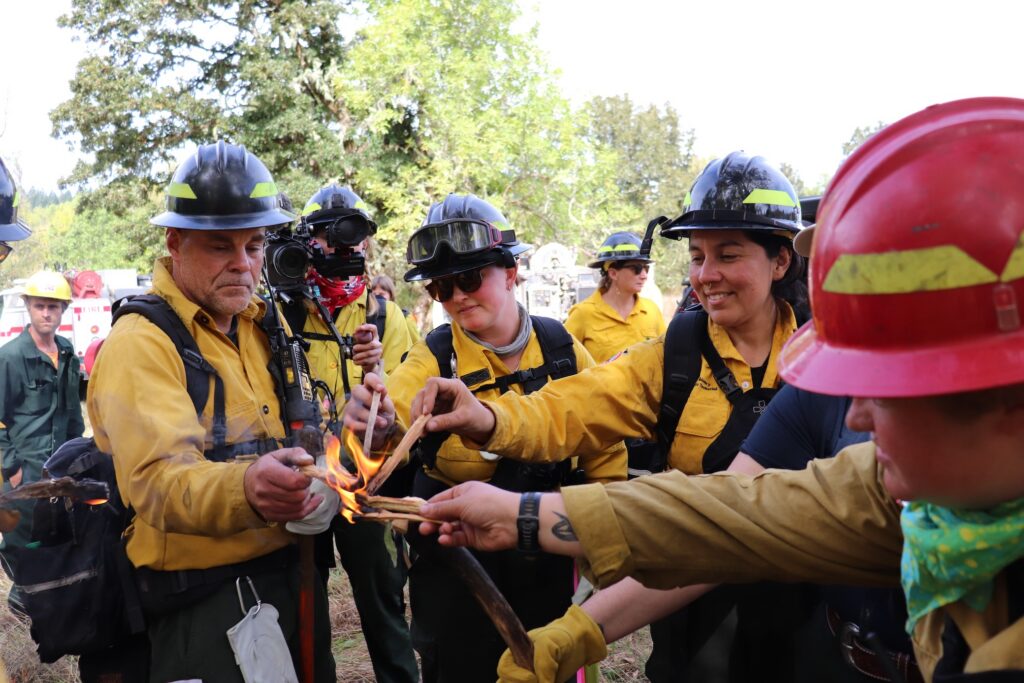
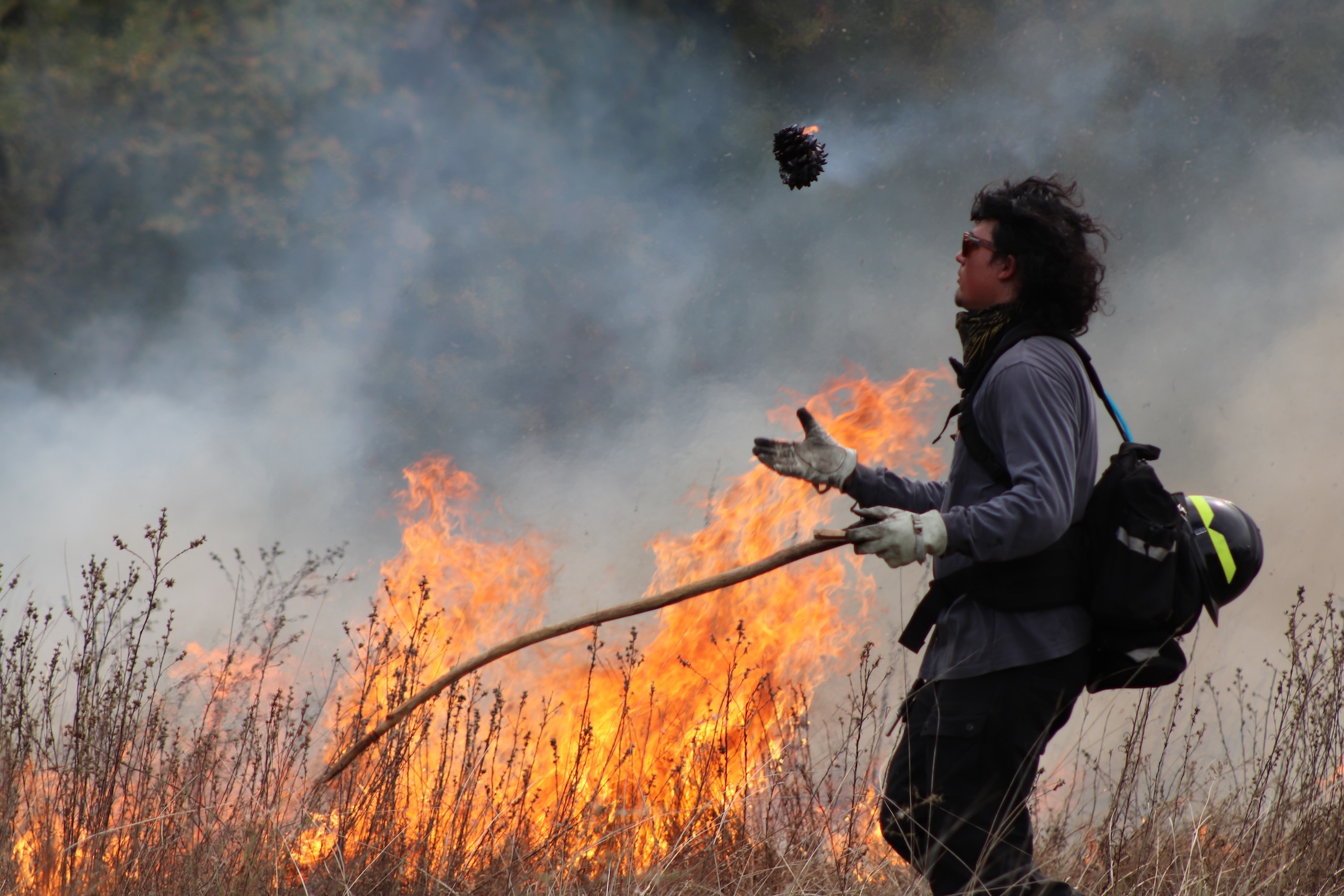
For this burn unit at Coyote Spencer Wetlands, standard tools yielded to cultural traditions. Under the guidance of Indigenous fire practitioners, traditional pitch sticks and pitch-covered pine cones served as the ignition sources. This practice honored the site’s cultural role in supporting Native youth and families through the Traditional Ecological Inquiry Program. By eliminating fuel use in this unit, the team helped protect camas gathering grounds tended by participants and their families.

Traditional ignition tools include pitch-covered pine cones and cedar pitch sticks. 

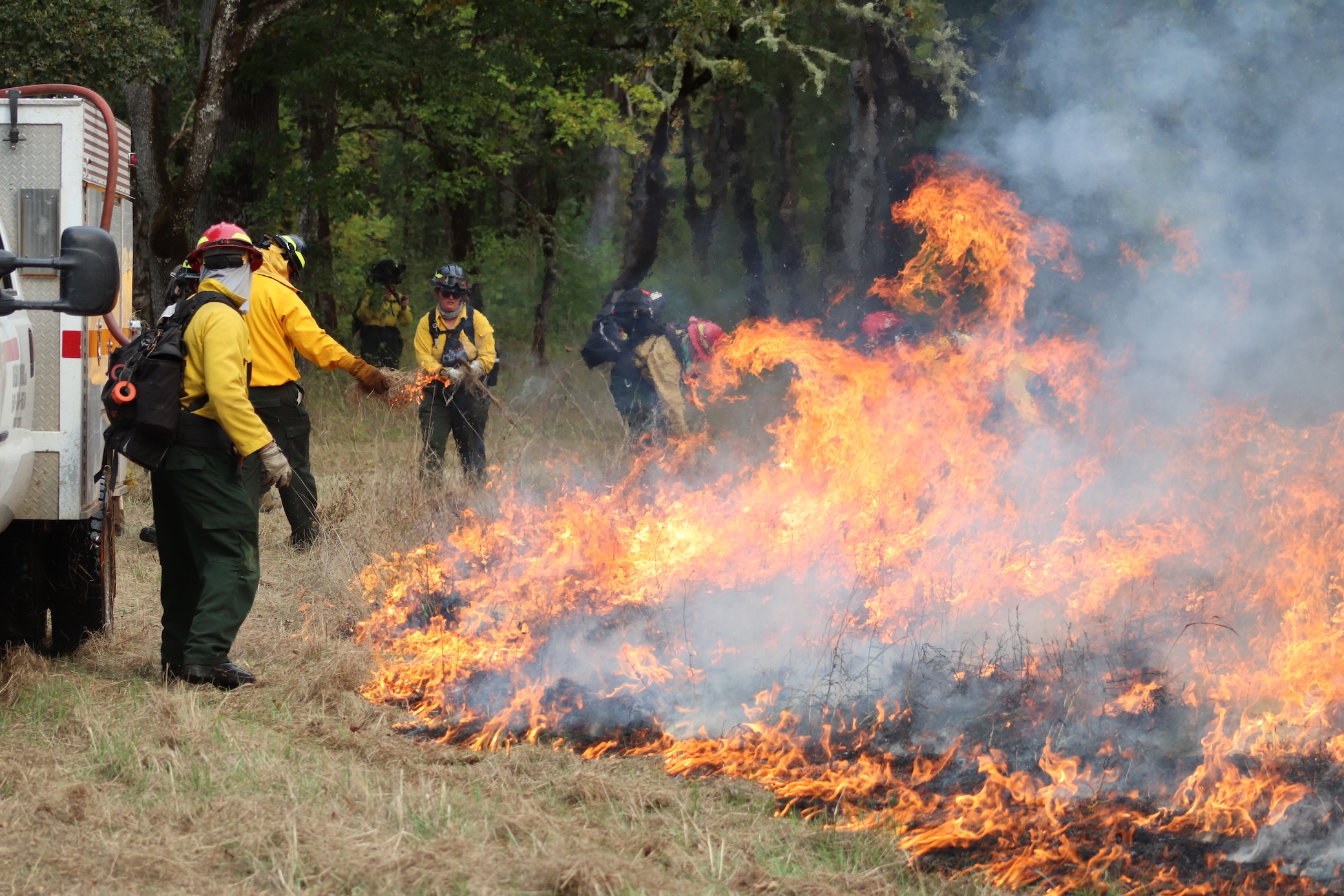
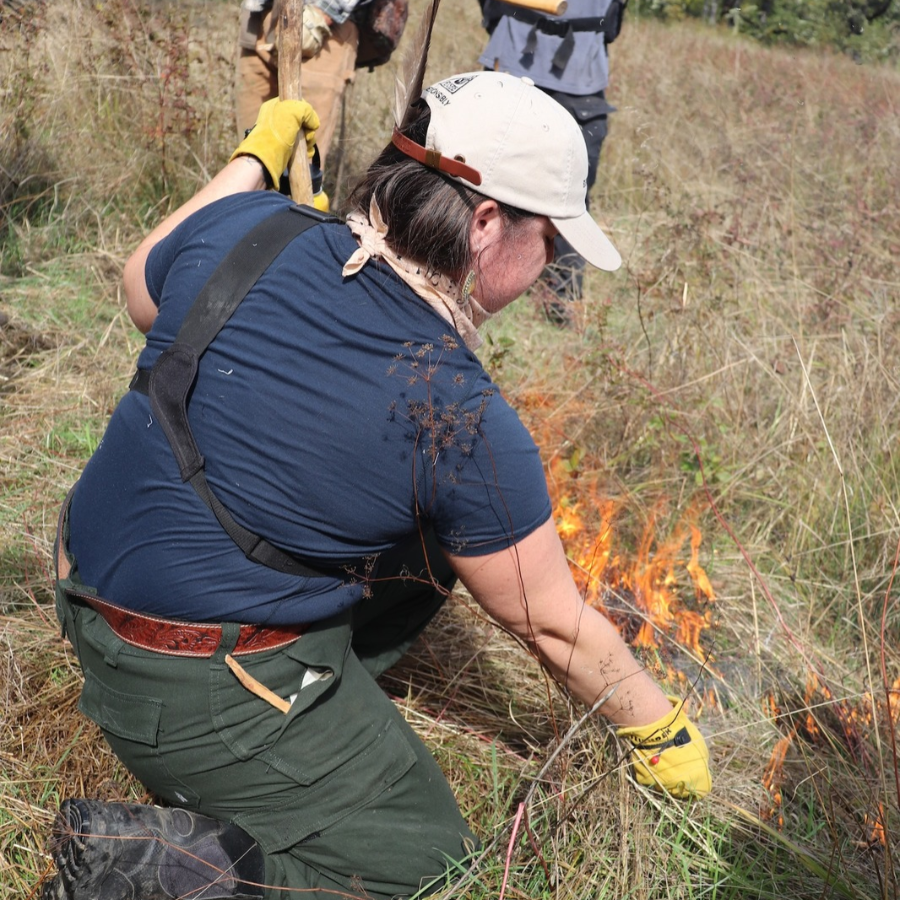
As the flames were lined out, tenders gathered handfuls of thatch from the overgrown prairie, bundling them tightly before dipping them into the slow progression of flames. Bending low, the thatch bundles painted the prairie in vivid strokes of yellow, orange, and red. Slowly, a flame-lined grid revealed itself as the overgrown thatch gave way to fire.

Dripping Fire on the Prairie

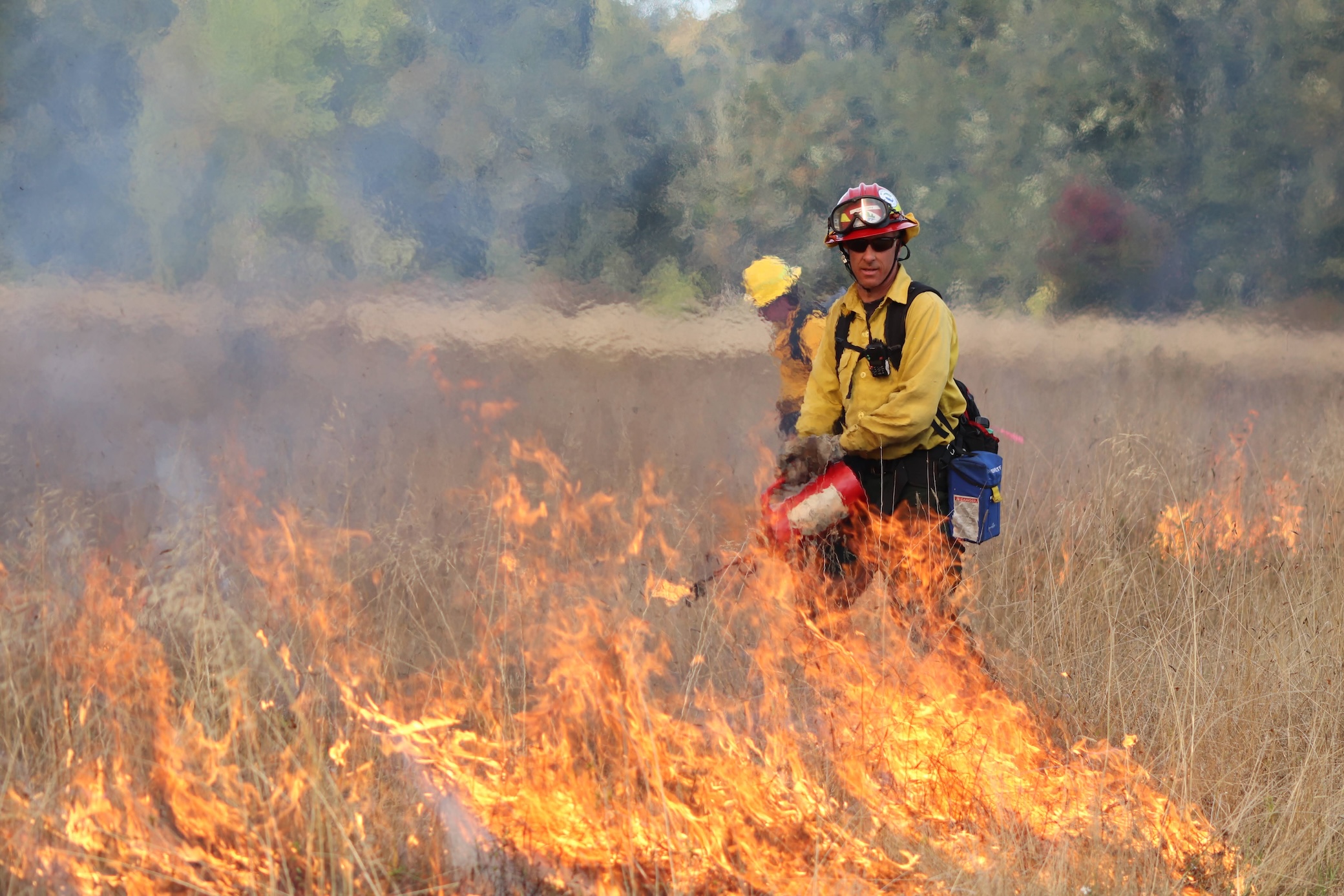
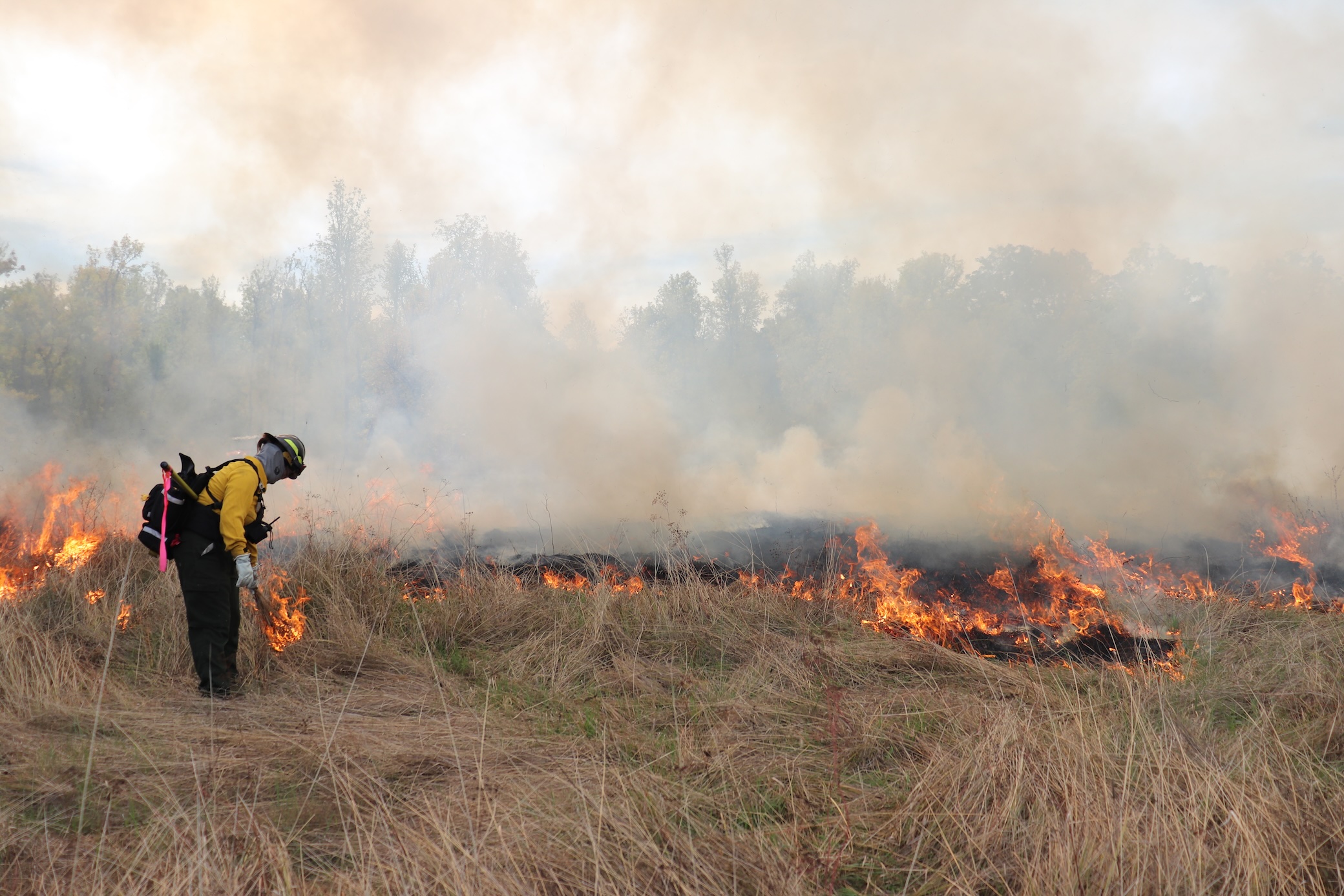
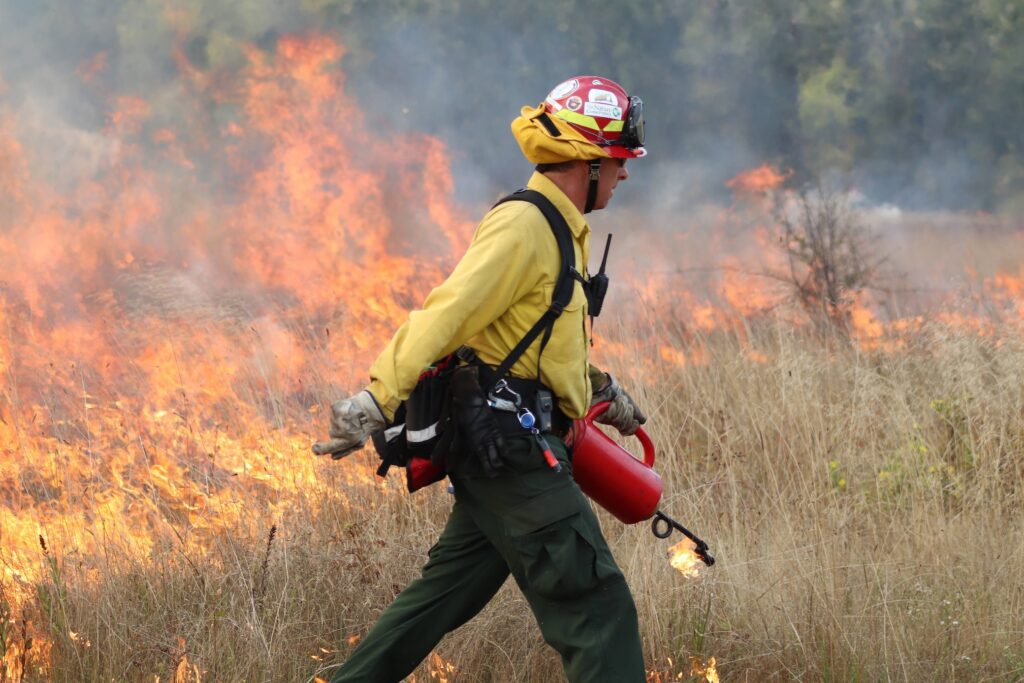
During the burn at Coyote Spencer Wetlands, crews burned three areas, called units. The first two units used traditional ignition methods, including pitch sticks, cones, and bundled thatch. At the third unit, the group transitioned to drip torches. 

A drip torch is a specialized fuel canister with a spout that allows practitioners to lay a controlled, thin bead of burning fuel along the ground at a steady walking pace. 

Crews coordinate their spacing and timing within the unit so that each line of fire pulls heat and air cleanly, without overwhelming the wetted boundary. Starting near controlled edges and working inward in coordinated passes, practitioners build a grid that helps keep the fire predictable and contained within the planned burn footprint.

Building Heat in the Burn Unit

Though how a fire is lit may change from burn to burn, the goals of that ignition are the same. 

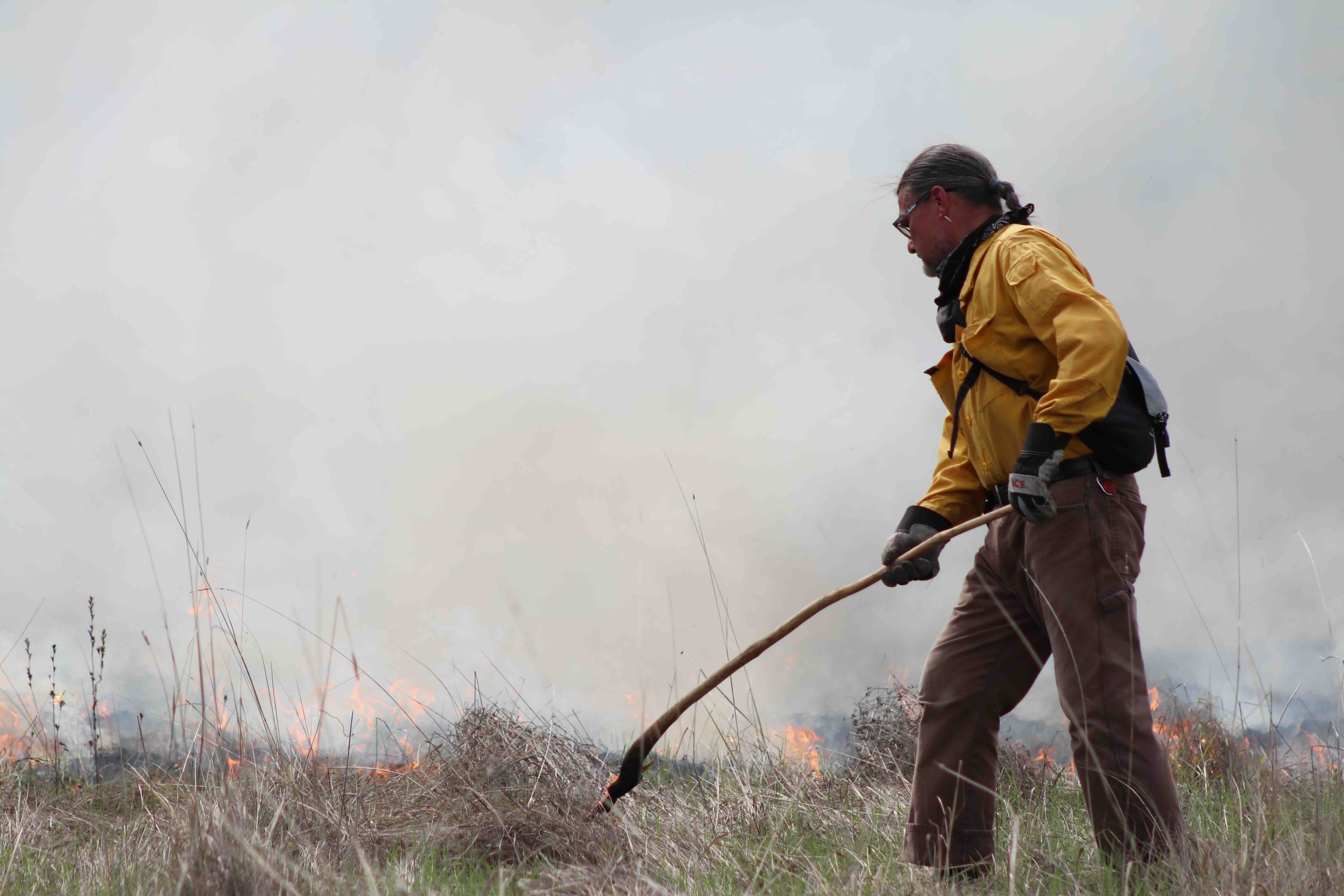
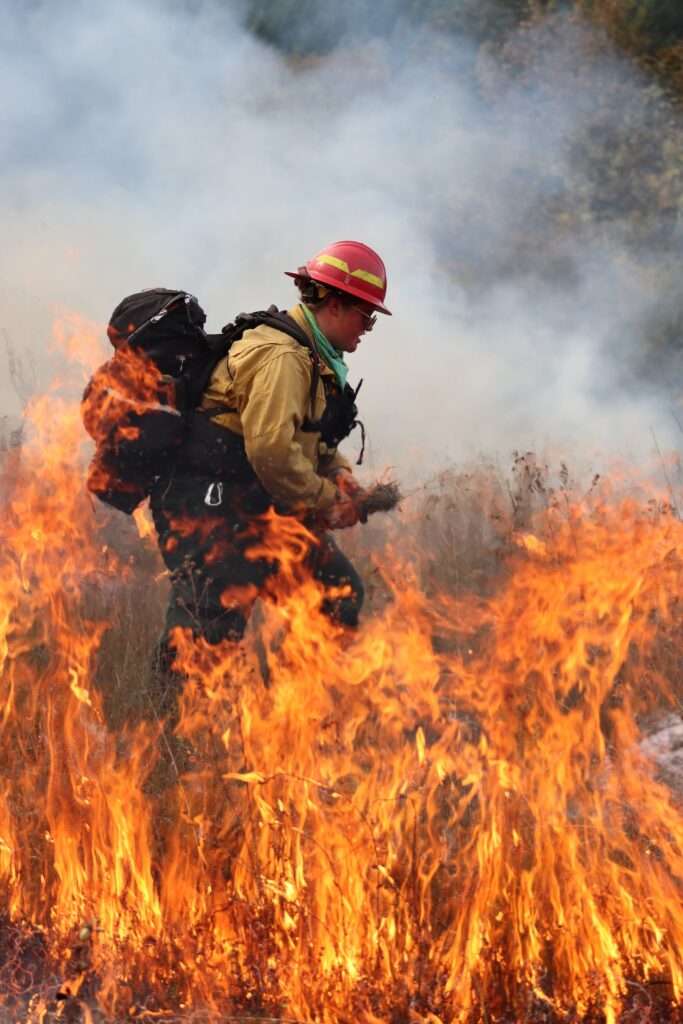
As ignition teams move down their grid lines, the tempo picks up. Heat begins to radiate across the open prairie. What started as delicate ribbons of flame has expanded into an energetic wall of fire.

Flames rise high into the air, dancing against the sky as growing threads of fire knit together into a single, roaring wave of heat. 

Increased heat promotes a more complete burn. As flames rip through the landscape, fuels burn more intensely, resulting in clearer smoke and reduced air pollution. This extreme heat also creates more lift, pulling hot air and emissions high into the atmosphere, leaving nearby roads and neighborhoods less affected.

Following the Fire

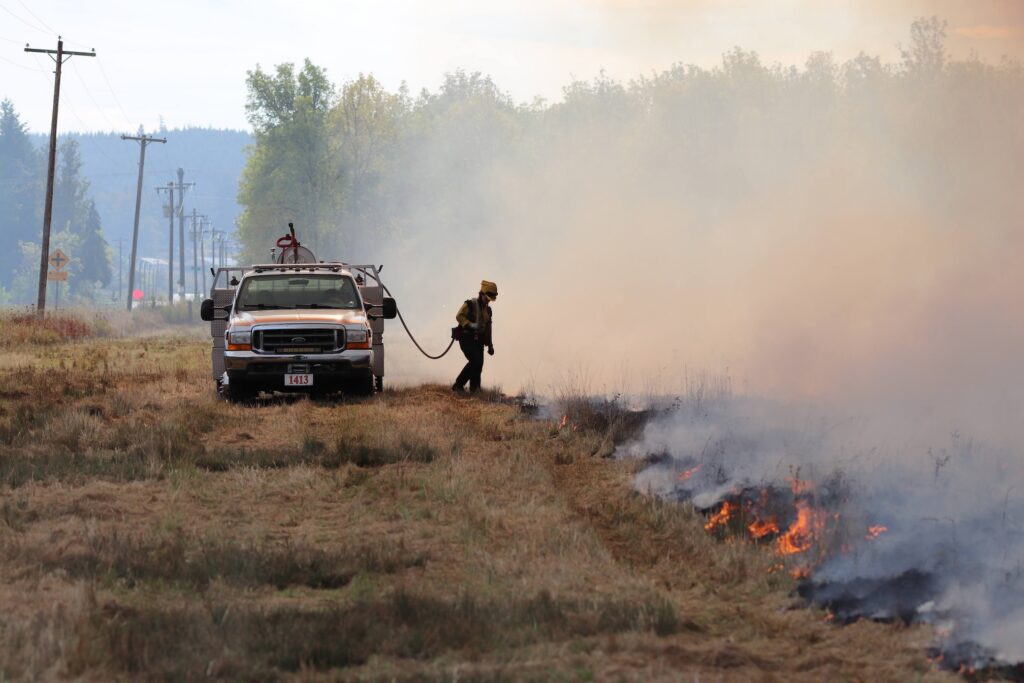
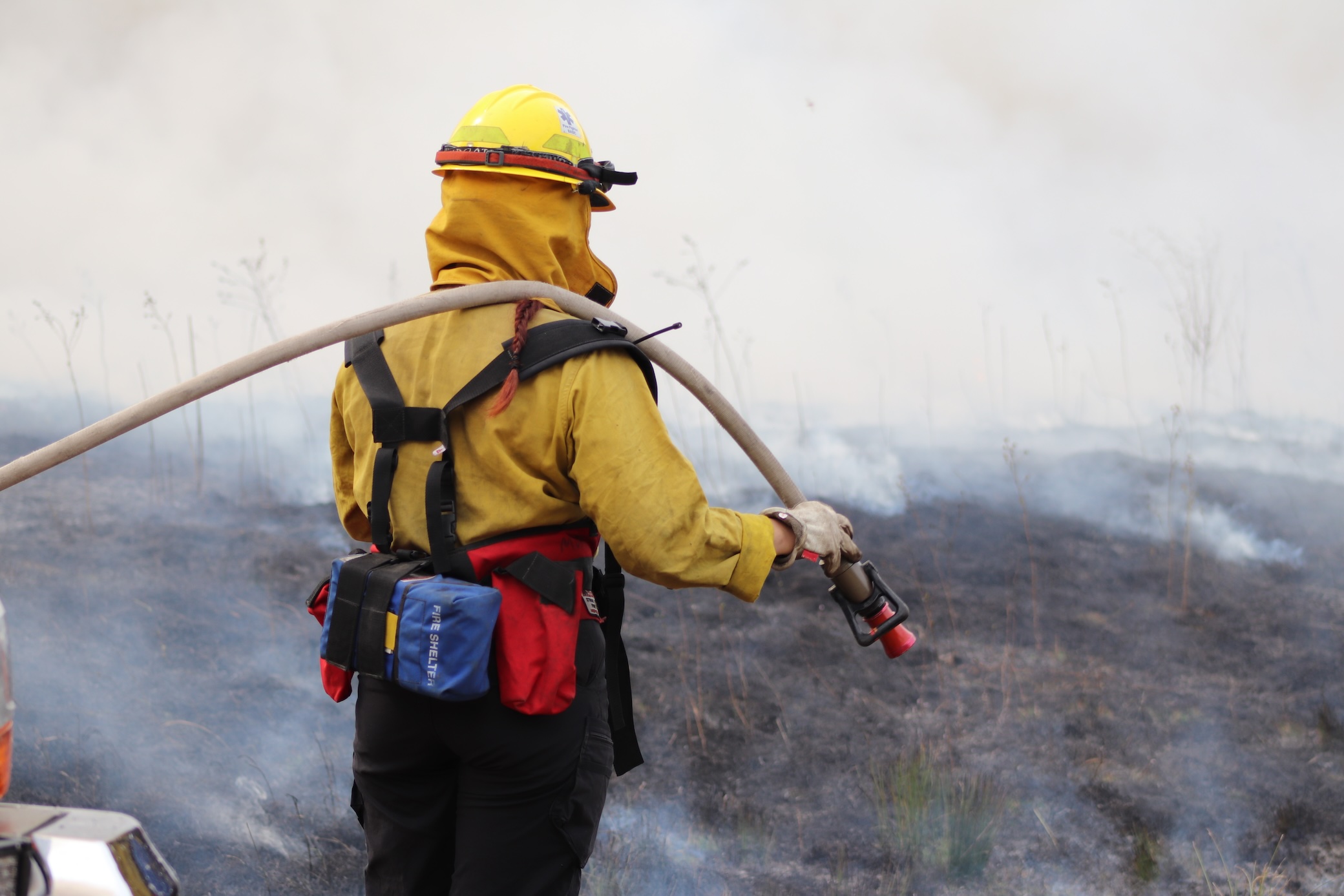
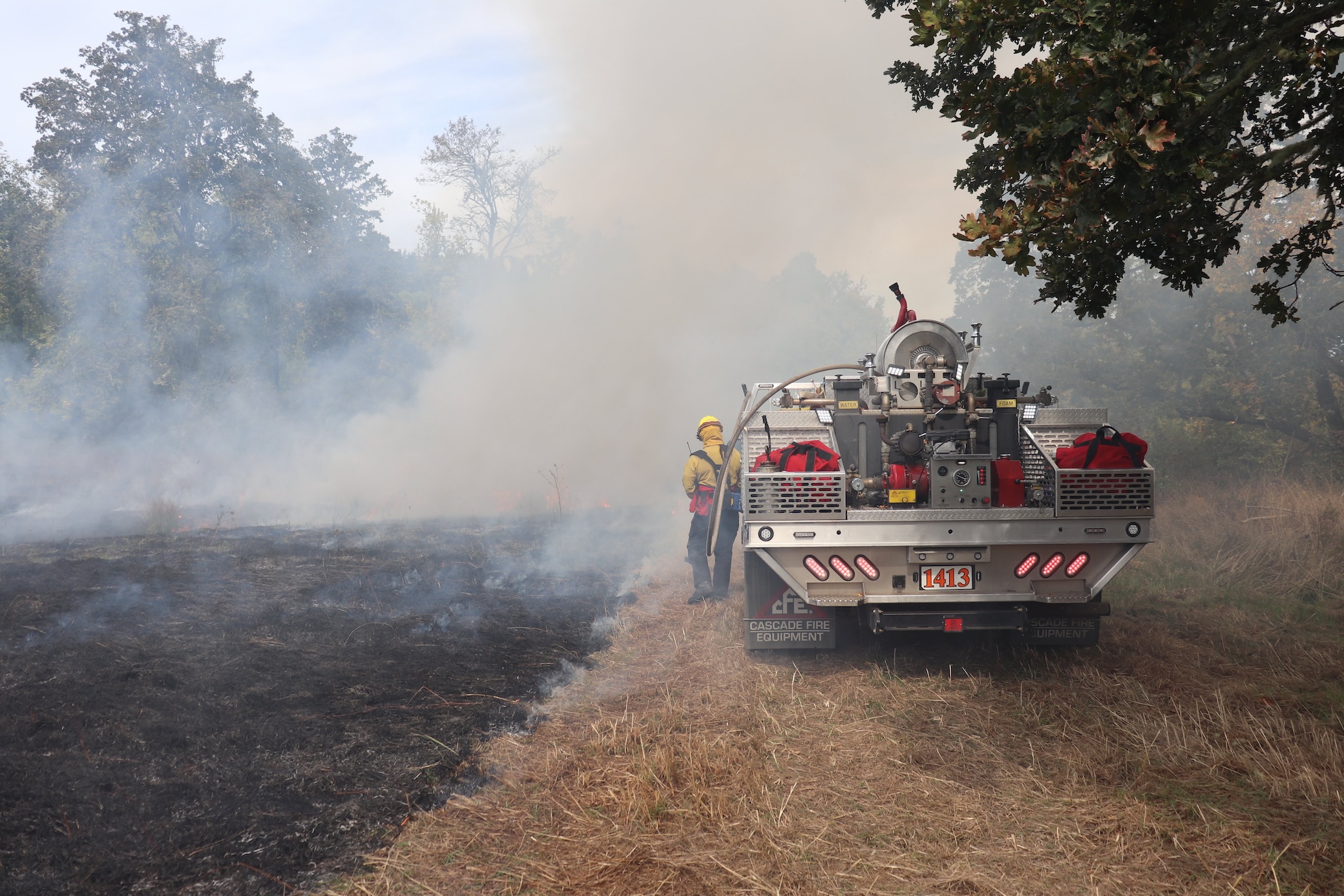
As the interior grid finishes burning, tenders and engine operators move into action. Streams of high-pressure water douse the perimeter, leaving a sharp line between burn and untreated land.

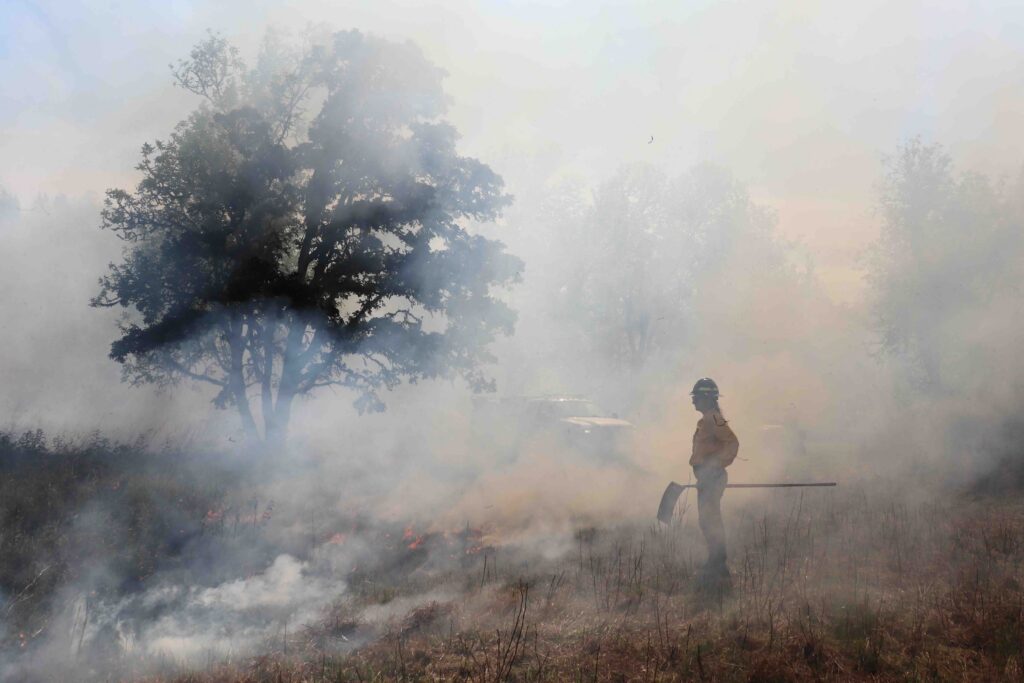
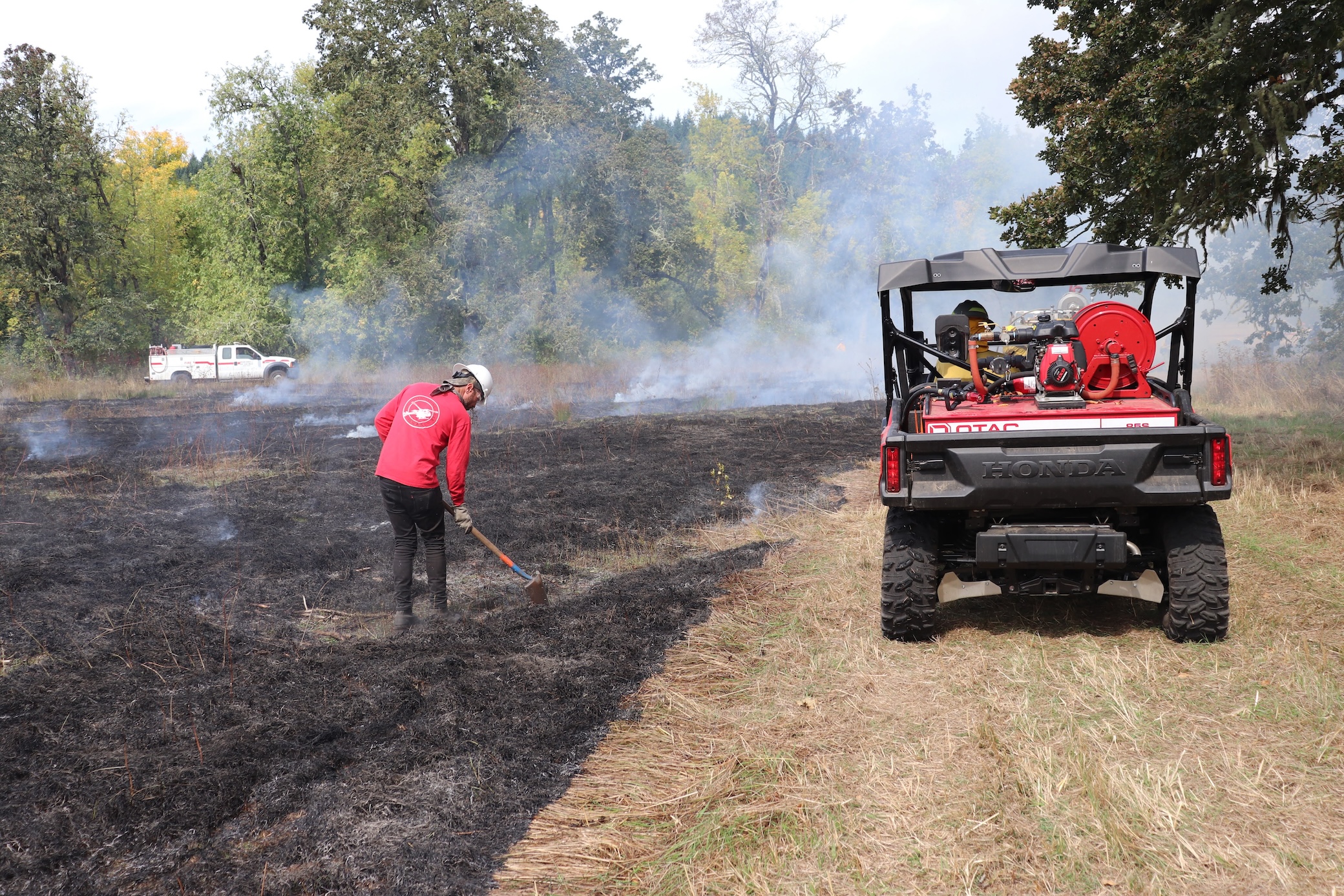
As active flames subside, the final hands move in for mop-up. Methodical and thorough, mop-up crew members use rubber flappers, hand tools, and water to extinguish any smoldering hot spots that could build heat or promote embers.

A Quiet Return

By late afternoon, the prairie had returned to stillness. A sea of burnt grass, now delicate threads of ash, shifted subtly under the breeze as thin columns of smoke rose like incense across the landscape. The smell hit with a bitter sting, yet carried a unique warmth that felt sweet and familiar. 

In a few days’ time, the black had given way to vibrant green. As the burnt threads dissolved into the earth, they carried with them vital nutrients to nourish sleeping roots through winter. Come spring, these quiet fields will burst into purples, pinks, and yellows as native wildflowers flourish in newly opened ground.

Growing Regional Resilience

This burn is one of many completed this season through the Rivers to Ridges partnership. Each year, this growing network of land stewards, Indigenous practitioners, and community partners expands its impact by sharing equipment, knowledge, and care across property lines.

Together, these fires seed far more than healthy prairies. They cultivate community, restore cultural relationships, and make our local landscapes more resilient for generations to come.

More news from the field

Field Notes

Behind the Smoke: A day spent on a controlled burn

Each fall, partners in the Upper Willamette Valley come together to implement controlled burning on the landscape. Join this fall’s burn at Coyote Spencer Wetlands through an intimate photo essay that takes you behind the scenes of a fire. Explore how cultural and ecological fire work on the ground, what crews do day-to-day, and how distinct roles support shared restoration goals.
Read More »
Restoration

Bringing back good fire, together

This fall, McKenzie River Trust and local partners are working together to safely return prescribed fire to conservation lands across the Eugene-Springfield area. Careful planning, weather monitoring, and regional coordination help make each burn possible.

Read More »
Field Notes

Lessons from the Red-Legged Frog

What can Oregon’s largest native frog teach us about resilience? Discover how the northern red-legged frog’s fall migration highlights the importance of wildlife corridors, wetland restoration, and community land conservation across western Oregon.

Read More »

Lasting conservation happens together.

Double your impact for land and water. $50,000 in donations will be matched dollar-for-dollar today!