A freshwater sponge grows in the side channels of Green Island

From shore, they would have been nearly impossible to spot.

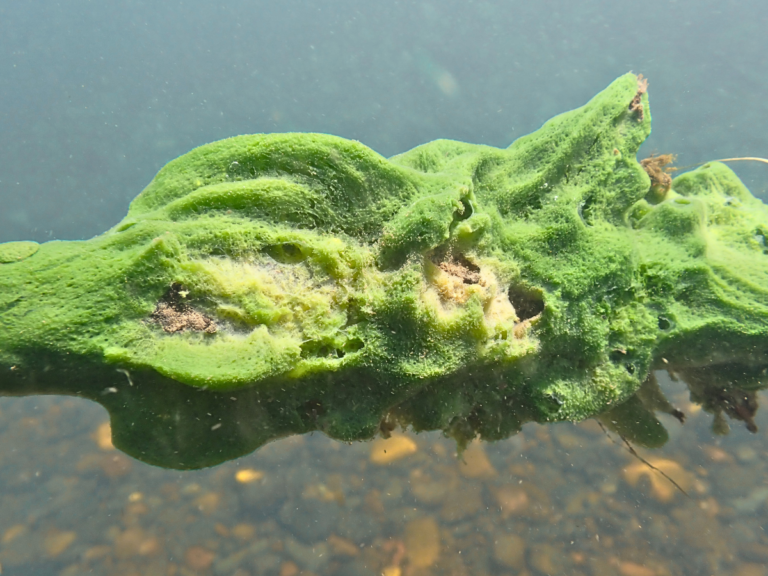
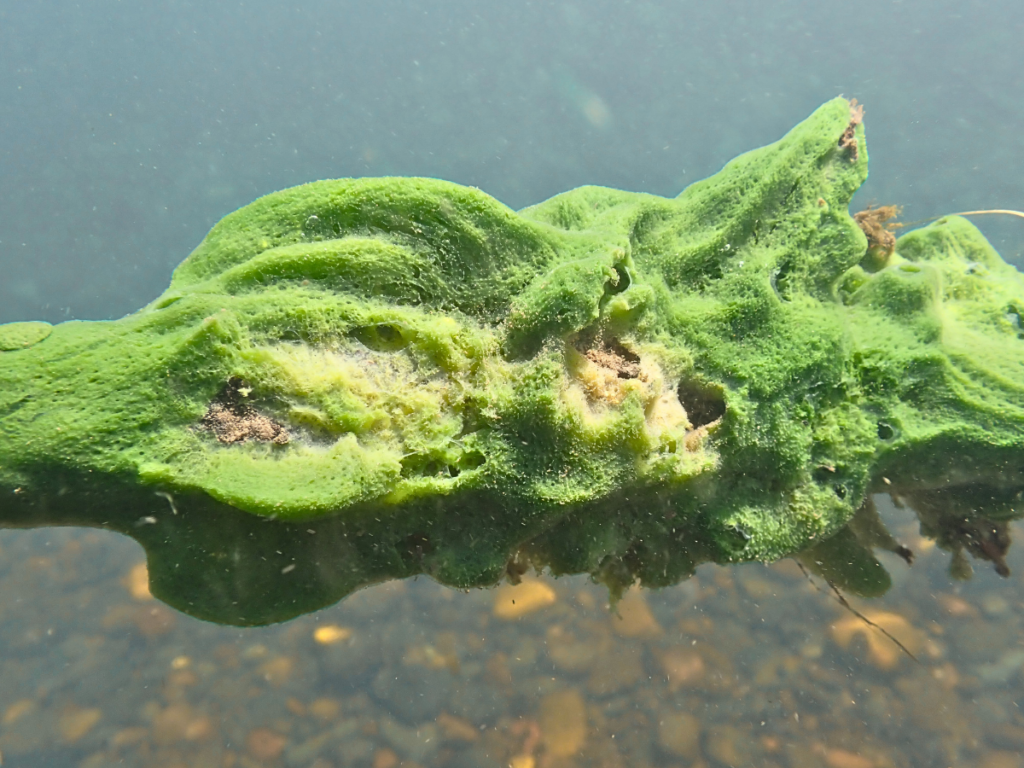
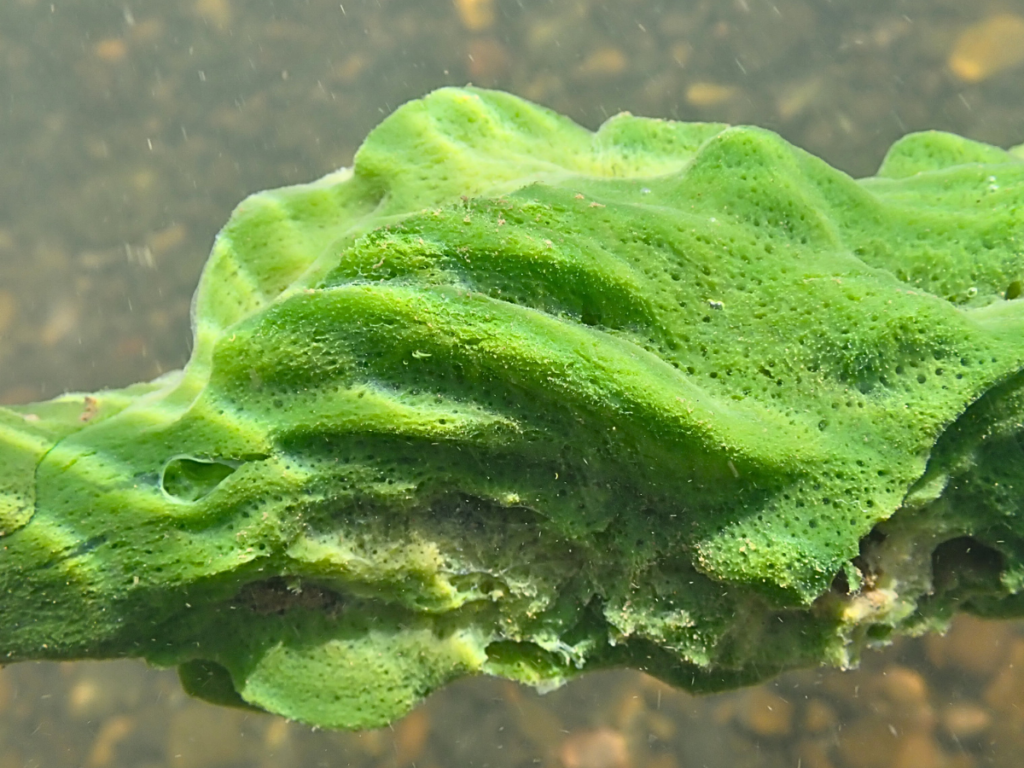
Beneath the surface, tucked among downed trees racked against the edges of Green Island’s side channels, brilliant green structures rose from the wood. Some spread like velvet over submerged stones. Others curled upward from gathering branches, their electric green bodies glowing against the gentle browns and blues of the river.

It was the kind of scene you had to enter the water to discover.

And that’s exactly what happened when participants on a recent snorkel tour dipped below the surface and stumbled upon an expansive colony of an animal none of us expected to find.

Freshwater sponge. Yes, sponge.

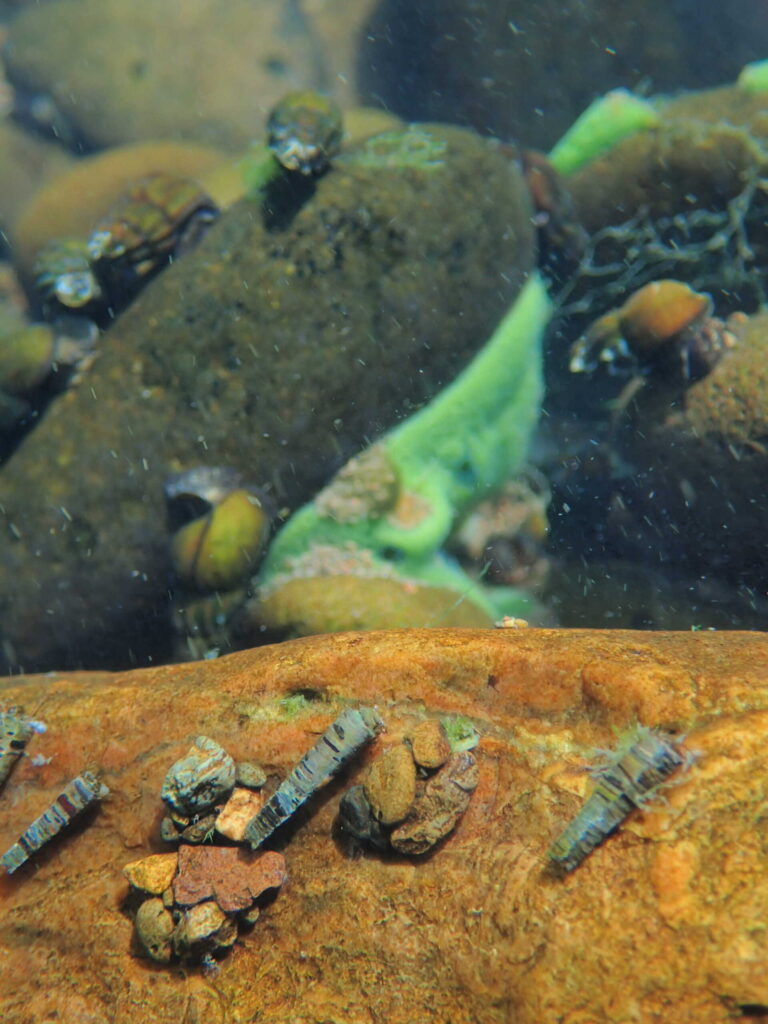
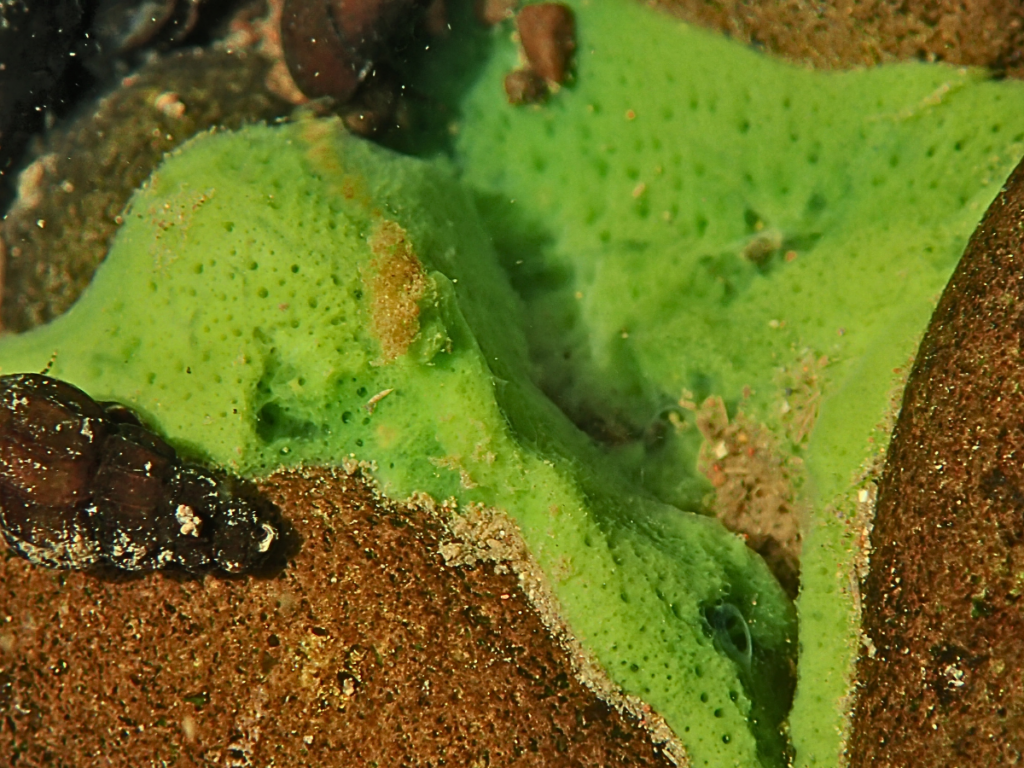
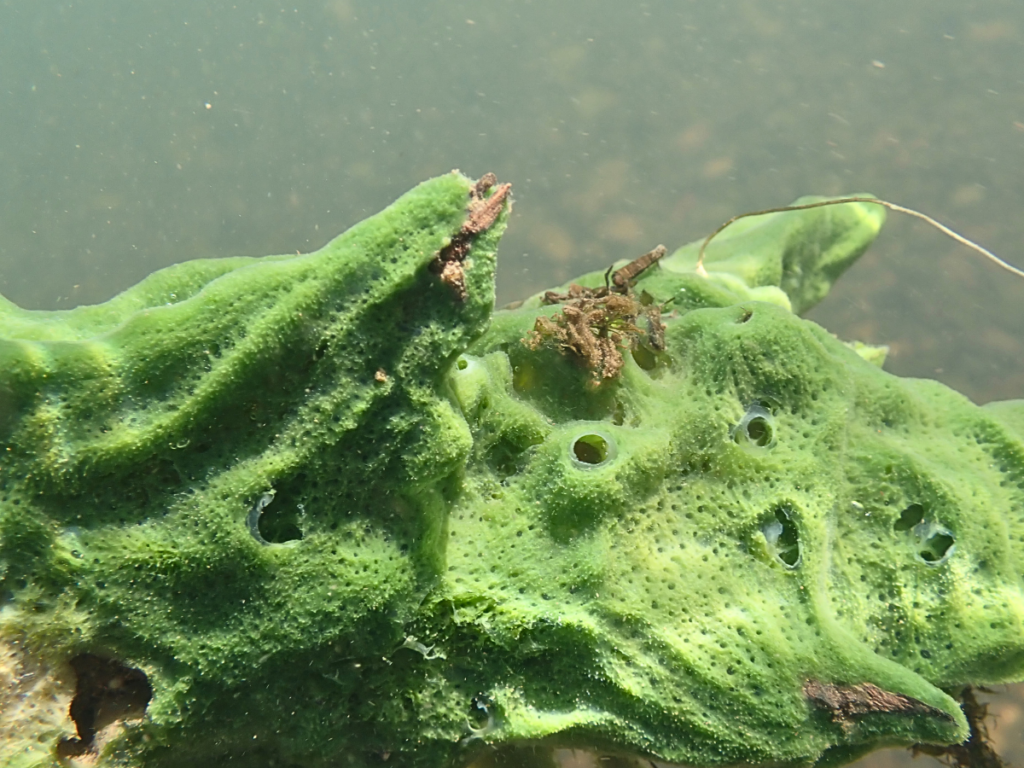
Caddisfly larvae (foreground) are one of a few animals who eat freshwater sponges.

Freshwater Sponges: An Unexpected River Animal

We tend to think of sponges as creatures of the sea, fixed to colorful reefs beneath tropical water. But some sponges have made their homes far from the ocean.

Around 20 species of freshwater sponge live in the lakes, rivers, and streams of North America. Here in the Pacific Northwest, relatively little research has been done on these unusual animals. So perhaps it shouldn’t be surprising that no one on our team had heard of them before this encounter.

Once we knew what we were looking at, an even stranger world began to unfold.

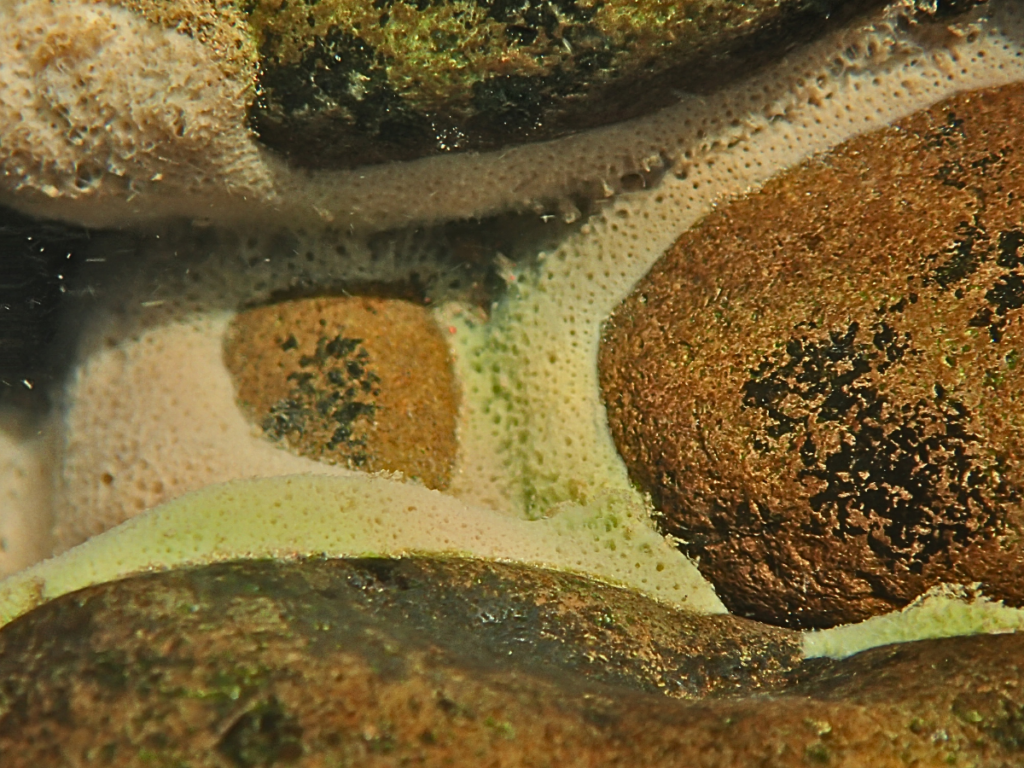
Freshwater sponges can be remarkably varied. Some grow as thin, velvety carpets, masking rocks and wood in white. Others gather into rounded clumps or rise into ornate green swirls and branching towers.

Yet appearances can be deceiving. The same species can take on very different shapes depending on where it grows. Current, light, depth, and the surface beneath it can all influence its form. That means even an expert may not be able to identify a freshwater sponge simply by looking at it. Instead, scientists turn to a microscope and to a skeleton very unlike our own.

A Skeleton Made of Glass

Sponges are simple, multicelled animals that spend their adult lives anchored to rocks, wood, and other underwater structures. They have no heart, brain, or nervous system. Instead, their bodies are built around the movement of water.

Hidden inside is an intricate skeleton made partly of tiny structures called spicules, which in freshwater sponges are often formed from silica, the same material found in sand and used to make glass. The shape and arrangement of these microscopic structures, along with tough reproductive pods called gemmules, can help scientists tell one species from another.

It is a strange thought: an animal soft enough to drape itself over a branch, held together by a delicate architecture of microscopic glass.

But nearly everything about a sponge asks us to reconsider what an animal can be.

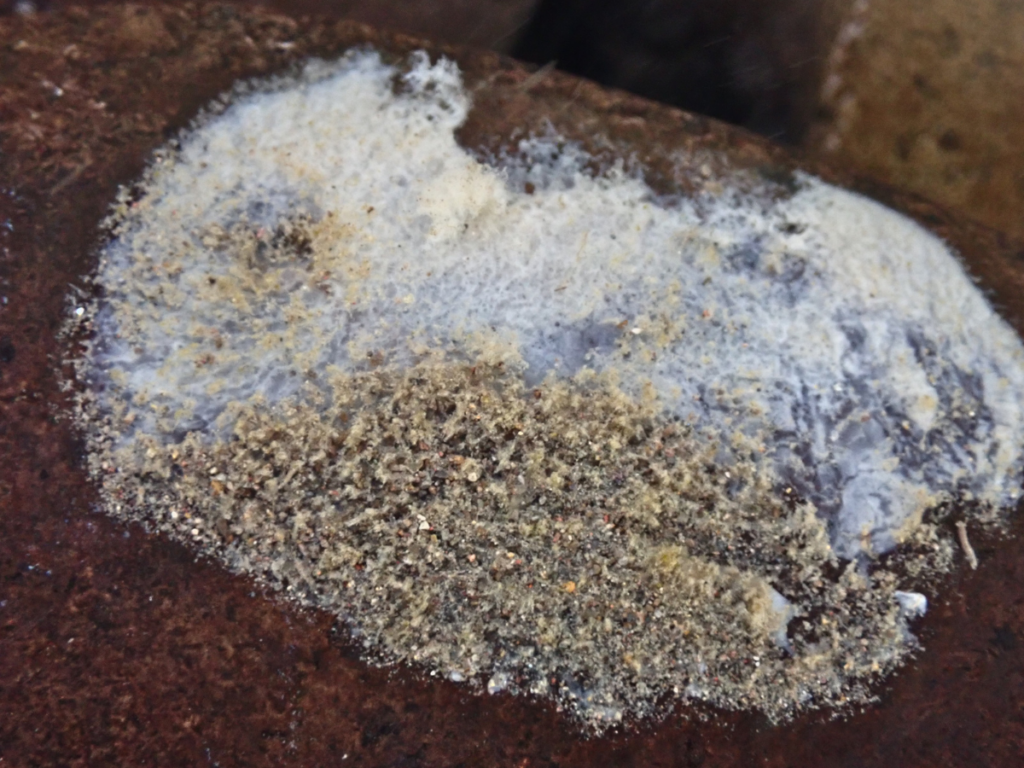
A thin carpet of sponge emerging.
White sponge begins to take shape.
More developed sponge with algae.

How Does a Freshwater Sponge Reproduce?

Freshwater sponge reproduction is as unusual as the animal itself.

Depending on the season and water temperature, a single sponge may reproduce both sexually and asexually. All sponges are hermaphroditic, carrying both sperm and eggs. During warmer months, sponges release sperm into the river. The current carries it away, where another sponge—constantly filtering the surrounding water—may pull it into its body where eggs can be fertilized in the inner chambers of the sponges body.

The eggs and young develop inside their parent before being released as a tiny swimming larva. For a few hours or days, they enter a rare wandering stage of life, carried by the current. Eventually, the larvae settle onto suitable rocks, branches, or other surfaces where they will remain for the remainder of their life. Here, a new sponge begins to grow. 

Tiny Survival Pods Built for Winter

As winter approaches and the river changes, freshwater sponges have another way to endure. They produce tiny structures called gemmules, which are tough reproductive buds containing cells capable of growing into a new sponge with the same genetics as its parent. And these pods are remarkably durable.

Gemmules can survive freezing temperatures and, in some species, periods when a streambed dries out. The visible sponge may die back as conditions become harsh, while these tiny capsules wait behind. Once the temperature warms again or water returns to the area, the sponge will begin to grow again.

And if that weren’t enough ways to keep a species going, a piece torn from a sponge can sometimes drift downstream, anchor to a new surface, and begin growing there, creating another genetic copy of itself.

That makes the idea of a sponge’s “lifespan” surprisingly complex. A single sponge’s body may disappear and return with the seasons, or pieces of itself may break away and continue elsewhere. Generation after generation of clones can carry the same genetically identical individual forward.

For an animal that cannot walk, swim as an adult, or choose to move somewhere new, freshwater sponges have developed an astonishing number of ways to persist.

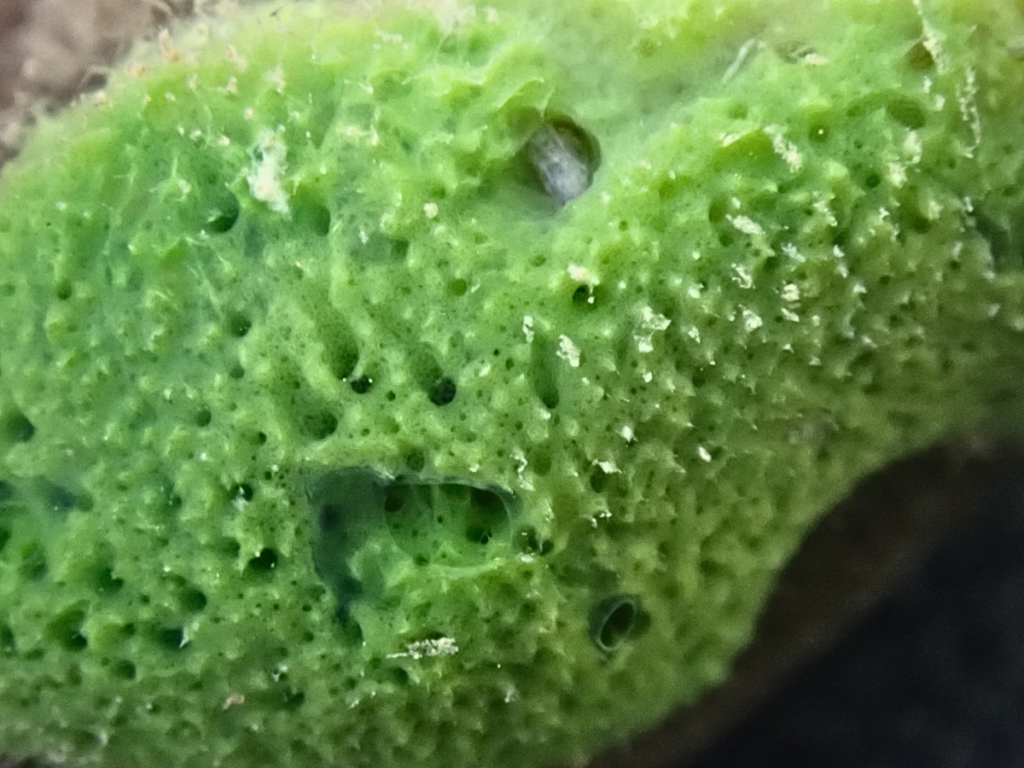
Tiny holes pump water in and out of the sponge body, gathering planktonic organisms for food.

An Animal Built to Filter the River

If you could shrink down and enter the body of a sponge, you would find water moving everywhere. Sponges are filter feeders, equipped with tiny cells that boast microscopic, whip-like structures called flagella, which keep water flowing through a maze of pores and channels within their bodies. 

With that water comes food. Bacteria, protists, and tiny drifting plants and animals are pulled from the current and captured before the water is pushed back out, while more takes its place. Again and again, all day long, the river passes through the sponge.

That intimate relationship with water also makes freshwater sponges extremely sensitive to their surroundings. Excess sediment can clog the structures they use to feed, while pollution and other changes in water quality strain their unique physiology and create poor sponge habitat. Because of this sensitivity, freshwater sponges can offer clues about the health of the waters where they live.

Even the current’s speed can shape their bodies. Where water moves swiftly, sponges may hug close to the surface, spreading low across rock or wood. In quieter water, their bodies can reach outward, growing into elaborate branches and towers. At Green Island, calmer pockets have produced some spectacular forms of twirling, branching bodies.

Why Are Some Freshwater Sponges Bright Green?

Sponges themselves are generally shades of white, beige, or yellow. The almost luminous green we saw at Green Island comes from something else living inside them: algae.

Some freshwater sponges form a partnership with microscopic algae that take up residence within their bodies. The algae gain a protected place to live, and in return, they provide the sponge with oxygen and nutrients produced through photosynthesis. 

At Green Island, this partnership was in full display. The sun-facing sides of the sponges glowed green from the algae’s photosynthesizing chlorella, while shaded portions remained bright yellow, a living map of where sunlight filtered through the water. From above, it was invisible, but below the surface, it was electric.

Mature sponge echoes the shape of water in the side channels of Green Island.

What Freshwater Sponges Can Tell Us About Green Island

Finding abundant freshwater sponges in Green Island’s side channels gives us another glimpse into what can happen when a river has room for complexity. Here, downed trees collect in side-channels, forming underwater scaffolding for new life. Pools deepen beside shallow riffles. Currents quicken, slow, split, and reconnect. Sunlight reaches one submerged branch while another remains in shade.

For a freshwater sponge, each difference matters. Conservation and restoration efforts at Green Island have aimed to nurture these kinds of dynamic river processes. The resulting weave of side channels, wood, pools, riffles, and quieter pockets of water creates more than habitat for the fish and wildlife we readily recognize. It also provides spaces for the unexpected plants and animals we might just be meeting today.

Places where, beneath a few feet of water, an animal without a heart, brain, or nervous system can build a skeleton of glass, harbor a garden of algae, clone itself, survive winter inside a tiny capsule, and quietly filter the river through its body.

Until that snorkel tour, we didn’t know freshwater sponges were here. Now we know enough to start looking and learning. Where else do they live at Green Island? Which channels do they favor? How do colonies change as winter water rises and summer flows recede? How do they spread through a river network that is itself always shifting?

There is still much we don’t know, and that may be the most exciting part of the discovery. Sometimes the wonder of a river is not in what we already know how to find, but in what has yet to be revealed to us. Like the sponge, how many others are waiting to be noticed just beneath the surface?

More From the Field

Shaped by Water: Freshwater Sponges found at Green Island 

Beneath the surface of Green Island’s side channels, an unexpected animal is thriving. Freshwater sponges that build delicate skeletons of microscopic glass around the rivers’ flow. These fascinating animals filter the river through their bodies and can glow electric green with the help of algae. Their discovery has opened a window into a strange and largely unseen freshwater world where an animal completely different than ourselves is making its home among the current.

Working together for western Oregon

Every conservation success starts with people working together. From the McKenzie River to Oregon’s coast, collaborative partnerships are helping communities protect drinking water, restore habitat, and build a more resilient future for western Oregon.

Ringtails: The Elusive Acrobats of Oregon

What looked like a “lost lemur” in Springfield turned out to be one of Oregon’s most elusive native mammals. Meet the ringtail, a remarkable nighttime acrobat with incredible climbing abilities, a mysterious lifestyle, and a surprising connection to nearby conservation lands.