
What if we came to know a tree the way we know a salmon, a beaver, or a bird?
From beavers to salmon, many of us are familiar with keystone species and the remarkable roles they play in their habitats. These charismatic creatures capture our hearts and imaginations. We recognize something of ourselves in their lives through their determination, their ingenuity, and the ways they shape the world around them.
But what happens when we extend that sense of kinship beyond animals? Can a tree be just as remarkable? Can a plant, too, hold entire worlds together?
For oaks, the answer is a resounding yes.
Across the Northern Hemisphere, oak trees support an extraordinary diversity of life with more than 2,000 species of plants and animals relying on them at some point in their lives. From insects and fungi to birds and mammals, oaks provide an anchor for life to flourish, and few other groups of trees can match their importance to the living communities around them.

Oak Tree Evolution: 56 Million Years of Adaptation
The story of oaks begins roughly 56 million years ago, in a world rapidly changing following the extinction of dinosaurs. Earth’s climate was warmer and wetter, forests stretched across far northern latitudes, and the ancestors of today’s oaks were emerging alongside them.
As the planet cooled and continents shifted, ancient oaks expanded into new environments. They endured over millions of years, diversifying into eight distinct lineages that remain today. Within these lineages, they evolved further, adapting to landscapes as different as coastal swamps and wetlands, desert moraines, and high-altitude forests.
In North America, two great branches of the oak family, the red oaks and white oaks, marched southward in parallel progression. As their ranges expanded, they rapidly adapted to new environments. With remarkable flexibility, they anchored themselves among different soils, temperatures, rainfall patterns, and neighboring plant communities.
Today, that adaptation has resulted in hundreds of unique oak species distributed across North America, with the epicenter of oak diversity in Mexico, where more than 160 unique species now occur.
Here in western Oregon, Oregon white oak (Quercus garryana) and California black oak (Quercus kelloggii) represent the familiar limbs and branches of our neighborhoods and natural areas. Their ancestors navigated immense changes in climate and geography with waves of establishment, retreat, and recolonization of the landscape. Following the glacial retreat of the last ice age, these oaks spread through the Pacific Northwest, establishing themselves as defining characters of the valleys and foothills we know today.
Why Oak Trees Matter for Wildlife
An oak does not live alone. Beneath its bark, insects tunnel and feed. Along its branches, lichens and mosses gather moisture from the air, and fungi form intimate relationships with its roots, exchanging nutrients and water for sugars produced by the tree. Birds search its leaves for caterpillars, and mammals find shelter in the hollows of aging trunks.
And then there are the acorns. Over their long lifetime, an oak may produce hundreds of thousands, even a million or more, of these nutrient-rich seeds. Each represents the possibility of another tree, but most become food for the animals living nearby.

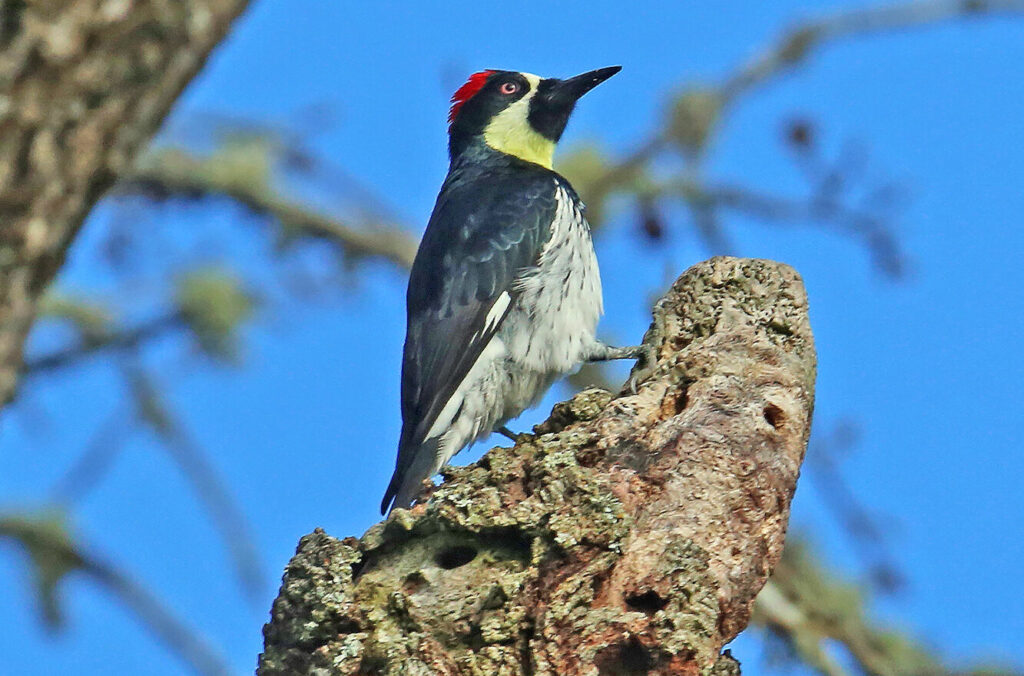
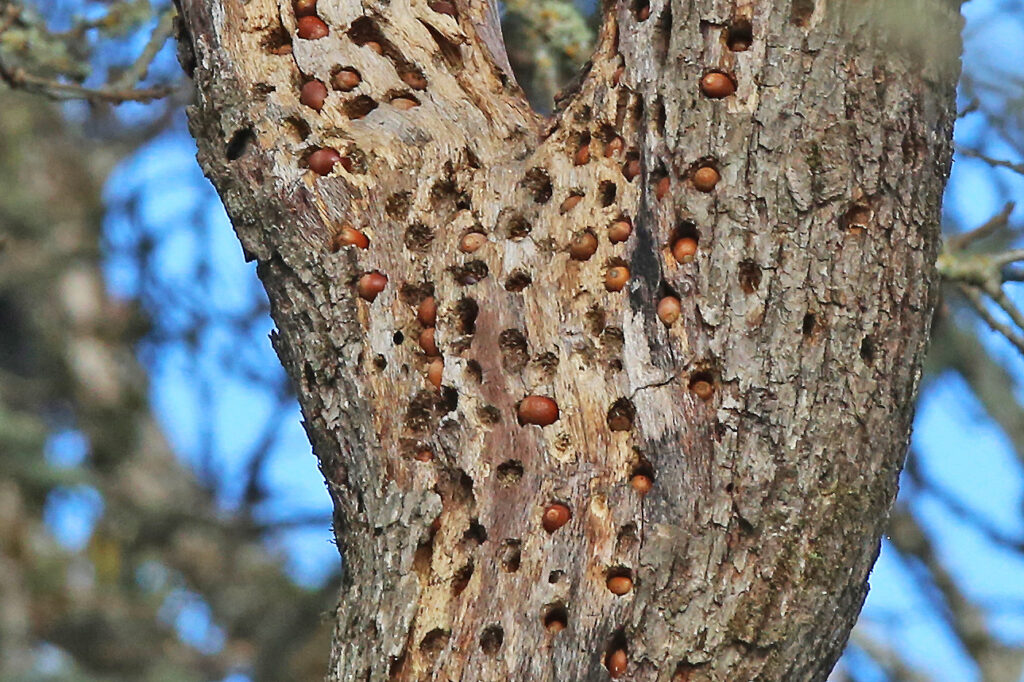
Woodpeckers gather and store them. Squirrels carry them away to bury in scattered caches. Bears, deer, jays, and countless other creatures also depend on their seasonal abundance. Some of these seeds, forgotten beneath the soil, may eventually take root, extending the oak’s reach into a new generation.
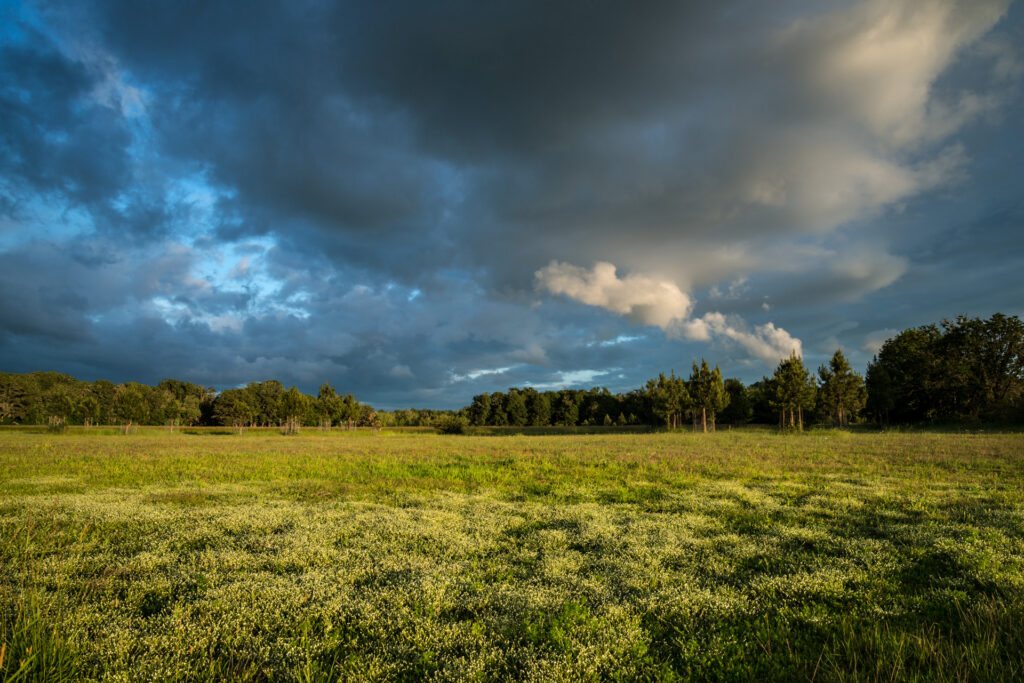
Here in the Willamette Valley, oak woodlands and prairies support a remarkable web of life. Acorn woodpeckers and western gray squirrels are closely tied to these habitats. Native wildflowers, grasses, lichens, fungi, and insects flourish in the open spaces beneath and between the trees, and nearby prairies provide habitat for rare species such as Fender’s blue butterfly. These communities are each part of the larger mosaic of oak savannas, woodlands, and grasslands that once stretched across the valley.
To encounter an oak tree is to meet more than a single organism. Each towering trunk represents a living community, shaped by countless relationships that have developed over generations. And some of those relationships may be older than the tree itself.

Fire and Indigenous Stewardship of Oak Woodlands
For thousands of years, the oak landscapes of western Oregon have also been shaped by human relationships. Native peoples cultivated and cared for oak savannas, woodlands, and prairies through intentional burning, harvesting, and other forms of land relationship. Among other benefits, acorns provided an important food source, and open oak landscapes supported a wealth of interactions between people, plants, and animals.
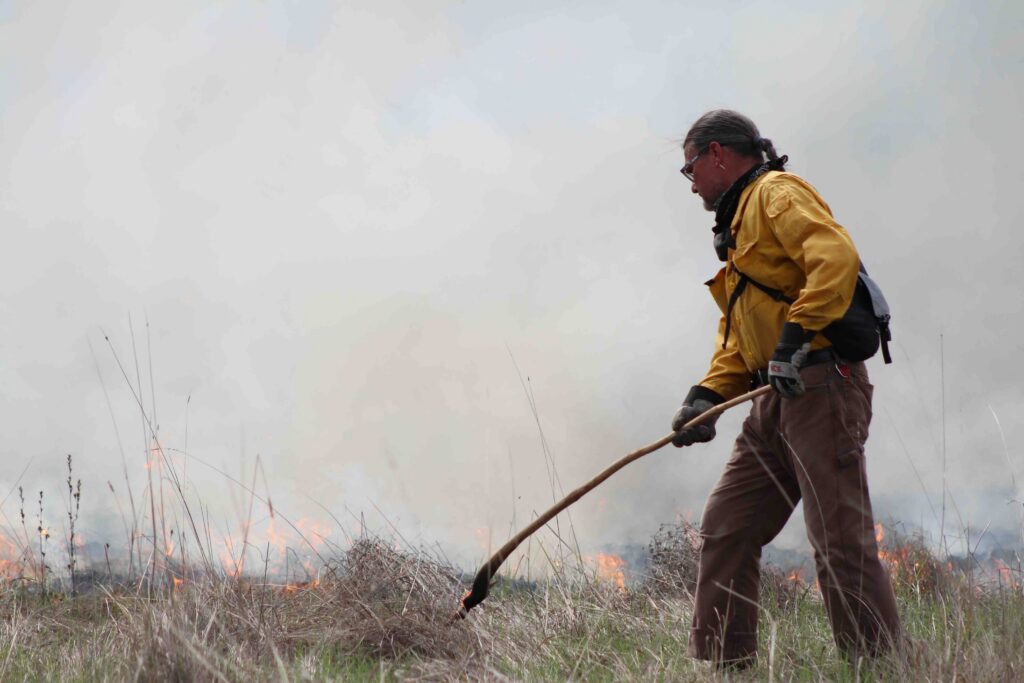
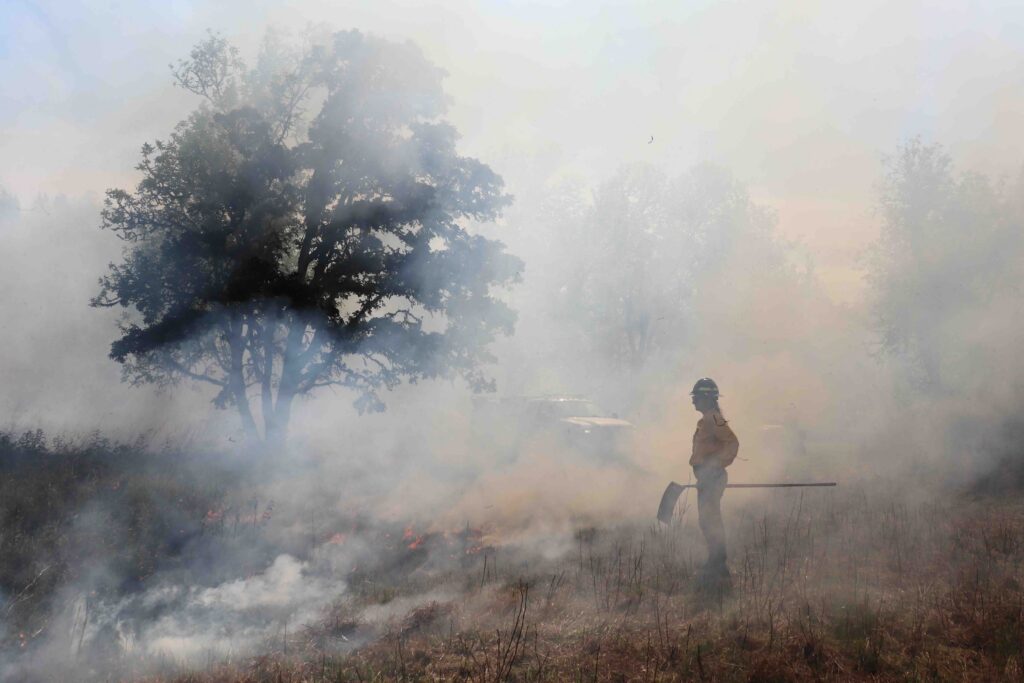
And fire was central to this care. Regular, carefully timed burning helped maintain the open conditions that enabled easier hunting and gathering, but also afforded oaks the space they need to thrive. Fire limits the growth of competing trees and shrubs, encourages the renewal of prairie plants, and sustains ecosystem balance for oak habitats.
Oregon white oaks are especially well adapted to the conditions of fire. Today, they boast thick bark that guards mature trees against low-intensity heat and wide branching crowns that capture sunlight while sheltering the landscape below. Without regular disturbance, faster-growing trees such as Oregon ash and Douglas-fir can rise above them or crowd this crowning behavior. Over time, oaks in competition can be shaded out of sunlight, and their sensitive branches fail to crown symmetrically, putting the tree at risk. Out of balance with the surrounding trees, their branches weaken, and the open habitats beneath them begin to disappear.
These landscapes were never “wild places” untouched by people. Their abundance was shaped, in part, by generations of Indigenous relationships and active care. When Native peoples were forcibly removed from these lands and their stewardship practices were suppressed, that relationship was disrupted. Agricultural conversion, development, and the exclusion of fire further transformed the valley.
Today, many of the remaining oaks stand as witnesses to that history, surrounded by landscapes that have changed dramatically within their lifetimes.

The Disappearing Oak Habitats of the Willamette Valley
Less than 7% of the Willamette Valley’s historic oak habitats and only a small fraction of its native prairie habitats remain. What once formed broad, connected landscapes has been reduced to scattered groves, isolated trees, and small pockets of prairie.
For a creature that may live 400 years or longer, these changes have happened with extraordinary speed. An oak that first took root before Oregon became a state may have watched generations of people pass beneath its branches. It may have survived fires, floods, droughts, and storms. Yet in just a century or two, the world surrounding it has become almost unrecognizable.

And when an old oak disappears, we lose far more than its trunk and canopy. We lose the cavities that took decades to form. The rough bark where insects shelter. The branches that hold nests. The accumulated relationships between roots, fungi, soil, and neighboring plants. A young oak can begin to replace some of these functions, but it cannot immediately replace the complexity of an old tree whose relationships took centuries to develop.
Protecting Oregon's Oaks for Future Generations
Across the Willamette Valley, McKenzie River Trust works with partners to protect and restore the oak landscapes that remain. This work takes many forms. Protecting mature trees and the lands around them. Removing competing vegetation to return sunlight to aging canopies. Planting young oaks where woodlands can expand, and supporting the return of good fire, including opportunities for Tribal-led cultural burning and renewed Indigenous land stewardship.
Each of these actions creates room for these landscapes to continue to live and change. As our climate changes around us, that work takes on new importance.
Oaks have survived millions of years of shifting conditions. Their deep roots, tolerance of seasonal drought, and ability to thrive in open landscapes make them an important part of western Oregon’s future. Healthy oak habitats may help sustain biodiversity as summers grow hotter and drier, especially where connected landscapes give plants and animals room to adapt.

But the evolutionary resilience of oaks does not mean they are immune to the speed of change unfolding today. A woodland that took centuries to develop cannot simply be replanted and restored within a human lifetime. Even under favorable conditions, it may take 100 to 200 years for young trees to begin developing the structure of a mature oak woodland, and longer still to recreate its complexity. This is why protecting the oaks we have today matters.
We must first protect the old trees and surviving woodlands and prairies, restore the habitats around them, and create opportunities for the next generations of oaks to take root and spread. The trees we plant today will not reach their full grandeur in our lifetimes, or those of our children, yet their broad crowns may someday shelter creatures we will never see, through seasons and conditions we cannot yet imagine.
Perhaps that is part of what makes an oak so remarkable. Like the salmon returning to its river or the beaver building its wetland, an oak is not simply part of the landscape. It is an active participant in shaping itself and the lives around it. And perhaps, when we begin to see these trees as fellow inhabitants of this place, we come to recognize just how deeply our own lives are connected to theirs.

Bringing back good fire, together
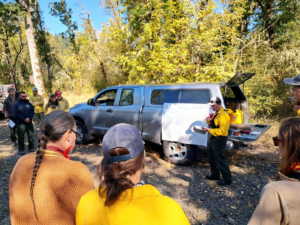
This fall, McKenzie River Trust and local partners are working together to safely return prescribed fire to conservation lands across the Eugene-Springfield area. Careful planning, weather monitoring, and regional coordination help make each burn possible.
Ringtails: The Elusive Acrobats of Oregon
What looked like a “lost lemur” in Springfield turned out to be one of Oregon’s most elusive native mammals. Meet the ringtail, a remarkable nighttime acrobat with incredible climbing abilities, a mysterious lifestyle, and a surprising connection to nearby conservation lands.
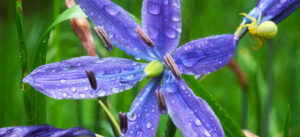
From Flame to Flower: How Prescribed Fire Supports Wildflower Prairies
Tribes, agencies, and nonprofits are working together to bring prescribed fire back to the landscape. Prescribed fires in spring and fall help restore balance. They limit the spread of invasive plants and reduce the risk of larger, more destructive fires. By supporting prescribed fire, we can help restore these landscapes and ensure wildflowers continue to thrive.